You’ve cut back on caffeine, tried breathwork, even deleted the news app. But your heart still races at 3 p.m., and your stomach flips before every meeting. Here’s the twist: what feels like a “mind” problem might start in your gut.
Most people blame work stress or poor sleep. The real driver can be cortisol—your stress hormone—running on a loop that your gut microbes help control. When that loop misfires, anxiety climbs, sleep breaks, and focus scatters.
This isn’t vibes or vague wellness-speak. It’s emerging biology: certain gut microbes talk to your brain, tune your stress response, and may shift how anxious you feel.
- Gut microbes help set cortisol “volume.” When the HPA axis runs hot, anxiety often follows.
- Not all probiotics help. Specific strains show promise; random blends may do little.
- Fiber and fermented foods may support calmer moods, partly via microbial metabolites.
- Counterintuitive: Working on digestion can make therapy and sleep strategies feel easier—not the other way around.
- Start low, go slow. Gentle changes reduce bloating and make benefits more likely.
The gut–cortisol loop: why stress hits your stomach first
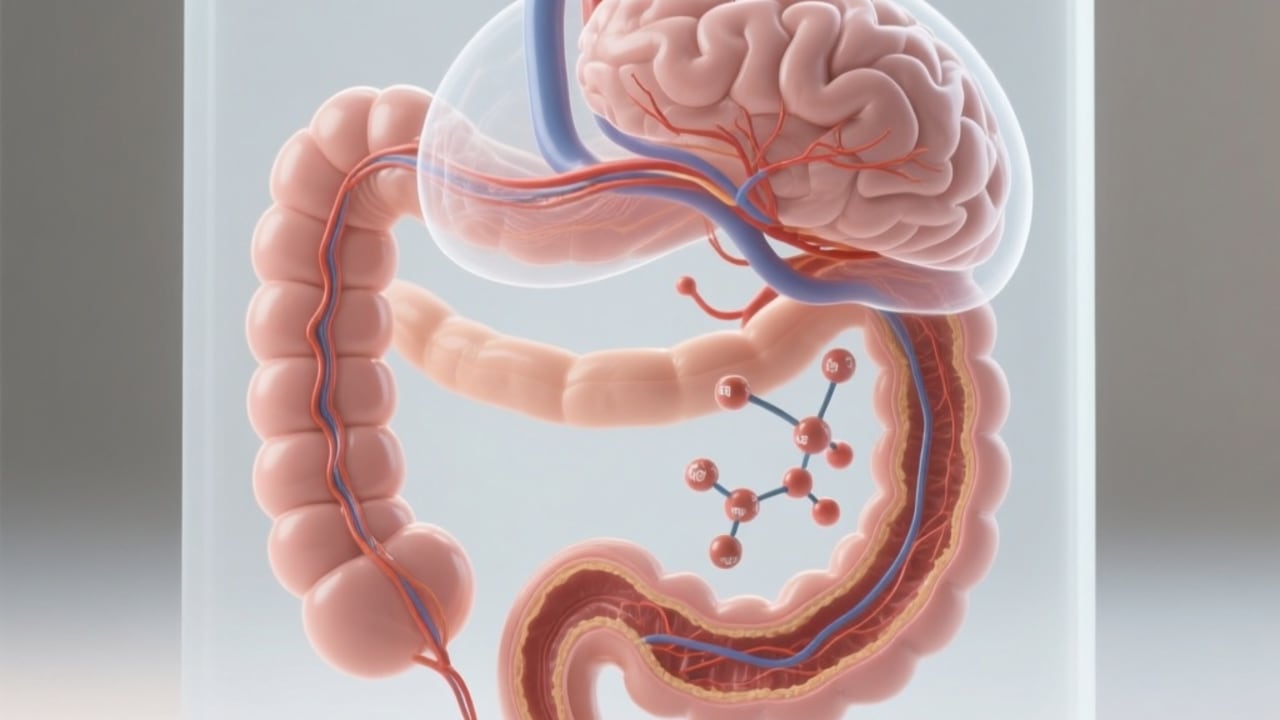
Picture this: an email pings, your belly tightens, and your brain spins. That’s your HPA axis—the brain’s stress circuit—calling for cortisol. Your gut microbes can turn that signal up or down by nudging immune messengers, the vagus nerve, and even gut barrier integrity.
A 2025 review in Frontiers in Microbiomes describes the gut microbiota as a key modulator of the HPA axis, noting that chronic cortisol exposure can wear down brain regions tied to emotional control, like the hippocampus and prefrontal cortex (Rusch et al., 2023; Bertollo et al., 2025). When the loop stays “on,” worry feels louder, sleep gets lighter, and motivation fades.
Meet the middleman: your gut barrier
If the gut lining gets “leaky,” immune signals rise—and the HPA axis may ramp up. In rodent models, the probiotic Lactobacillus reuteri DSM 17938 improved gut integrity, lowered inflammation, and even restored brain-derived neurotrophic factor (BDNF) linked to PTSD-like behaviors (Petakh et al., 2024, summarized in Frontiers in Microbiomes, 2025). It’s early data, but it maps a plausible path from belly to brain.
Microbial messengers that shape anxiety
Microbes don’t just sit there—they make molecular “texts” that your brain reads. Some are calming, some are agitating, and context matters.
A 2025 EMBO Molecular Medicine study from Duke-NUS found that microbial metabolites called indoles can directly regulate brain activity linked to anxiety—pointing toward targeted “psychobiotic” therapies down the road. Think of indoles as tiny dimmer switches for brain circuits that govern vigilance and calm.
Short-chain fatty acids, vagus signals, and you
When you feed fiber to gut microbes, they produce short-chain fatty acids (SCFAs) like butyrate. These may support the gut barrier, influence inflammation, and signal through the vagus nerve—mechanisms tied to steadier moods in preclinical work and small human studies. It’s like giving your stress circuit better shock absorbers for everyday bumps.
Probiotics and foods: what the evidence actually says
Here’s the thing: “Take a probiotic” is too vague. Strains matter, and so does your baseline gut. Some people feel nothing; others notice lighter anxiety or better sleep within weeks.
A double-blind RCT in 2011 reported that a combo of Lactobacillus helveticus R0052 and Bifidobacterium longum R0175 reduced anxiety/depression scores, with hints of cortisol shifts in people with lower baseline cortisol (Steenbergen et al., summarized in a 2019 review in Frontiers in Psychiatry/PMC). That’s not a prescription—just a sign that specific strains may help some.
Diet counts too. A 2015 study of 710 young adults found an inverse link between fermented food intake and social anxiety, especially in more neurotic participants (Hilimire et al., 2015; summarized by GlobalRPH, 2025). Observational data can’t prove cause, but it fits the gut–brain story: cultured foods may add helpful microbes and metabolites.
When gut work helps other tools work better
Most people have been there—therapy skills make sense on Sunday and vanish by Monday. Supporting your gut may lower the “noise floor,” so breathwork, CBT skills, or medication plans feel more effective. The Frontiers review notes that tamping down chronic HPA activation can protect brain regions that store coping strategies, which may be why small gut shifts sometimes feel bigger than they look.

Why this matters
Anxiety doesn’t just live in your head—it shows up in your stomach, your skin, your sleep, your calendar. When you understand the gut piece, your options open up: you can work on the loop from both ends.
“Calming the gut won’t replace therapy—but it may make your nervous system more coachable.”
And that’s what you want on a real Tuesday: a little more calm, a little less reactivity, and the energy to do the things that help you feel like yourself.
What you can do today
- Try one fermented food daily (e.g., plain yogurt, kefir, kimchi, miso). Research suggests regular intake is associated with lower social anxiety; start with 2–4 tablespoons to reduce bloating risk.
- Feed your microbes fiber with oats, beans, chia, and colorful plants. SCFAs from fiber may support the gut barrier and gentler HPA responses.
- Consider a targeted probiotic trial for 4–6 weeks with strains studied for mood (e.g., L. helveticus R0052 + B. longum R0175). Effects vary; discuss with a clinician if you have IBS, are immunocompromised, or take immunosuppressants.
- Protect your sleep window. Consistent bed/wake times and a 60–90 minute screen wind-down may help stabilize cortisol rhythms—and your gut microbes seem to like routine too.
- Pair gut steps with stress skills like 4–7–8 breathing, a 10-minute walk after meals, or brief mindfulness. These may amplify gut–brain benefits without side effects.
Small, steady moves beat heroic overhauls. Share this with the friend who’s tried everything for their anxiety—except their gut.
Frequently Asked Questions
Many people take probiotics alongside SSRIs or other meds without issues, but interactions are still being studied. Start with one product, go low and slow, and check in with your prescriber—especially if you’re immunocompromised or have GI conditions.
Early human data point to combinations like Lactobacillus helveticus R0052 plus Bifidobacterium longum R0175. Results vary by person; a 4–6 week trial is reasonable if you tolerate it, alongside lifestyle and clinical care.
Diet alone won’t “fix” cortisol, but fiber and fermented foods may support a healthier gut barrier and microbial metabolites linked to calmer HPA responses. Think supportive, not a cure.