
Picture this: it’s 2 a.m., your room is dark, and your brain feels bright. Your heart’s a little louder than usual, your thoughts are racing, and the more you try to “relax,” the more alert you feel.
Most people blame blue light or a bad mattress. Here’s the thing: the real culprit is often a nervous system stuck in “go” mode. When your sympathetic system (the gas pedal) stays pressed, sleep can’t start—no matter how tired you are.
Research on insomnia keeps pointing to this hyperarousal pattern—faster heart rates at night, altered heart rate variability, and a body that won’t downshift. That’s why targeted breathing isn’t woo; it’s physiology.
- Insomnia often involves a “wired” nervous system—too much sympathetic activation can block sleep onset.
- Slow, nasal breathing with longer exhales may nudge your vagus nerve and promote drowsiness.
- Practice earlier in the day—counterintuitive, but daytime breathwork can make bedtime easier.
- CBT-I isn’t just for sleep; it’s been shown to reduce future depression risk in people with insomnia.
- One size doesn’t fit all—pair breathing with light, caffeine timing, and a consistent wake time.
Insomnia is often a nervous system issue
If your body feels like a car idling at 3,000 RPM, you’re not imagining it. A growing body of work frames insomnia as a state of hyperarousal—chronic sympathetic overactivity with underactive parasympathetic “brakes.” A 2018 perspective in Frontiers in Psychiatry outlined how this imbalance disrupts sleep onset and quality, and why breath regulation may help rebalance it.
You can even measure the “idle” with heart rate variability (HRV), a marker of autonomic flexibility. Classic studies have found altered HRV patterns and higher nighttime sympathetic tone in people with primary insomnia compared with good sleepers (Psychosomatic Medicine, 1998; Clinical Autonomic Research, 2013). Translation: the system meant to power down is still revved.
Most people have been there—tired but wired, scrolling in the dark. When the gas pedal is stuck, sleep hygiene tips alone feel like pushing a rope. You need a way to tap the brake.
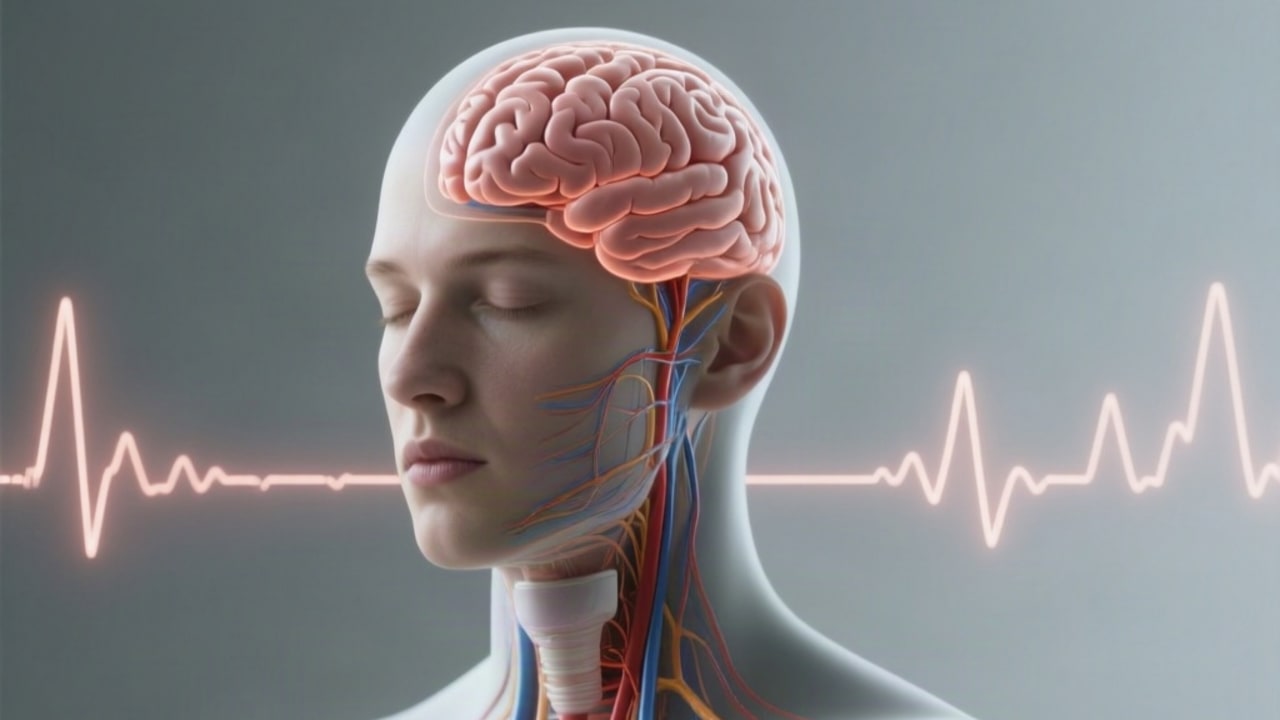
Why slow breathing works (and how to do it)
Slow, nasal breathing with longer exhales is one of the fastest ways to signal safety to your body. Longer exhales tend to increase parasympathetic activity via vagal pathways, while nasal breathing supports nitric oxide production and smoother airflow—both of which may aid relaxation.
A Frontiers in Psychiatry paper describes mechanisms for using paced breathing to shift autonomic balance and improve sleep initiation—think of it as a manual override for a wired system. Many people land around 5–6 breaths per minute (about 4–5 seconds in, 6–8 seconds out) as a “resonant” rhythm that can raise HRV and reduce perceived arousal.
Two simple patterns to try
1) 4–6 Breathing: Inhale through the nose for 4 seconds, exhale for 6–8 seconds. Aim for 3–5 minutes. If you get lightheaded, shorten the counts and keep breaths gentle.
2) Box-to-Downshift: Do two gentle box breaths (inhale 4, hold 4, exhale 4, hold 4) to collect your attention, then switch to longer-exhale 4–7 breathing for 2–3 minutes to “hit the brakes.”
Here’s the surprising part: practicing earlier may help more than only doing it at bedtime. A few short sessions during the day can lower your overall arousal “set point,” so when lights go out, your system is already closer to rest.
Sleep, mood, and the brain—why treating insomnia pays off
Insomnia isn’t just a side effect of stress or mood issues; it can help drive them. An NIH workshop summary reported that delivering cognitive behavioral therapy for insomnia (CBT-I)—to people with insomnia but not current depression—reduced later depression risk across different groups, including younger adults and postpartum women (Cheng 2022; Felder 2022; Irwin 2022).
Think of sleep like a foundation. When the base is cracked, everything upstairs shakes—focus, patience, appetite, motivation. Addressing insomnia early may buffer mood, sharpen cognition, and make other wellness habits easier to keep.
If your nights feel chaotic and your days feel flat, that two-way street is at play. Improving sleep can make therapy, mindfulness, and exercise work better—and vice versa.

“Nervous system resets” like chiropractic—what we actually know
You’ll see claims that spinal adjustments or other “resets” fix insomnia by balancing the nervous system. While some people report sleeping better, rigorous evidence for chiropractic as a primary insomnia treatment is limited. Insomnia appears to involve whole-body autonomic imbalance—altered HRV, higher nighttime heart rate, and other physiologic shifts (Yeungnam Medical Science review, 2023)—so any single-body-region fix is unlikely to be a universal answer.
That said, reducing pain, tension, or anxiety through safe, licensed care can indirectly help sleep for some. If you’re curious, discuss options with your clinician, prioritize proven strategies like CBT-I and breathing, and track your own response.
Why this matters
Because this isn’t about “trying harder” to relax—it’s about giving your biology the right cues. When your sympathetic system is loud, sleep won’t arrive just because you wish it would. It shows up when your body gets evidence you’re safe.
Your body isn’t broken—it’s braked. Breathing is one way to lift that brake so sleep can roll in.
Imagine heading to bed already 30% calmer because you practiced downshifting at lunch and during your commute. That’s what changes the 2 a.m. story.
What you can do today
- Try 5 minutes of 4–6 nasal breathing, twice daily. Research suggests slower, longer exhales may increase vagal tone and support sleep onset.
- Use a mini wind-down ritual: lights dim, screens off, then 3 minutes of 4–7 breathing in bed. If you wake at night, repeat gently without clock-watching.
- Protect your “sleep window”: keep caffeine before 2 p.m., get 10–20 minutes of morning daylight, and keep a consistent wake time—even after a rough night.
- Consider CBT-I (digital or in-person). Evidence indicates it treats insomnia and may reduce future depression risk; ask your clinician or look for reputable apps.
- If snoring, leg urges, or pain disrupts sleep, discuss evaluation for conditions like sleep apnea or restless legs syndrome—treating these may help everything else work better.
You don’t need a perfect routine to start sleeping better. A few steady signals—slower exhales, earlier light, consistent wake-ups—can shift your system over days and weeks. If this helped, share it with the friend who “can’t turn their brain off” at night.
Frequently Asked Questions
Many people start with 3–5 minutes of slow, nasal breathing with longer exhales. Doing brief sessions during the day may help your system arrive at bedtime calmer.
If you feel lightheaded, shorten the counts, breathe more gently, or use 4–6 breathing. Stop if symptoms persist and consider discussing with a clinician, especially if you have respiratory or cardiovascular issues.
Breathing can be a helpful tool but isn’t a replacement for CBT-I or care for conditions like sleep apnea. If insomnia persists, it’s worth speaking with a healthcare professional.