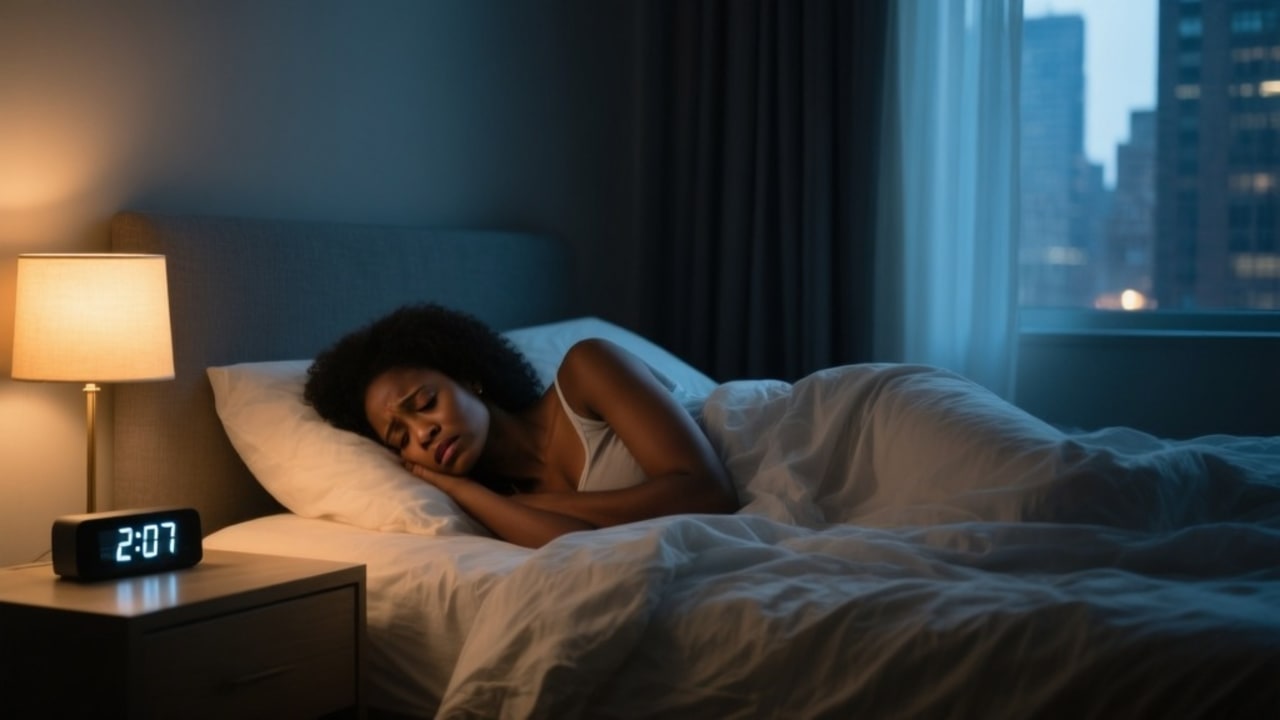
Picture this: it’s 2am, your eyes are gritty, and your brain finally stops scrolling through tomorrow’s to-dos—yet your chest is buzzing like you just had an espresso. You’re exhausted, but your body won’t power down.
Most people blame “stress” or a bad day. But here’s the thing: for many, insomnia isn’t only about thoughts. It’s a full-body state called hyperarousal—your nervous system stuck slightly in “go” when you need “slow.”
Understanding that wiring—and how to nudge it—can change your nights. Not with magic fixes, but with small, precise tweaks that train your brain and body to sync again.
- Insomnia often involves hyperarousal—higher heart rate, alert brain rhythms, and stress hormones at the wrong time.
- Your heart-rate variability (HRV) and interoception (body-signal awareness) may shape how “wired” you feel at night.
- CBT-I retrains the sleep drive and your brain’s bed associations; it’s the gold-standard treatment.
- Counterintuitive: Trying harder to sleep can keep you awake; reduce effort and rebuild sleep hunger.
- Consistent wake time, stimulus control, light timing, and brief worry windows may help downshift your system.
The Hyperarousal Trap: Why You Feel Tired and Wired
Think of your nervous system like a hybrid car. By day, the gas engine (sympathetic “go”) gets you moving. By night, the electric motor (parasympathetic “rest”) should glide you quietly to sleep. With insomnia, that engine idles too high at bedtime.
Sleep experts at Harvard describe insomnia as, for many, a state of “hyperarousal,” where people show a faster heart rate, higher evening cortisol, and more fast brain activity near sleep onset—though not everyone with insomnia shows the same pattern (Harvard Sleep Medicine, Sleep and Health Education Program).
What’s surprising? You can feel wired even when your thoughts are quiet. The body leads; the mind follows. That mismatch explains why “just relax” rarely works at 2am.

Your Heart’s Clues: HRV and Interoception
Your heart isn’t a metronome—it subtly speeds and slows with each breath. That variability (HRV) is one window into your stress–recovery balance. Lower, more rigid HRV often reflects sympathetic tilt; flexible HRV suggests better parasympathetic tone.
A review on insomnia as a systemic condition links emotional dysregulation and poor sleep with altered HRV, pointing to an autonomic imbalance between “go” and “rest.” It also highlights interoception—how you sense internal signals like heartbeat or temperature—as a powerful player in insomnia (Yeungnam University Medical Science review on insomnia as systemic disease).
Relatable picture: You know that feeling when a ping from your phone spikes your pulse? With insomnia, your body sometimes treats the pillow like a “ping.” Improving the way you notice—and respond to—body cues may help lower that false alarm.
How Insomnia Learns Itself: The 3P Model
Insomnia rarely appears out of nowhere. Spielman’s 3P model describes three forces: predisposing traits (like high sensitivity or a family history), a precipitating stressor (injury, loss, big deadline), and perpetuating habits (sleeping in, long naps, clock-watching) that keep the problem going.
A 2019 review on behavioral strategies for insomnia explains how elevated central nervous system activity—driven by pain, stress, or anxiety—can override normal sleep regulation, especially when perpetuating habits build in (National Institutes of Health/PMC: “Behavioral Strategies, Including Exercise, for Addressing Insomnia”).
Analogy time: It’s like walking past a “Wet Paint” sign. The more you test it, the messier it gets. The more you check the clock or chase sleep, the stickier insomnia becomes.

Rewiring Sleep With CBT-I: Small Tweaks, Real Payoffs
Cognitive Behavioral Therapy for Insomnia (CBT-I) helps realign the two big systems that run sleep: circadian timing and the “sleep drive” (your natural sleep hunger). Stanford sleep researchers call CBT-I the gold-standard—teaching behavioral shifts to rebuild sleep drive and reduce arousal in bed (Stanford Medicine Insights, 2025).
Core pieces include a consistent wake time, limiting long naps, and “stimulus control” (bed only for sleep and sex; if you’re awake ~15–20 minutes, get up and do something calm in low light). Many programs also use time-in-bed limits temporarily to restore sleep hunger—counterintuitive, but effective for some when guided.
CBT-I doesn’t dismiss stress. It just shifts your leverage from “think calmer” to “teach your body to power down.” That said, it’s worth discussing any persistent insomnia with a clinician, especially if you have other mental or physical health conditions or take medications that affect sleep.
Why This Matters
This isn’t about willpower. It’s about wiring—and wiring can be trained. When you stop treating bedtime like a performance and start treating it like a pattern, your nervous system gets the memo.
“The goal isn’t to force sleep—it’s to make wakefulness at night a little more boring and a lot less rewarding.”
What does that actually mean for your Monday morning? It means choosing a steady wake time, getting bright light early, and letting your sleep drive rebuild—so bedtime stops feeling like a test and starts feeling like gravity.
What You Can Do Today
- Pick a consistent wake time (even after a rough night). This may help reset circadian cues and rebuild sleep drive over days to weeks.
- Use stimulus control. If you’re awake ~15–20 minutes, get out of bed and do something low-stimulation (dim light, paper book). Return only when sleepy.
- Try a 10-minute “worry window” in the early evening. Jot down tomorrow’s tasks and next steps. Research suggests this may reduce nighttime rumination.
- Guard your wind-down. The last hour before bed, shift to cooler temperature, softer light, and quiet activities. This may support parasympathetic tone.
- Mind naps and caffeine. Short early-afternoon naps (if needed) and avoiding caffeine within 8–10 hours of bedtime may help restore sleep hunger.
- Track gently, not obsessively. If you use HRV or sleep trackers, glance weekly trends rather than nightly scores to avoid performance anxiety.
You don’t have to “fix” sleep in a night. Small, steady inputs teach your system to trust bedtime again. If insomnia sticks around, a clinician or a certified CBT-I provider can tailor strategies to your health, schedule, and goals.
Frequently Asked Questions
You can’t diagnose it at home, but clues include feeling physically “amped” at bedtime—racing heart, warm body, alert mind. A clinician can assess patterns, medications, and health factors and may suggest CBT-I strategies that reduce arousal.
Many programs run 4–8 weeks. Some people notice improvements in 1–2 weeks, while others need longer. Temporary setbacks are common—especially when limiting time in bed—so guidance from a trained provider can help.
Some people find gentle options like magnesium glycinate or L-theanine calming, but evidence varies and they can interact with medications. It’s best to discuss supplements with your doctor and focus first on CBT-I fundamentals.