Most people blame willpower when the real cause is running on four hours and raw nerves. You swear you’ll “be good” tomorrow—then the 3 pm cravings hit like a freight train.
Here’s the thing: short sleep tilts your hormones toward hunger and fat storage. In a randomized trial, adults who extended sleep by about an hour ate roughly 270 fewer calories per day without trying (JAMA Internal Medicine, 2022). Less grind, more rest—and your biology gets easier to work with.
If weight loss feels stuck, it might not be your plan. It might be your bedtime.
- Cortisol rises with short sleep, which can increase appetite and push the body toward storing fat.
- Ghrelin (hunger) goes up and leptin (satiety) goes down after sleep loss—cravings feel “louder.”
- Late nights misalign your body clock, nudging blood sugar higher and making nighttime snacking more fattening.
- Counterintuitive: Getting more sleep may lower calorie intake without extra willpower.
- Aim for a consistent 7–9 hours—but even 15–30 minutes more can help.
Cortisol: When Stress and Sleep Collide
Picture this: you grind through a late-night deadline, crash at 1 am, and pop up at 6. Your body treats the next morning like an emergency. That’s cortisol—your primary stress hormone—stepping on the gas.
A 2022 review in Frontiers in Behavioral Neuroscience reported that acute sleep deprivation is linked to elevated cortisol in healthy adults, alongside changes in mood, inflammation, and cognition. Translation: after short sleep, your stress chemistry runs hotter, which can stimulate appetite and shift fat storage toward the belly.
The rhythm problem
Cortisol should peak in the morning and coast down by evening. Chronic late nights can flatten or shift that curve—so you feel wired at bedtime and sluggish at sunrise. That “tired but wired” state makes it easier to snack late and harder to fall asleep the next night. It’s a loop.
Hunger Hormones Hijacked: Ghrelin and Leptin
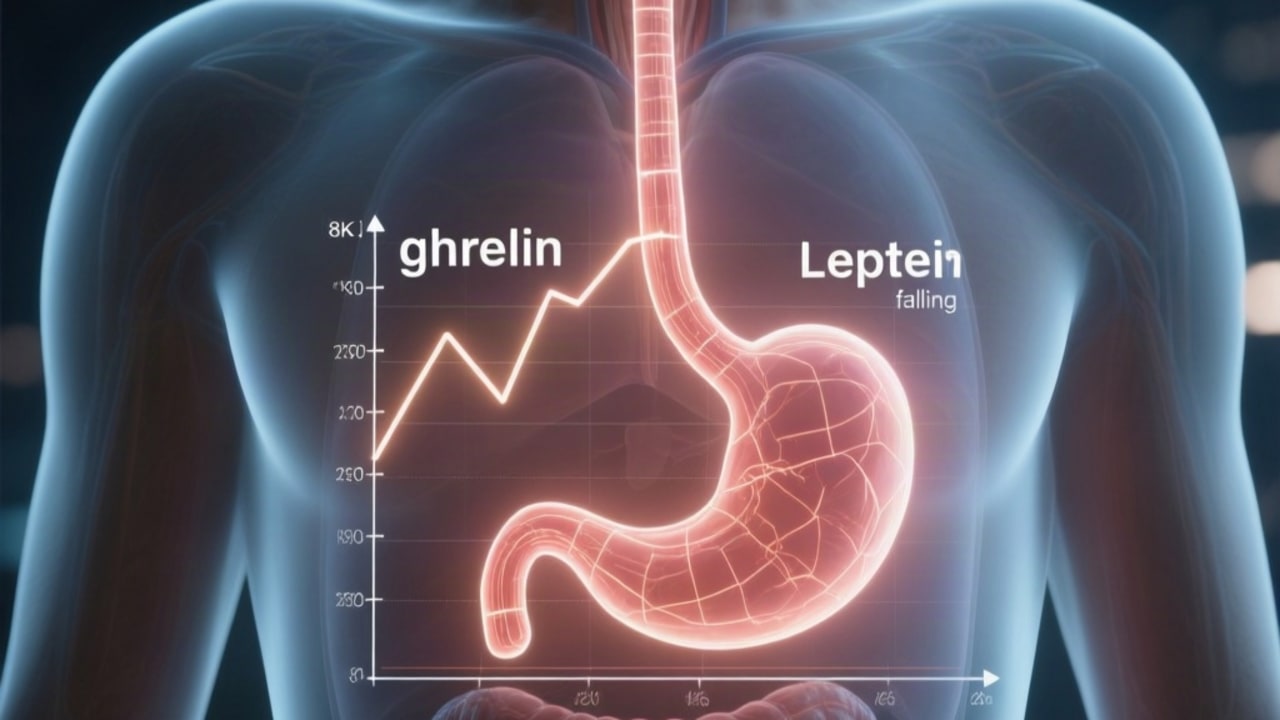
You know that feeling when your lunch salad suddenly looks like a joke? Short sleep can crank up ghrelin (which says “eat now”) and turn down leptin (which says “you’re full”).
Classic experiments in humans found higher ghrelin and lower leptin after restricted sleep (Spiegel et al., 2004), and a 2021 systematic review reported leptin tends to drop with acute stressors like sleep loss. Put together, your brain hears hunger more loudly and satiety more faintly—hello, office donuts.
Why cravings feel “louder”
After poor sleep, your reward pathways also get more reactive to calorie-dense foods. In practice, that means a croissant feels emotionally “worth it” in a way broccoli never will at 5 hours of sleep. Biology stacks the deck.
Metabolism and Timing: Late Nights Nudge Fat Storage
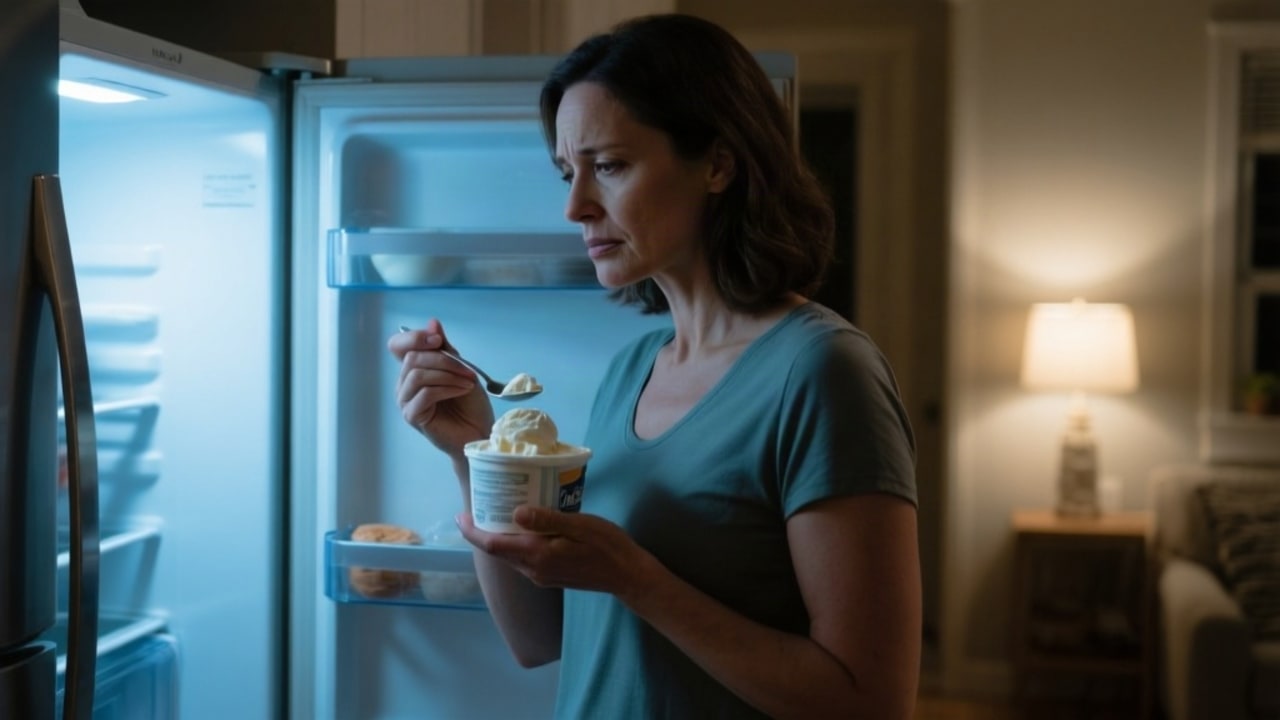
Most people have been there—late-night fridge light, spoon in the ice cream, promising just one bite. The timing matters. When sleep is short or your schedule drifts late, your internal clock can misalign with your eating window.
In a controlled study, people sleeping less ate more and gained weight within days (PNAS, 2013). Other lab work has shown that circadian disruption and sleep restriction reduce insulin sensitivity, making it easier to store calories as fat and harder to manage blood sugar. It’s not that your metabolism “breaks”—it’s that the levers tilt against you at night.
Late eaters burn less from the same meal
Because of circadian biology, identical meals may lead to higher glucose and lower energy burn at night compared with daytime. That means late-night snacking can carry a heavier metabolic “receipt.”

How Much Sleep Do You Need—Really?
Most adults feel and function best at 7–9 hours. There’s a wide normal, but long-term short sleep is consistently linked with higher body weight and metabolic risk.
In 2022, the American Heart Association elevated sleep to one of its “Essential 8” for cardiovascular health, underscoring its role in weight, blood sugar, and blood pressure. And that JAMA Internal Medicine trial? Extending sleep by about an hour led participants to spontaneously eat fewer calories—no diet rules required.
Why This Matters
But what does that actually mean for your Monday morning? It means that white-knuckling your diet while skipping sleep is like running uphill with a backpack of rocks. When you get even a bit more rest, hunger calms down, stress softens, and the path flattens.
“Sleep isn’t a reward you earn after being ‘good’—it’s the lever that makes ‘good’ easier.”
No guilt. No moralizing. Just one powerful variable you can nudge to make your health plan more forgiving—and more sustainable.
What You Can Do Today
- Pick a realistic sleep window (say, 11 pm–7 am) and move bedtime earlier by 15–30 minutes this week. A consistent window may help steady cortisol and appetite.
- Get morning light within an hour of waking (2–10 minutes outdoors if possible). Bright light anchors your clock, which may improve sleep drive at night.
- Front-load protein and fiber at your first meal (eggs + berries, tofu + oats). A steadier glucose response may help quiet mid-morning cravings.
- Set a caffeine curfew 8–10 hours before bed. Less late caffeine may reduce “tired but wired” nights.
- Close the kitchen earlier—aim to finish dinner 2–3 hours before bed. An earlier eating window may support glucose control and night sleep.
You don’t need a perfect routine—just a kinder one. Share this with the friend who’s crushing workouts but forgetting bedtime, or save it for the next time your cravings try to talk you out of an early night.
Frequently Asked Questions
Sleeping in may help you feel better short term, but it doesn’t fully reverse the hormonal shifts from chronic short sleep. Aim for a steadier schedule and talk with your clinician if fatigue or weight changes persist.
Research suggests even one night of short sleep can nudge cortisol higher and increase next‑day hunger signals. The effect tends to build with repeated nights, which is why consistency helps.
Some people find low‑dose melatonin helpful for sleep timing, and stress‑support herbs may help certain individuals, but responses vary. It’s wise to discuss options, dosing, and interactions with a healthcare professional.