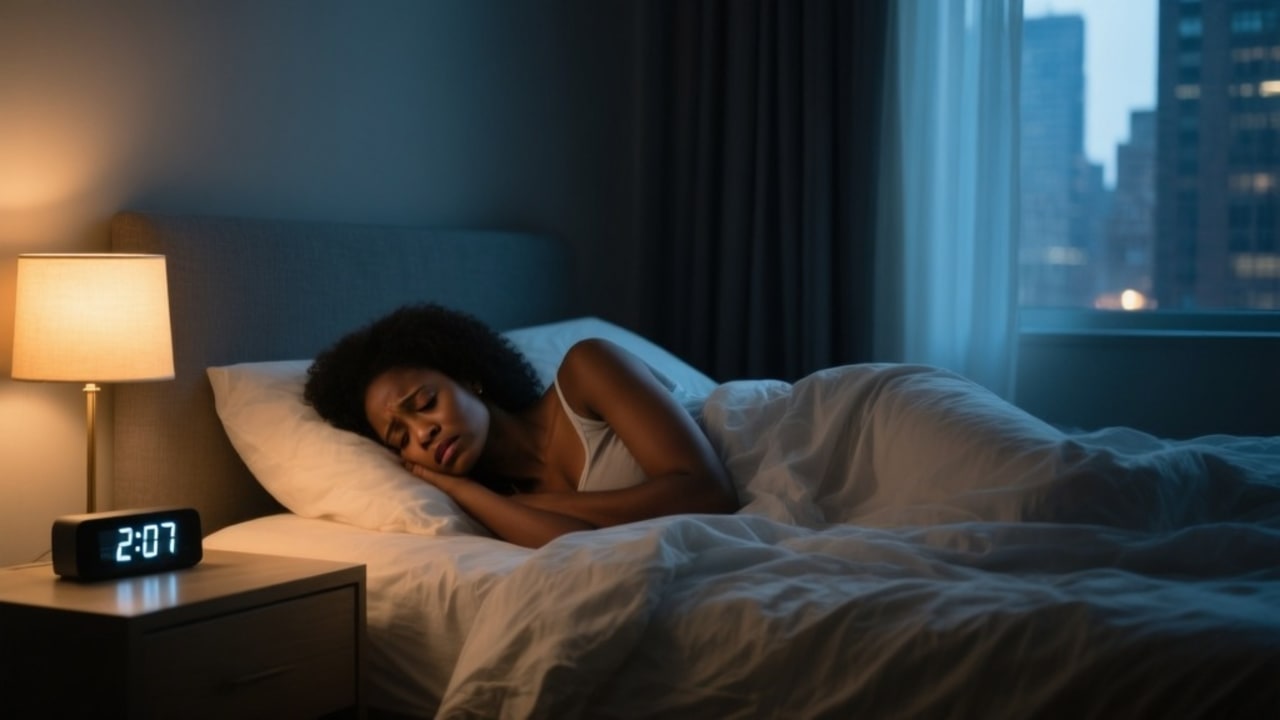
Most people blame “bad sleep hygiene” for another restless night. Here’s the thing: the real culprit is often a revved-up nervous system that refuses to downshift—no matter how perfect your blackout shades are.
Picture this: it’s 2 a.m., your body feels wired, your mind’s rehearsing tomorrow’s to‑do list, and even your heartbeat sounds loud. That wired-but-tired state has a name—hyperarousal—and it can override your sleep drive.
The good news? You can nudge that system toward calm with a few targeted habits that speak the same language as your brain and body.
- Hyperarousal (physiologic, cognitive, emotional) can keep you awake even when you’re exhausted.
- Caffeine within 6 hours of bed and late-night alcohol can fragment sleep and reduce quality.
- Consistent routines, exercise earlier in the day, and light exposure help your sleep system.
- Counterintuitive: Alcohol can make you sleepy—then disrupt the second half of the night.
- If snoring, gasping, or leg urges wake you, rule out other sleep disorders.
Meet Hyperarousal: The “Stuck Awake” Setting
When your nervous system stays “on,” sleep has to fight for a turn. Hyperarousal can be physiologic (stress hormones and a revved sympathetic system), cognitive (the racing-thoughts loop), or emotional (anxiety at lights‑out). It’s basically your brain struggling to disengage from the environment.
A report on the pathophysiology of insomnia conceptualizes hyperarousal just this way and notes it can show up as elevated cortisol, altered heart rate variability, EEG patterns, or even that familiar feeling—“I can’t turn off my mind.” It also describes sympathetic activation markers like shortened pre‑ejection period and a phenomenon where some people underestimate how much they actually sleep because they’re switching rapidly between sleep and wake states (NIH/PMC: Pathophysiology of Insomnia).
Think of it like trying to idle a car with your foot still feathering the gas. The engine’s hum never quite fades, so the system can’t coast into sleep.

Triggers You Can Tame: The 3P Model in Real Life
Most people have been there—stressful week, a minor injury, a breakup—and suddenly sleep unravels. Spielman’s “3P” model explains it well: predisposing factors (like a sensitive stress system), a precipitating event (pain, trauma, big stress), and perpetuating habits (late caffeine, clock-watching, weekend sleep-ins) that keep insomnia going.
A 2019 review on behavioral strategies for insomnia notes that stress and worry can activate the hypothalamic–pituitary–adrenal (HPA) axis, making sleep harder. It also highlights practical levers: caffeine can disrupt sleep if taken within 6 hours of bedtime; nicotine stimulates the nervous system; and while alcohol may speed sleep onset, it increases awakenings and alters sleep stages later in the night (NIH/PMC: Behavioral Strategies, Including Exercise, for Addressing Insomnia).
Here’s the real kicker: a few small timing tweaks—moving coffee earlier, building a wind‑down routine, exercising in the daytime—can reduce that background “hum,” so your sleep drive finally gets the green light.
Why Sleepless Nights Mess With Your Brain
You know that foggy, thin‑patience feeling after poor sleep? Chronic insomnia can ripple through attention, mood, and reaction time. Consumer health reporting summarizes how the central nervous system relies on sleep to process information; when sleep is short or fragmented, concentration slips, coordination slows, and microsleeps can creep in—dangerous if you’re driving (Healthline: Sleep Deprived? Effects on the Body).
Neuroimaging work adds more context: individuals with insomnia have shown reduced gray matter volume in regions like the ventromedial prefrontal cortex and precuneus—areas tied to emotion regulation and self‑referential thinking (NIH/PMC: Pathophysiology of Insomnia). That doesn’t mean damage you can’t recover from—but it does hint at why nights of hyperarousal may spill into the next day’s mood and focus.
Put simply: a wired night steals bandwidth from tomorrow’s brain.

When It’s Not “Just” Insomnia
Sometimes the obstacle isn’t only hyperarousal. Sleep apnea can fragment sleep with brief breathing pauses; restless legs syndrome (RLS) can spark an irresistible urge to move at night. Both keep you out of deep, restorative stages. Neurology clinics commonly flag these conditions as sleep disrupters that can impact memory, mood, and daytime functioning (Neurology Center for Epilepsy & Seizures).
Clues worth discussing with a clinician: loud snoring, gasping or choking at night, waking with a dry mouth or headache, or recurring leg sensations that ease only when you move. The fix is different for each condition, and getting the right diagnosis may help your sleep rebound faster.
Why This Matters
But what does that actually mean for your Monday morning? If your nervous system stays hot after midnight, your patience runs thin with coworkers, workouts feel heavier, and small decisions feel oddly hard. Sleep isn’t just “nice to have”—it’s your brain’s nightly system update.
“You’re not ‘bad at sleeping.’ Your nervous system is doing its job a little too well—and you can teach it to stand down.”
The goal isn’t perfection. It’s nudging the system toward calm often enough that your natural sleep drive can do what it’s designed to do.
What You Can Do Today
- Time your stimulants: If you aim to sleep at 10 p.m., consider making your last caffeine by 2–3 p.m. Research suggests caffeine within 6 hours of bed may disrupt sleep. Nicotine is stimulating too—reducing evening use may help.
- Rethink the nightcap: Alcohol may help you doze, then fragment sleep later. Many people feel better with a 3–4 hour alcohol buffer before bed and a glass of water alongside.
- Build a wind‑down “bridge” (45–60 min): Dim lights, lower the temperature, and try an easy breath pattern that extends your exhale (for example, in for 4, out for 6–8). Gentle stretches or a warm shower may help signal “off‑duty.”
- Give your thoughts a container: Schedule 10 minutes earlier in the evening to list worries and next steps. At bedtime, if thoughts pop up, remind yourself they have a slot tomorrow. This may reduce cognitive hyperarousal.
- Anchor your body clock: Get morning daylight, move your body during the day (even 20–30 minutes), and keep a consistent sleep/wake window—including weekends as much as real life allows.
If you snore loudly, wake gasping, or have persistent leg urges at night, it’s worth discussing with a healthcare professional. Treating an underlying sleep disorder can make every other habit work better.
You don’t have to muscle your way to sleep. Small, steady nudges tell your nervous system it’s safe to stand down—and that’s when better nights start stacking up. If this helped, share it with the friend who’s always “tired but wired.”
Frequently Asked Questions
Research cited in a 2019 review suggests caffeine within 6 hours of bedtime can disrupt sleep. Many people do better cutting caffeine by 2–3 p.m., but you can experiment to find your cutoff.
Alcohol may make you feel sleepy, but it often fragments the second half of the night and reduces sleep quality. A 3–4 hour buffer before bed may help if you choose to drink.
Insomnia is trouble falling or staying asleep despite enough opportunity. Sleep apnea often includes loud snoring, gasping, or morning headaches. If you notice these signs, discuss a sleep evaluation with a clinician.