
Picture this: it’s midnight and you’re exhausted, yet your brain is doing cartwheels. You finally crash at 2 a.m., then wake at 6 feeling like you ran a marathon in your sleep. Coffee helps—until it doesn’t. By afternoon, your patience and blood sugar both tank.
Most people blame willpower. Or a “bad week.” But the real driver might be hormonal: cortisol, your body’s primary stress signal. When it’s out of rhythm, you can feel wired-but-tired, snacky, anxious, and somehow always behind—no matter how hard you push.
Here’s what that actually looks like, why it happens, and practical steps that may bring your system back to steady.
- High cortisol has a pattern: “wired at night, heavy by day,” belly fat, mood swings, and sleep that never feels restorative.
- Counterintuitive but true: A healthy morning cortisol spike is good—what hurts is a spike that lingers into the evening.
- Daily habits move the needle: morning light, steady meals, caffeine curfews, and smart training may help recalibrate.
- Testing exists: morning serum cortisol, late-night salivary cortisol, or 24-hour urinary free cortisol—discuss with your clinician.
- See a pro: if symptoms are severe (rapid weight changes, high blood pressure, fainting, or new psychiatric symptoms), seek care.
Your cortisol rhythm: the spark you need, the dimmer you want
Think of cortisol like a smart dimmer switch. In a healthy rhythm, it rises in the morning to get you alert, then eases down through the day so your brain can power down at night. When that switch jams, you feel tired when you need energy and wired when you want calm.
Most people have been there—staring at the ceiling at 1 a.m., then slogging through a 9 a.m. meeting. A 2001 paper in the Journal of Clinical Endocrinology & Metabolism found that people with chronic insomnia showed activation of the stress axis and higher evening cortisol, the exact “tired-but-wired” profile that wrecks sleep quality (Vgontzas et al., 2001).
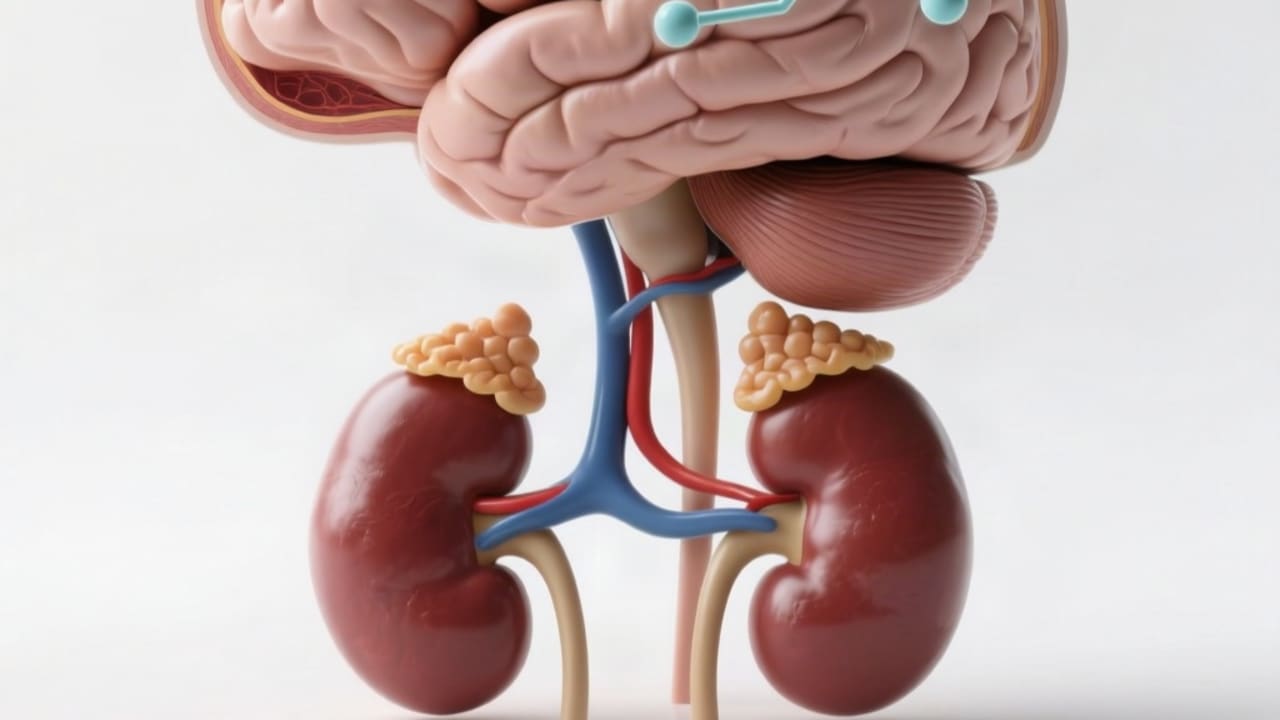
7 signs your cortisol may be running high
Cortisol isn’t the villain—you need it to think, move, and adapt. But when levels stay elevated or mistimed, your body leaves clues. If several of these feel familiar, it’s worth a conversation with your clinician.
- “Wired but tired” nights: you can’t downshift even when exhausted.
- Belly-first weight gain: extra padding around the middle despite no big diet changes.
- Mood swings and irritability: small things feel big; patience is thin.
- Blood pressure creeping up: higher readings during routine checks.
- Frequent colds or slow healing: you catch what’s going around and it lingers.
- Brain fog or memory blips: names, tasks, and words slip when you need them.
- Cycle changes (for women): irregular periods or worsened PMS alongside stress flare-ups.
Here’s the thing: central fat is especially cortisol-sensitive. A 2000 study in Psychosomatic Medicine linked higher stress responses to greater abdominal fat, even in otherwise healthy women (Epel et al., 2000). That midsection “creep” isn’t just aesthetic—it can reflect how your stress system is operating.
What’s pushing cortisol up (and what probably isn’t)
Your body reads many modern habits as mini-emergencies: blue light at 11 p.m., inbox avalanches, back-to-back HIIT with too little recovery, or skipping meals and pounding coffee. Each nudge tells your adrenal glands, “Stay on.”
Picture your day like a playlist. If it’s all high-tempo tracks—late nights, fasted mornings, heavy training—your stress axis never gets the slow song. Research suggests even partial sleep loss can bump evening cortisol the next day, making wind-down harder (Leproult et al., Journal of Clinical Endocrinology & Metabolism, 1997).
What’s surprising: “doing more” healthy things isn’t always better. Overtraining without fuel, cutting carbs too aggressively, or stacking stimulants may keep cortisol elevated. On the flip side, you don’t have to quit your job or meditate for an hour to see benefits—small, repeatable cues can help your nervous system stand down.

Testing and when to talk to a clinician
Self-checks can be useful, but only labs can confirm cortisol issues. Common options include: an 8 a.m. serum cortisol (to assess your morning peak), late-night salivary cortisol (to check if it’s staying high), and 24-hour urinary free cortisol (your daily total). Your doctor may also consider a 1‑mg overnight dexamethasone suppression test in certain cases.
For red-flag symptoms—rapid unexplained weight changes, purple stretch marks, muscle weakness, or sustained hypertension—see a clinician promptly. The Endocrine Society’s clinical guideline outlines appropriate first-line tests for suspected cortisol excess (Nieman et al., Journal of Clinical Endocrinology & Metabolism, 2008). Medication reviews matter too; steroids (like prednisone), some antidepressants, and hormonal therapies can influence readings.
Why this matters
This isn’t just about stress at work—it’s about your mornings feeling clear, your workouts feeling good again, and your relationships not absorbing the fallout of burnout. High cortisol can make you feel like someone else is steering your day. Bringing it back into rhythm helps you get the wheel again.
When cortisol runs the show, everything feels urgent. When it’s in rhythm, you remember you get to choose the pace.
What you can do today
- Catch the morning light: 5–10 minutes of outdoor daylight within an hour of waking may help reinforce a healthy cortisol peak and melatonin drop later.
- Front-load your fuel: a protein- and fiber-rich breakfast (think eggs + berries + oats or tofu + greens + quinoa) may steady blood sugar and blunt stress-driven snacking.
- Caffeine curfew: try keeping caffeine before noon; some people sleep better and feel less “tired-but-wired” by evening.
- Train smart, not max: alternate intense days with walks, mobility, or easy rides; over 2–3 weeks, see if energy and sleep improve.
- Bookend your day: a 10-minute evening wind-down—dim lights, stretch, box breathing (4-4-4-4)—may cue your nervous system to power down.
- Talk to your clinician: if symptoms persist, discuss testing and medications that may influence cortisol; personalized guidance beats guesswork.
You don’t need a total life overhaul to feel better—just a few consistent signals that tell your body it’s safe to relax. If this resonated, share it with the friend who’s “fine” but always buzzing. Your pace can be steady again.
References (selected)
- Vgontzas AN et al. Chronic insomnia is associated with activation of the hypothalamic–pituitary–adrenal axis. Journal of Clinical Endocrinology & Metabolism. 2001.
- Epel ES et al. Stress and body shape: stress-response and abdominal fat. Psychosomatic Medicine. 2000.
- Leproult R, Copinschi G, Buxton O, Van Cauter E. Sleep loss results in an elevation of cortisol levels the next evening. Journal of Clinical Endocrinology & Metabolism. 1997.
- Nieman LK et al. The diagnosis of Cushing’s syndrome: An Endocrine Society Clinical Practice Guideline. Journal of Clinical Endocrinology & Metabolism. 2008.
Frequently Asked Questions
You can’t confirm it without labs, but patterns help: wired-at-night sleep, belly-first weight gain, irritability, and slow recovery from illness. If several line up, discuss testing options with your clinician.
Many clinicians start with an 8 a.m. serum cortisol to assess your morning peak and a late-night salivary cortisol to see if levels stay high. The right test depends on your symptoms and medications, so get personalized advice.
There’s no instant fix, but steady meals with protein and fiber, limiting caffeine after noon, and staying hydrated may help over days to weeks. Pair nutrition with sleep and stress skills for a bigger effect.