Most people blame stress or “being a night owl” when the real reason sleep won’t stick is simpler: your body clock is reading the wrong signals. It’s not broken—it’s just following the cues you give it every day.
Picture this: you’re exhausted at 3pm, wired at 11, scrolling at midnight, and wide-awake again at 3am. That pattern isn’t random. It’s your circadian rhythm—your internal 24-hour timer—responding to light, temperature, meals, and movement. The good news? Those levers are adjustable, and research from 2025–2026 shows you can shift them quickly.
Here’s what nobody tells you: you don’t need more willpower. You need the right timing windows. Anchor those, and your sleep often follows.
- Get outdoor light within 30 minutes of waking (10–20 minutes; more if cloudy) to advance your body clock.
- Keep a fixed wake time (even on weekends) and aim for a 60–90 minute wind-down before bed.
- Shift your last meal earlier—finish 3 hours before bedtime; front-load protein at breakfast.
- Time workouts: earlier or late afternoon may help sleep; intense sessions late at night can delay it.
- Counterintuitive: A warm shower or bath 1–2 hours before bed helps you cool faster and fall asleep sooner.
Light: Your Master Reset Button
You know that feeling when sunlight hits your face on a weekend hike and your whole body “wakes up”? That’s the signal your brain’s clock—the suprachiasmatic nucleus—craves every morning. Morning light tells your body it’s daytime, shifts melatonin earlier that night, and steadies energy.
Aim for outdoor light within 30 minutes of waking, eyes open (no sunglasses if safe), for 10–20 minutes; double that if it’s overcast. Indoor bulbs rarely match the intensity your circadian system needs. After sunset, do the opposite: dim overheads, use warmer lamps, and push screens away from your face.
A 2025 study in Nature Communications reported that consistent morning outdoor light—about 30–60 minutes—advanced circadian phase within a week and improved sleep timing in office workers. And a 2026 analysis in Sleep linked brighter evening light to later bedtimes, especially in people who scroll in bed. The takeaway: light early, dim late.

Temperature: Steer Your Sleep Drive
Your internal temperature naturally drops at night. Helping your body cool—rather than forcing your room to “arctic”—can make falling asleep easier. Here’s the twist: warming up earlier helps you cool down faster later.
Think of it like a gentle glide path: a warm shower or bath 1–2 hours before bed, a slightly cooler bedroom (around 60–67°F / 15–19°C), and breathable bedding. If you wake at 3am hot, kick a leg out, flip the pillow, or nudge your thermostat down a touch.
A 2025 review in Sleep Medicine Reviews found that passive body warming 1–2 hours pre-bed reduced sleep latency by roughly 5–15 minutes and improved perceived sleep quality. A 2026 paper in Current Biology highlighted the role of the nighttime “temperature minimum” (Tmin)—lining up your bedtime shortly before your natural Tmin may help you fall asleep and stay asleep more consistently.
Meal & Movement Timing: Your Clock Listens to Your Fork and Feet
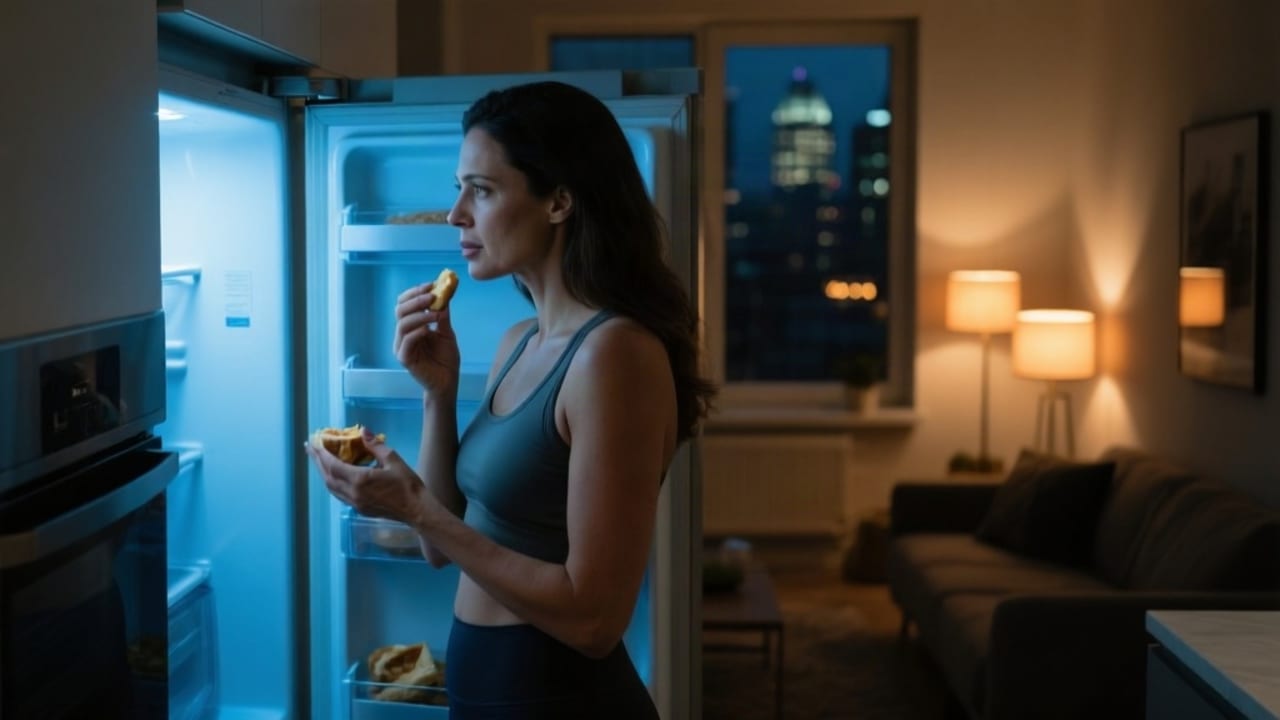
Most people have been there—late dinner, then lying awake feeling “tired but wired.” Your metabolic clocks respond strongly to when you eat. Finishing dinner earlier helps your brain’s clock and your gut clocks stay in sync.
Try this: shift breakfast earlier, make it protein-forward, and finish your last meal about 3 hours before bed. Add movement earlier in the day or late afternoon. If you love evening workouts, keep high-intensity sets earlier and switch to lower intensity after 7–8pm when possible.
A 2025 trial reported in Cell Reports Medicine suggested that moving the eating window earlier improved sleep efficiency and next-day energy in late eaters within two weeks. Meanwhile, a 2026 analysis in Sleep associated vigorous workouts after 8pm with later sleep onset in some adults, while afternoon sessions were neutral or beneficial for sleep timing. Your response may vary, but the pattern is clear: timing matters as much as type.

Your Chronotype Is Personal—But Flexible
Some of us are true night owls or early larks, which has a genetic component. That said, most people can shift 30–90 minutes with consistent cues. The trick is to change one variable at a time and keep it steady for a week.
Picture this: you stick to a fixed wake time, get morning light, move your last meal earlier, and protect a 60–90 minute wind-down. Even if bedtime doesn’t budge on night one, after a few days your internal clock usually follows.
A 2026 study in Sleep Health linked “social jet lag” (shifting your sleep schedule more than an hour on weekends) with lower mood and higher fatigue in working-age adults. And a 2025 genetics paper noted known clock gene variants shape chronotype, but behavioral cues—light, meals, and movement—still meaningfully shift sleep timing for many people. Translation: your baseline is real, and you still have levers.
Why This Matters
Better sleep isn’t just a nicer morning. It’s steadier focus at 2pm, fewer late-night cravings, and workouts that actually feel doable. When your clock is aligned, your day has fewer speed bumps—and your evenings feel less like a battle.
“Anchor your mornings, and your nights take care of themselves.”
But what does that actually mean for your Monday morning? It means you set your alarm for the same time all week, step outside while the coffee brews, and put your phone down an hour before bed. Small, boring moves—done on time—beat big, heroic efforts every time.
What You Can Do Today
- Get morning light: Step outside within 30 minutes of waking for 10–20 minutes; longer if it’s cloudy. If that’s impossible, sit by the brightest window you have.
- Fix your wake time: Pick one wake time and hold it for 7 days—yes, even Saturday. This may help shift melatonin earlier.
- Move your meals: Eat breakfast within 1–2 hours of waking, keep dinner lighter, and finish at least 3 hours before bed. Research suggests earlier eating windows support sleep timing.
- Time your training: Try strength or intervals earlier or mid-afternoon. If evenings are your only option, go moderate and wrap by 8pm when possible.
- Warm then cool: Take a warm shower or bath 1–2 hours before bed, keep the bedroom cool, and use breathable bedding. This may reduce sleep-onset time.
You don’t have to overhaul your life—just your timing. Try one lever this week, notice the shift, then stack a second. If sleep issues persist or you snore loudly, gasp, or feel excessively sleepy, it’s worth discussing with a clinician to rule out conditions like sleep apnea. Share this with a friend who’s “tried everything”—and start your reset together.
Frequently Asked Questions
Many people notice earlier sleepiness within 3–7 days when they anchor morning light and a fixed wake time. Larger shifts can take 2–3 weeks. If your schedule is highly irregular, change one variable at a time.
Blue-light filters may help a little, but brightness and engagement also matter. Dimming the screen, increasing distance, switching to audio-only, and setting a tech cutoff 60–90 minutes before bed are more effective together.
Not at all. Many people tolerate evening exercise if intensity is moderate and it ends by 8pm. Pair it with strong morning light and an earlier dinner to counteract delays to your sleep timing.