
Most people blame stress when their sleep unravels. But here’s the thing: for a surprising number of us, the real culprit is timing—your body clock is out of sync with your life.
Up to 5% of adults will face a clinically significant circadian rhythm disorder at some point. That’s not just a few rough nights—it’s a pattern that can ripple through mood, appetite, workouts, and even heart health.
Picture this: it’s 11:30 p.m., you’re tired but not sleepy. You scroll, snack, and tell yourself you’ll “fix it this weekend.” Then Monday hits like jet lag without a flight. If that feels familiar, keep reading.
- Morning light is medicine: 10–20 minutes of outdoor light soon after waking may help shift your clock earlier.
- Timing beats quantity: Consistent sleep and meal times often matter as much as total sleep hours for feeling human.
- Late eating pushes your clock: Moving bigger meals earlier may support better sleep timing.
- Evening dimming works: Lower light and screen brightness 2–3 hours before bed to reduce “nighttime daytime.”
- Counterintuitive: A short morning walk can impact sleep timing more than an extra hour in bed.
Your Clock Isn’t Just About Sleep—It’s About Health
Your circadian rhythm is the body’s 24-hour timing system that coordinates sleep, hormones, metabolism, and brain function. When it’s misaligned—because of late light, mistimed meals, or irregular schedules—risk adds up.
A 2025 American Heart Association report linked circadian disruption to higher risks of cardiovascular disease, Type 2 diabetes, high blood pressure, and obesity, with light exposure, mistimed sleep, meals, and exercise named as key drivers. That’s not abstract—it explains why late nights and late dinners can leave your heart and metabolism feeling out of rhythm the next day.
On the brain side, a 2026 Johns Hopkins–National Institute on Aging study found that adults with more fragmented day–night activity patterns had faster shrinkage in certain brain regions over time. Translation: erratic rhythms may be a long-game issue for cognitive health, not just today’s foggy morning.
Most people have been there—one late night turns into three, and your “weekday self” and “weekend self” live in different time zones. That social jet lag is exactly the kind of misalignment these studies are warning about.

Why Your Body Clock Drifts Later (Even If You’re Tired)
Think of your clock like a sourdough starter—it responds to regular “feeds.” Light, meals, movement, and social cues are the feeds. Change their timing, and the starter (your clock) changes, too.
Light is the strongest signal. Bright morning light pulls your clock earlier; bright late-evening light pushes it later. The American Heart Association’s 2025 statement highlighted light timing and intensity—along with sleep, meals, and exercise timing—as core levers of circadian health.
Meals matter more than most people think. Dr. Richard Bogan (Bogan Sleep Consultants, 2026) notes that irregular schedules, travel, shift work, and screen time can throw the system off—meals included. Eating big, late dinners is like telling your body it’s still daytime.
Mental health and medical conditions can also nudge timing off course. The Barrow Neurological Institute (2026) points out that chronic circadian disruption increases vulnerability to anxiety, depression, and burnout—and that addressing underlying conditions may help bring rhythms back in line.
You know that feeling when you finally fall asleep at 2 a.m., then wake up groggy at 7? That mismatch—sleep pressure high, clock running late—is why you can feel exhausted yet wired at night.
The Reset Signals That Actually Move Your Clock
Light: your main lever
Get outdoor light early. Morning light (even on cloudy days) is stronger than indoor bulbs and may shift your clock earlier over days to weeks. In the evening, dim overheads, lower screen brightness, and keep light warm and low—this reduces the “it’s still daytime” signal your brain receives.
Meals: anchor your daytime
Aim for breakfast within 1–2 hours of waking and finish dinner 2–3 hours before bed. The AHA’s 2025 guidance flags meal timing as a modifiable factor for metabolic and cardiovascular health—small moves here can reinforce your sleep window.
Movement: time it to your target
Exercise is a secondary clock signal. Morning or early-afternoon workouts may help shift earlier; intense late-night sessions can push later for some people. If you only have evenings, keep it moderate and finish with a cool-down ritual under dimmer light.
Melatonin: a timing tool, not a sedative
Low-dose melatonin (often 0.3–1 mg) taken several hours before your target bedtime may help shift timing for some adults, but it’s not a sleeping pill. Discuss with your clinician—especially if you’re on medications or have mood, seizure, or autoimmune conditions. Barrow’s 2026 overview underscores that diagnosis is clinical and individualized, which applies to timing tools, too.
Most people imagine a hard reset button. In reality, think gentle nudges—light, meals, movement—applied consistently across 10–14 days. That’s how you move a clock, not just a single night.
Who’s Most at Risk—and When to Get Help
Shift workers, frequent travelers, new parents, and anyone juggling irregular hours live with built-in circadian headwinds. If sleep timing problems persist for weeks, or daytime sleepiness affects safety or mood, it’s worth a conversation with a clinician or a board-certified sleep specialist.
Barrow Neurological Institute (2026) notes that managing underlying conditions can prevent ongoing disruption. If you suspect delayed sleep–wake phase (can’t fall asleep until late and struggle to wake) or advanced phase (sleepy very early, waking pre-dawn), a specialist can help tailor timing strategies and, if appropriate, timed light therapy or melatonin.
Most people have been there—trying three hacks at once, getting nowhere. Targeted timing beats random experiments. A brief plan you can stick to for two weeks is often more effective than a dozen one-off tricks.
Why This Matters
Sleep isn’t just about feeling rested—it’s your daily reset for hormones, hunger, mood, and focus. When the reset happens at the wrong time, everything runs a bit off: you over-caffeinate, skip the workout, crave sugar, feel edgy, and repeat.
“The biggest upgrade isn’t a new mattress—it’s getting your mornings brighter and your evenings dimmer, consistently.”
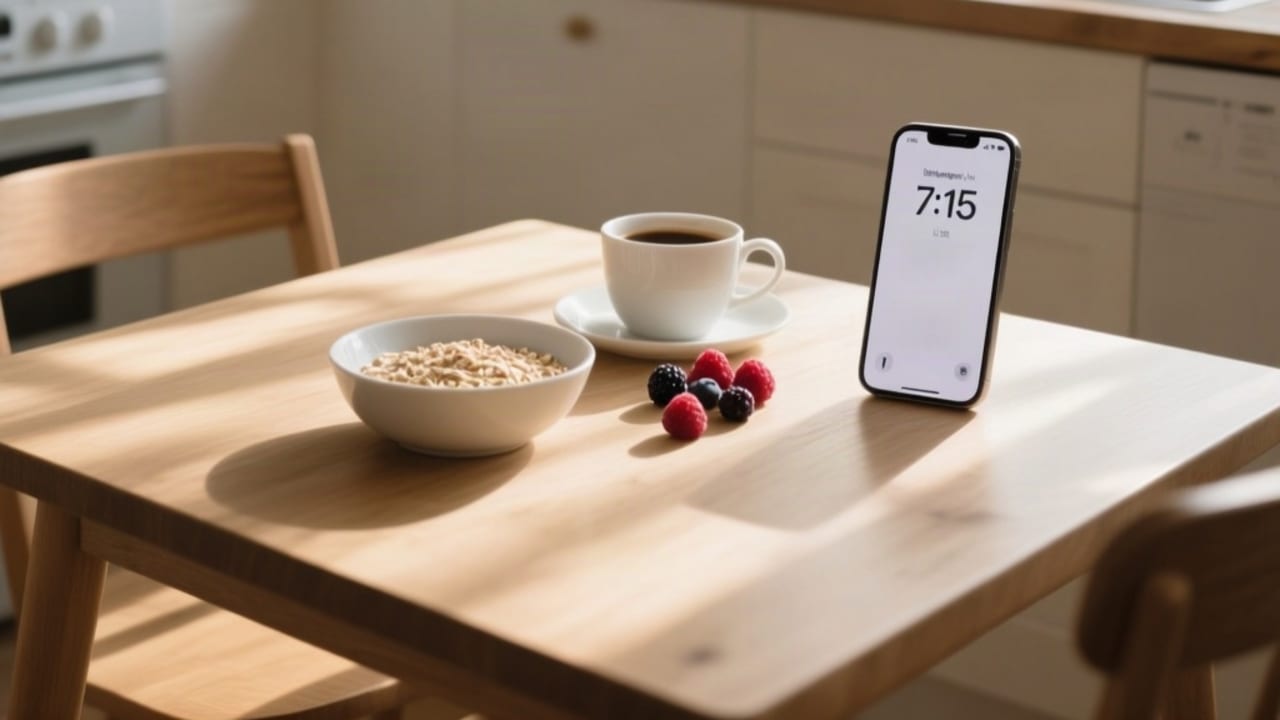
But what does that actually mean for your Monday morning? It means stepping outside with your coffee instead of sipping it under kitchen LEDs. It means putting dinner a little earlier, screens a little dimmer, and weekends a little closer to weekdays. Small shifts, stacked daily, change the rhythm.
What You Can Do Today
- Get morning light: 10–20 minutes outdoors within an hour of waking may help advance your clock. Sunglasses off; look toward the sky, not the sun.
- Set anchor times: Pick consistent wake time and first-meal time, even on weekends. Research suggests regularity supports sleep quality and metabolic health.
- Dim evenings: Lower lights and screen brightness 2–3 hours before bed. Warm, low light may reduce late-night alerting.
- Shift meals earlier: Aim to finish dinner 2–3 hours before bed; make breakfast or lunch your bigger meal if you’re trying to move earlier.
- Talk to a pro if needed: If timing issues persist, discuss light therapy, melatonin timing, or underlying conditions with a clinician or sleep specialist.
You don’t need perfect habits—just better timing. Start with one lever (morning light, earlier dinner, or a set wake time) and stick with it for two weeks. If it helps, add a second. And if you know someone stuck on “night mode,” share this—they might just need a sunrise.
Frequently Asked Questions
Many people notice small shifts within a week, but a full reset can take 10–14 days of consistent timing. If it’s not budging, a clinician can help tailor light and melatonin timing.
Low doses may help with timing for some adults, but it can interact with medications and certain conditions. It’s worth discussing dose and timing with your doctor before regular use.
Strategic light matters. Bright light during your “day” and blackout-level darkness for sleep may help, along with consistent meal timing relative to shifts. A sleep specialist can personalize a plan.