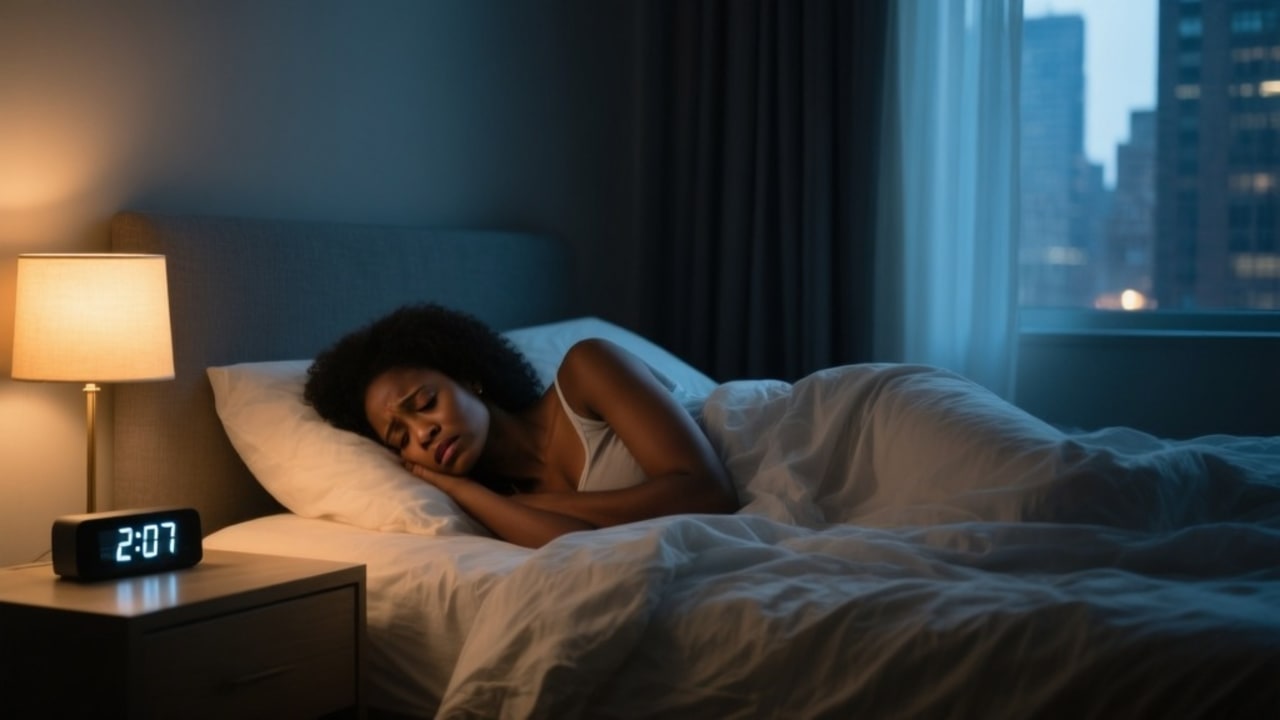
Most people blame stress, screens, or “not trying hard enough” when their sleep falls apart. Here’s the twist: a single week of mistimed sleep, meals, and light can jack up blood sugar and blood pressure—even if your calorie count doesn’t change.
Picture this: it’s 2 a.m. and you’re wide awake again. You promise to “be better” tomorrow, but by Friday you’re sleeping in, eating late, and scrolling under bright blue light. You didn’t lose willpower—your body clock lost the plot.
Circadian rhythm disruption isn’t just about feeling groggy. It’s linked with metabolic syndrome, mood disorders, and—when it’s chronic—higher mortality risk in shift workers. The good news? Small, smart changes can nudge your clock back on time.
- Morning light, same wake time and a consistent eating window are the fastest levers to realign your clock.
- Even a few nights of late meals + bright evening light can spike glucose and raise blood pressure.
- Weekends matter: “social jet lag” (late nights, late mornings) pushes your clock later by Monday.
- Counterintuitive: It’s better to keep your wake time after a bad night and go to bed earlier the next, than to sleep in.
- Shift workers can still protect their health with timed light, naps, and strategic meals.
Your body runs on time — not willpower
Your master clock sits in the suprachiasmatic nucleus (SCN) and syncs to light. It sends time-of-day signals that coordinate hormones, temperature, digestion, and alertness like an orchestra cueing each section at the right moment.
When light hits your eyes in the morning, it suppresses melatonin and sets a cascade: cortisol peaks, body temperature rises, metabolism gears up. Evening darkness does the opposite—melatonin rises, gut slows, and repair ramps.
This clockwork is baked into our biology. The 2017 Nobel Prize in Physiology or Medicine honored the discovery of the genes that drive our internal clocks, underscoring how fundamental circadian timing is to human health.
Analogy time: think of your day as a playlist. Morning light is track one. If you skip it, the rest of the songs play out of order—and the whole album feels wrong.

What misalignment does to mood, metabolism, and longevity
In controlled lab conditions, researchers have shown that sleeping and eating at the “wrong” biological time can quickly impair health markers. A team led by Dr. Frank Scheer at Brigham and Women’s Hospital found that circadian misalignment raises blood glucose, reduces insulin sensitivity, and elevates blood pressure—even without extra calories (PNAS, 2009).
Mood tracks with your clock too. In a massive UK Biobank analysis, people with disrupted daily rhythms had higher odds of depression and lower well-being (Lancet Psychiatry, 2018, Lyall et al.). That lines up with clinical observations that late-evening light and irregular schedules can worsen anxiety and low mood in susceptible people.
The long game matters. Among rotating night-shift nurses, longer shift-work exposure was associated with higher cardiovascular and all-cause mortality (American Journal of Epidemiology, 2015, Gu et al.). It’s not destiny, but it’s a red flag that timing—not just quantity—of sleep and light matters for long-term health.
You know that groggy, “hangry for no reason” morning after a late night? That’s your metabolic and mood systems running on a different clock than your calendar.
Who’s most at risk—and the sneaky habits that shift your clock
Shift workers, new parents, frequent flyers, and anyone with irregular bed/wake times are obvious candidates. But plenty of 9-to-5 folks get thrown off by “just one more episode” under bright screens, late dinners, and sleeping in on weekends.
“Social jet lag”—keeping one schedule during the week and another on weekends—has been linked to higher BMI and worse metabolic health (Current Biology, 2012, Roenneberg et al.). The body reads that Sunday sleep-in like a mini–time zone shift and pays for it by Tuesday.
Seasonal light swings matter too. Short, dim winter days can pull your clock later and dull mood, while late summer sunsets can push meals and bedtimes back. Think of light as your steering wheel; small turns add up over days.
Most people have been there—Monday feels like molasses because Saturday and Sunday ran on “west coast time.”

Light, food, and movement: the three levers to reset
Morning light is your anchor. Getting bright light soon after waking advances your clock—making earlier bedtimes feel natural—while evening light delays it. The human “phase response” to light has been mapped in the lab: morning light shifts earlier; late-night light shifts later (Journal of Physiology, 2003, Khalsa et al.).
Food is a potent secondary clock. Keeping most calories within a consistent 10–12 hour daytime window may help stabilize glucose and energy. In a small human pilot, a 10-hour eating window was linked with modest weight loss and improved metabolic markers (Cell Metabolism, 2018, Wilkinson et al.).
Movement helps set the tempo. Daytime activity—especially outdoors—reinforces alertness signals, while high-intensity workouts too close to bed can push your clock later for some people. A brisk morning walk is like tapping “sync” on your entire system.
For delayed sleep schedules, low-dose, early-evening melatonin timed hours before bedtime may help shift the clock. The American Academy of Sleep Medicine notes that clinician-guided timing is key—dose and timing matter more than “more melatonin.”
Why this matters
Because your life runs on time blocks—work, workouts, meals, family. When your internal clock is late to the party, everything feels harder than it should. Cravings hit at 10 p.m., focus drifts at 2 p.m., and “just one more episode” becomes tomorrow’s slump.
Real energy comes from alignment—when your light, meals, and sleep rhyme with your biology, not fight it.
You don’t need perfection. You need a few anchors most days so your body trusts the plan. That’s how mood steadies, workouts feel easier, and mornings stop feeling like jet lag.
What you can do today
- Get outside within an hour of waking for 5–15 minutes (longer if it’s cloudy). Morning light may help advance your clock and improve sleep quality.
- Keep a consistent wake time—even after a rough night. This helps your next bedtime arrive naturally. A short afternoon walk or light exposure may reduce the slump.
- Front-load your calories and aim for a 10–12 hour daytime eating window. Early, regular meals may support glucose control and appetite signals.
- Dim and warm your evenings: lower overhead lights, use warm-tone lamps, and park screens 60–90 minutes before bed or use dim, warm settings. Blue-blocking may help, but darkness helps most.
- If you work nights, consider bright light during your shift, sunglasses on the commute home, a dark cool bedroom, and discussing low-dose, timed melatonin with a clinician.
You don’t have to overhaul your life—just choose a few anchors and repeat them. Share this with the friend who “can’t sleep” but also “can’t stop scrolling.” Their clock is listening.
Frequently Asked Questions
Common signs include trouble falling asleep before midnight, weekend sleep-ins that make Mondays rough, late-night hunger, and mid-afternoon energy crashes. If sleep issues persist or affect your safety or mood, consider speaking with a healthcare professional.
Low doses (often 0.3–1 mg) taken hours before the intended bedtime may help shift timing, but timing is crucial and needs personalization. It can interact with medications; it’s worth discussing with your doctor or a sleep specialist first.
Many shift workers find timed light helpful: bright light during the first half of the shift, sunglasses on the commute home, and a very dark bedroom. Anchoring meals to your main wake period and keeping a consistent schedule for several days in a row may also help.