
Most people try to “think” their way out of anxiety — breathwork apps, mindset resets, another 10-minute meditation. Helpful, sure. But here’s the thing: your mood is being nudged by a community two feet south of your brain.
Picture this: you eat on the run, crash at 3 p.m., then your heart sprints at 2 a.m. You blame work. Meanwhile, your gut microbes are whispering to your stress system, tweaking cortisol, inflammation, even sleep drive. That quiet conversation — the gut brain axis — can make a frazzled day feel like a full-on spiral.
The surprise? Supporting your gut doesn’t just help digestion. Research suggests it may ease anxiety symptoms for some people, and it’s not all yogurt commercials and hype. There’s real science here.
- Your microbes “talk” to stress hormones: The gut brain axis can influence HPA-axis reactivity and cortisol.
- Probiotics may help some anxiety symptoms: Several trials report modest benefits — not a cure, but a nudge.
- Food matters fast: Fiber and fermented foods may shift the microbiome in weeks, not months.
- Counterintuitive: Calmer mental health therapies can soothe the gut — and gut care can steady the mind.
- Start simple: 30g fiber/day, one fermented serving, consistent meals, and better sleep timing.
How Your Gut Talks to Your Stress System
You know that feeling when an email pings and your chest tightens? That’s your HPA axis — the brain’s stress circuit — flipping on. Gut microbes can tune that dial. A 2026 review in Frontiers Microbiomes (Ataei and colleagues) outlines how dysbiosis can heighten HPA reactivity, pushing cortisol higher and longer, which can worsen anxious arousal and sleep disruption.
Think of your gut as a thermostat room that sends signals to the building’s central heating. If the thermostat is off (inflamed or leaky), the whole building (your stress system) overheats. Stanford Medicine’s 2025 overview on the gut–brain connection echoes this: microbes can influence mood, sleep, even motivation — and may be a starting point for some neurologic and psychiatric symptoms.
In practice, that means a few weeks of irregular meals, alcohol-heavy weekends, or antibiotics can shift your microbial mix — and your stress responsiveness — more than you’d expect.
Microbes Make Messengers: Neurotransmitters, Vagus Nerve, Immune Signals
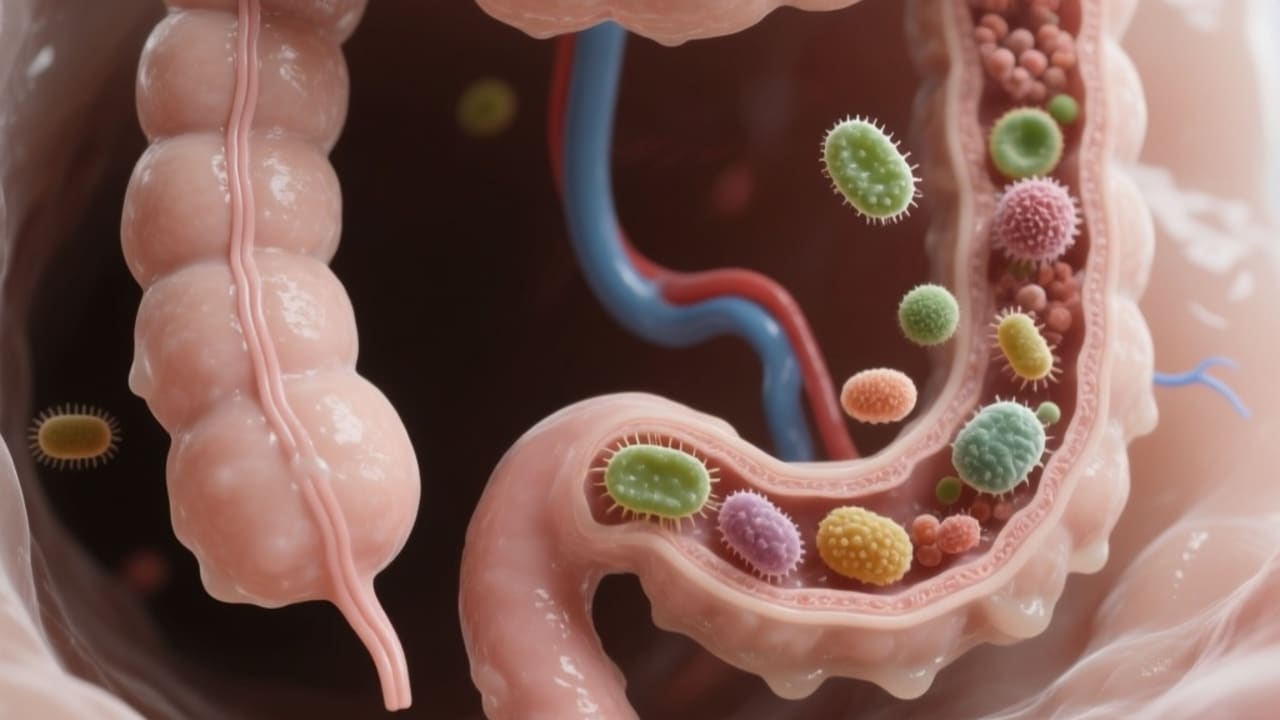
Most people have been there — stomach knots before a presentation, then brain fog afterwards. That gut-to-brain “ping” travels a few routes. First, microbes make metabolites (like short-chain fatty acids) that can support gut barrier integrity and indirectly affect brain function. A 2024–2026 body of work summarized in Frontiers Microbiomes describes how certain Lactobacillus strains improved gut integrity and reduced inflammation in animal models linked to stress behaviors.
Second, the vagus nerve — your body’s longest “rest-and-digest” cable — carries real-time status updates from gut to brain. When the gut is calm, vagal tone tends to be steadier; when inflamed, the lines get noisy. Hopkins Medicine notes that our “two brains” talk constantly, which helps explain why therapies like CBT and even medical hypnotherapy can ease irritable bowels and mood symptoms.
Third, the immune system. A 2023–2024 review in the NIH’s database on anxiety, PTSD, and OCD highlights that microbiome shifts can alter inflammatory cytokines and even blood–brain barrier dynamics — changes tied to anxious and stress-related symptoms. When inflammation runs high, the brain often interprets it as threat, priming anxiety.
What the Evidence Actually Says About Anxiety, PTSD, and OCD
Here’s where hype meets data. A 2026 Frontiers Microbiomes review reports that several human trials of “psychobiotics” — specific probiotics or prebiotics for mental health — show small but meaningful reductions in anxiety or stress scores for some participants. Effects vary by strain, dose, and baseline gut health, so results aren’t universal.
In animal models, Lactobacillus reuteri and related strains have reduced stress-related inflammation and restored brain-derived neurotrophic factor (BDNF) in regions tied to fear and mood — a mechanistic clue. Translating mouse gains to human outcomes is tricky, yet these findings guide smarter trials.
For trauma-related conditions, a peer-reviewed overview on the gut–brain axis in anxiety, PTSD, and OCD (available via PubMed Central) points to microbiome–immune–brain cross talk affecting anxiety circuitry. Early data hint that modulating the gut may complement first-line therapies like exposure-based treatments or SSRIs, not replace them.
Bottom line: there’s credible, growing evidence that the gut brain axis influences anxiety. Interventions look promising as add-ons, especially when paired with established therapies, sleep support, and consistent routines.

Food and Habits That Shift the Microbiome (Without Going Extreme)
Imagine your gut as a neighborhood. Fiber is the local farmers’ market that keeps residents fed; fermented foods are the lively café drawing in helpful “regulars.” When the market shuts down (low fiber) and the café closes (no ferments), the block gets rougher — more inflammation, less resilience.
A growing set of nutrition studies suggest that aiming for ~30 grams of fiber per day from diverse plants can support microbial diversity. Small human trials also report that adding 1–2 daily servings of fermented foods (like kefir, live-culture yogurt, kimchi, or sauerkraut) may lower inflammatory markers and improve subjective stress. Stanford’s team has highlighted these patterns while calling for larger, longer trials.
On timing, your microbes keep circadian rhythms too. Eating at wildly different hours, skimping on daylight, and sleeping in fragments can disrupt microbial patterns and, by extension, stress signaling. Gentle consistency — regular meals, morning light, earlier caffeine cutoff — can help reset the loop.
Why This Matters
Because it reframes your “why am I like this?” moment. If you’ve been white-knuckling through anxiety with only mindset tools, you’re missing half the conversation. When your gut is inflamed or underfed, your brain hears “danger” before your thoughts even start.
“You’re not weak — your signals are loud. Calming the gut can quiet the noise your brain’s been translating as anxiety.”
And that means small, doable nutrition and routine shifts may help your therapy work better, your sleep feel deeper, and your mornings start steadier. It’s not about perfection; it’s about giving your nervous system a calmer channel to listen to.
What You Can Do Today
- Build a fiber baseline: aim for ~30g/day from plants (beans, oats, berries, greens). Increase gradually to reduce bloating. This may support microbial diversity and steadier mood.
- Add one fermented serving: try live-culture yogurt, kefir, kimchi, or sauerkraut daily. Research suggests this can lower inflammation and may ease stress in some people.
- Pick a consistent meal window: regular meal timing may help microbial rhythms and HPA stability. Even a simple 12-hour eat/sleep split can be worth trying.
- Prioritize morning light and earlier caffeine: bright light within an hour of waking supports circadian cues; limiting caffeine after noon may help sleep — and calmer gut motility.
- Consider a targeted probiotic with your clinician: certain strains (e.g., Lactobacillus or Bifidobacterium species) have anxiety-related data. Not for everyone — discuss if you’re pregnant, immunocompromised, or have GI conditions.
You don’t have to overhaul your life. Start with one lever — fiber, ferments, timing, or sleep — and notice what shifts over 2–4 weeks. If anxiety is severe or persistent, talk with a licensed clinician; gut-focused steps can complement, not replace, evidence-based care.
If you’re curious about the science, look for: Stanford Medicine’s 2025 overview of the gut–brain connection; Hopkins Medicine’s explainer on the “second brain”; a 2026 Frontiers Microbiomes review on microbes and mental health; and PubMed Central summaries on the gut–brain axis in anxiety, PTSD, and OCD.
Small choices at your next meal can change tomorrow’s stress signature. Share this with someone who’s been trying to out-think their anxiety — they might just need to feed it differently.
Frequently Asked Questions
Some clinical trials report small improvements in anxiety or stress with certain probiotic strains, but results vary. Think of them as a possible add-on to therapy, sleep, and nutrition — not a stand-alone fix. Discuss options with your clinician.
A diverse, fiber-rich diet (beans, oats, veggies, fruit, nuts) plus one daily fermented food may help. Many people notice changes in digestion and stress within a few weeks.
Microbiome shifts can begin in days, but mood effects often take 2–4 weeks. Track sleep, energy, and anxiety alongside food changes to see what’s actually helping.