
Picture this: your heart ticks faster before a big meeting, your thoughts rush—and your stomach tightens like a fist. You chalk it up to stress or not enough sleep. But here’s the twist: signals coming from your gut microbes may be priming that anxious buzz long before your calendar does.
Scientists are now tracing anxiety circuits back to compounds made in your intestines. Some of those molecules can calm the brain’s fear center; others might fan the flames. It’s not woo—it’s chemistry, nerves, and immune cross-talk.
- Microbial metabolites—especially indoles—can influence the amygdala’s excitability, shaping anxiety responses (EMBO Molecular Medicine, 2024/2025).
- Early human trials suggest certain “psychobiotics” may reduce anxiety in stressed groups, though results vary by strain and lifestyle.
- Fiber-rich, minimally processed foods support helpful microbes; higher ultra-processed intake has been linked with greater odds of anxiety in teens (BMC Public Health, 2026).
- Antibiotics shift microbiome composition—sometimes reducing key metabolites—so use only when needed and support recovery (Nature Medicine, 2026; prior SCFA research).
- Counterintuitive: Today’s breakfast may shape tonight’s stress response via your gut-brain loop.
How your gut talks to your brain—fast and slow lanes
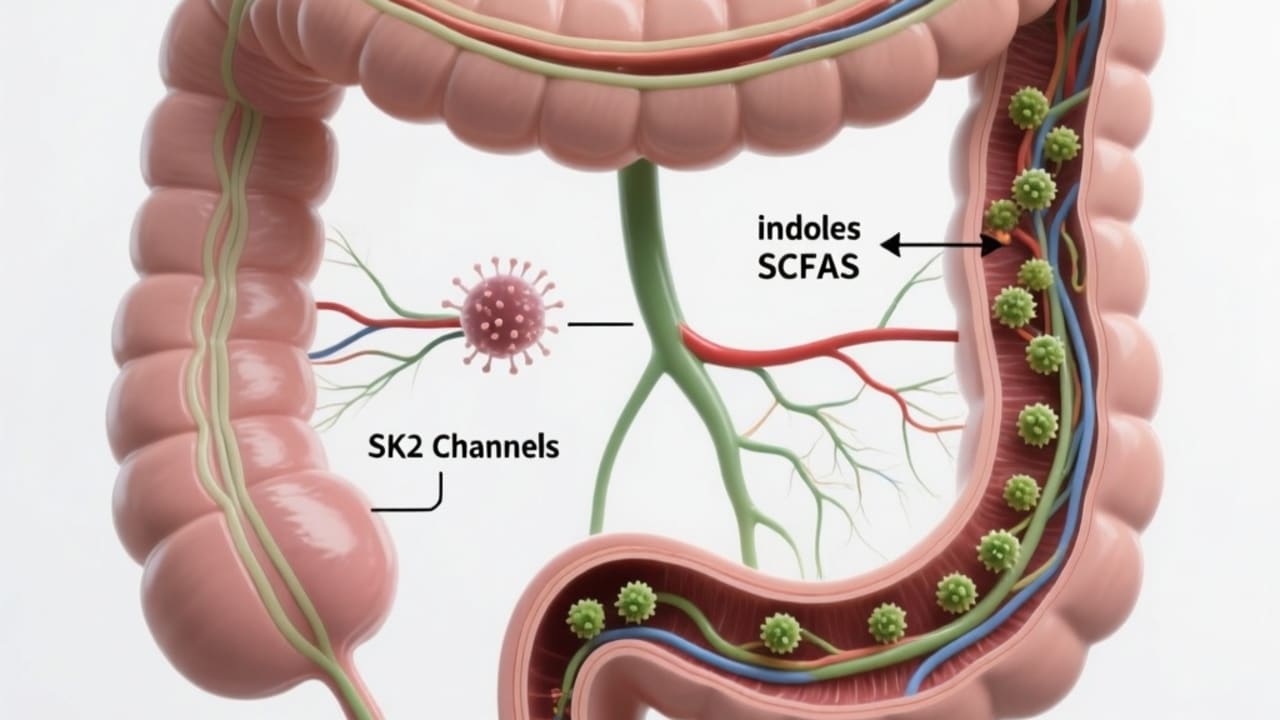
Your gut and brain run a constant group chat. The “voice notes” are nerve signals through the vagus nerve; the “texts” are immune messengers and microbial metabolites. When that chat skews negative, anxiety can feel louder.
A study reported in EMBO Molecular Medicine by researchers from Duke-NUS and the National Neuroscience Institute showed that microbial metabolites called indoles can dial down overactivity in the basolateral amygdala by affecting SK2 channels—proteins that regulate neuronal firing. In their experiments, indoles helped prevent neurons from becoming overly excitable, a pattern linked to anxious behavior.
Microbes also shape inflammation and barrier integrity in the gut. In rodent work summarized in a 2026 Frontiers in Microbiomes review, administering Lactobacillus reuteri DSM 17938 improved gut integrity, lowered inflammation markers, and restored brain-derived neurotrophic factor (BDNF) linked to stress-related behaviors. That’s animals—not people—but it maps the pathways scientists are tracking.
Analogy time: think of your gut-brain loop like airport security. When the system is calm, you breeze through. When it’s on high alert—because of signals from the gut—everything slows, alarms ping, and anxiety ramps up.
Anxiety research you can actually use
Here’s the thing: not all probiotics help all people. A 2026 review in Frontiers in Microbiomes reported trends toward reduced anxiety symptoms with certain strains and combinations, especially in stressed groups, but emphasized variability and study differences.
In a 2022 double-blind randomized controlled trial with highly stressed nurses, a heat-treated psychobiotic (HK‑PS23) improved anxiety scores versus placebo. And in 2023, a randomized trial in Nutrients found that psychobiotic effects on anxiety in healthy adults were modulated by lifestyle behaviors—sleep, diet, and stress habits seemed to influence who benefited most.
Translation: strains matter, and your routine matters. If your sleep and diet are chaotic, a capsule alone may not move the needle much. But with foundational habits in place, the right strain could provide an extra nudge.
Even mainstream institutions are taking note. A 2025 feature from Stanford Medicine highlighted the gut-brain link’s reach—from mood and sleep to motivation—underscoring that the conversation runs both ways: stress can reshape your microbiome, and your microbiome can reshape stress responses.
Daily habits that quietly shift the loop
Most people have been there—coffee for breakfast, a protein bar for lunch, and by 4 p.m. you’re wired and wary. Ultra-processed foods are convenient but can starve fiber-loving microbes. A 2026 BMC Public Health study in adolescent girls linked higher ultra-processed intake with greater odds of anxiety, depression, and stress. It’s observational and in teens, but it echoes a wider nutrition–mood pattern.
Antibiotics save lives, but they don’t just hit the bad guys. A 2026 Nature Medicine paper using data from nearly 15,000 people tied antibiotic use to clear shifts in microbiome composition; earlier research has associated such shifts with reduced short-chain fatty acids—key metabolites that help keep gut and immune signaling balanced. If you need antibiotics, it may be worth planning your gut recovery afterward.
Sleep is another underappreciated lever. Your microbiome follows a daily rhythm that interacts with your own. When sleep gets patchy, microbial patterns can wobble too—one reason better sleep hygiene often pairs with calmer days, as highlighted in neuroscience reporting from Stanford Medicine in 2025.
Think of your gut microbes like a tiny workforce. Feed them fiber and they clock in on time; feed them mostly additives and sugar, and the night shift gets weird—emails go unanswered, alarms misfire, and your stress inbox fills up.

Picking a probiotic (or not): a practical mini‑guide
If you want to experiment, go strain-specific and time-bound. Look for products that disclose exact strains, not just species, and consider a 4–8 week trial while keeping your diet and sleep steady. Track mood, sleep, and GI comfort weekly.
Evidence snapshot: a 2022 randomized trial in highly stressed nurses found that HK‑PS23 improved anxiety; the 2026 Frontiers review reports trends with other strains, while noting inconsistent results across studies. Rodent data on Lactobacillus reuteri DSM 17938 suggest mechanisms (BDNF, inflammation, gut integrity), but human anxiety data for that strain are preliminary.
Quality check: aim for third‑party tested brands, avoid megablends with a dozen strains you can’t track, and store as labeled (some are shelf‑stable, others need refrigeration). If you’re immunocompromised, pregnant, have significant GI disease (like active IBD), or use immunosuppressants, discuss probiotics with a clinician first.
And remember: diet often moves first. A cup of yogurt or kefir, fiber from legumes and veggies, and consistent meals can create a friendlier baseline that any supplement works with—not against.
Why this matters
Because anxiety isn’t just “in your head”—it’s in your body’s signaling, too. When your gut is unsettled, your amygdala may listen and lean toward alarm. When your gut is steady, the same brain can stand down faster after stress.
“Small, repeatable choices—sleep, fiber, fermented foods, the right probiotic—can nudge the gut-brain loop from ‘threat’ toward ‘safe.’”
What does that mean for your Monday morning? Maybe you still have the presentation jitters—but your body doesn’t pitch them into a panic. That’s a meaningful win.
What you can do today
- Build a fiber floor: aim for plants at every meal (beans, oats, berries, greens). This may boost short‑chain fatty acids tied to calmer stress signaling.
- Add one fermented food: yogurt, kefir, kimchi, or tempeh. Research suggests these may support microbial diversity and gut barrier integrity.
- Try a targeted psychobiotic: consider a strain‑specific product for 4–8 weeks (e.g., those studied in RCTs), track how you feel, and discontinue if no benefit.
- Guard sleep like medicine: consistent bed/wake times may stabilize gut rhythms and reduce next‑day anxiety.
- Plan post‑antibiotic recovery with your clinician: when antibiotics are necessary, ask about timing for prebiotic fiber and fermented foods as you recover.
None of this replaces therapy or prescribed treatment. But aligning your gut and routine may give your brain a quieter baseline. Share this with someone who’s “tried everything” for anxiety—they might not have tried feeding their calm.
Frequently Asked Questions
Evidence is strain‑specific and mixed. Trials have reported benefits with HK‑PS23 in highly stressed adults, and reviews note trends with certain Lactobacillus/Bifidobacterium strains. It’s reasonable to try a strain‑specific product for 4–8 weeks while optimizing sleep and diet, and discuss with a clinician if you have health conditions.
Some people notice changes in a few weeks—especially with more fiber and fermented foods—while for others it’s subtler. Because the gut-brain loop is dynamic, stabilizing meals, sleep, and caffeine may help your system recalibrate.
Many probiotics are generally well tolerated, but interactions and safety depend on your health status. If you’re immunocompromised, pregnant, or have significant GI disease, check with your prescriber. Never stop or change psychiatric meds without medical guidance.