
Most people blame their racing mind on the inbox, the coffee, or the news cycle. But for a surprising number of us, the real agitator sits about two feet below our brain—inside the gut.
Picture this: you’re wired at 2 a.m., heart tapping a little too fast, mind looping worst-case scenarios. You didn’t change your routine—but your gut microbes might have shifted after a rough week, a few late nights, or an antibiotic course months ago. Here’s the thing: that microscopic neighborhood can nudge your stress pathways and shape how anxious you feel.
In the last few years, researchers have mapped a tight gut–brain conversation that runs through nerves, immune messengers, and the stress system that controls cortisol. And while no single food or pill “fixes” anxiety, the science points to practical levers you can pull—starting today.
- The gut–brain axis influences how you handle stress via the HPA axis and cortisol.
- Microbial metabolites (like short-chain fatty acids) may help calm inflammation that can worsen anxiety.
- Your body clock matters—meal timing and sleep can shift your microbiome and mood.
- Some probiotic strains show promise, but results are strain-specific and not guaranteed.
- Counterintuitive: Improving sleep consistency may steady your gut—and your anxiety—more than adding a supplement.
The stress circuit you can’t see: HPA axis meets your gut
When your brain senses stress, it flicks on the HPA axis—a control center that releases cortisol to help you cope. Cortisol is useful in short bursts. But chronically high levels can alter gut permeability and shift which microbes thrive. Those shifts, in turn, can send signals back through the vagus nerve and immune system that keep the stress loop humming.
Think of it like a group chat where one friend (stress) keeps spamming the thread. The more it pings, the more the rest of the group (your gut microbes and immune cells) react—and the tone of the whole chat changes. A 2025 review in Frontiers in Psychiatry described this gut–brain–circadian axis as a feedback loop that can sensitize the HPA system in mood disorders, including anxiety. Stanford Medicine’s 2025 overview also highlighted strong evidence that gut signals influence mood, sleep, and motivation via neural and hormonal pathways.
What’s surprising is how fast this can happen. Poor sleep for a few nights, a run of ultra-processed meals, or high work stress can nudge your microbiome—and your stress response—within days. That said, the loop can shift in your favor, too.
A real-world snapshot
You know that feeling when coffee suddenly hits harder after a week of late nights? It’s not just the espresso. Your gut may be more permeable, stress hormones a touch higher, and gut–brain crosstalk a little louder—so the same caffeine lands differently.
Microbes make messengers: SCFAs, tryptophan, and inflammation
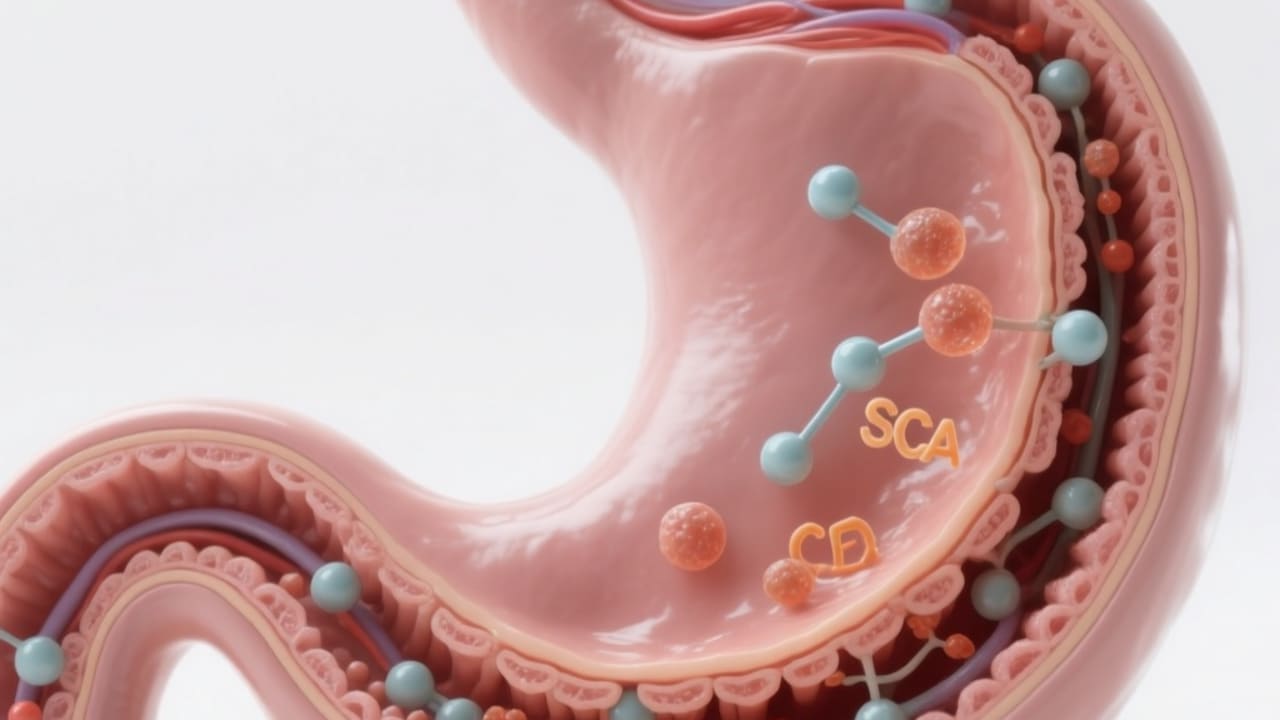
Your microbes don’t just sit there—they make bioactive compounds. Short-chain fatty acids (SCFAs) like butyrate, produced when you eat fiber, may support the gut lining and modulate inflammation that can feed anxious states. Other pathways involve tryptophan (a serotonin building block) being diverted toward metabolites that can either support or stress the brain.
A 2025 review in the NIH’s open-access literature noted trends toward attenuated stress responses in some human psychobiotic trials, alongside animal data where probiotic treatment influenced brain-derived neurotrophic factor (BDNF) and gut integrity. Meanwhile, a 2025 article in Gut Microbes described how microbiota-dependent metabolites help guide immune T-cell responses—important because low-grade inflammation can worsen anxiety for some people. Together, the picture is clear: what your microbes make may shape how you feel.
Analogy time: your gut is like a fermentation lab. Give it diverse raw materials (fibers, polyphenols), and it bottles up more calming compounds. Feed it mostly refined sugars and emulsifiers, and the output looks very different.
A real-world snapshot
Most people have been there—two takeout-heavy days, then a restless night and an edgy morning. It’s not just guilt. Your gut “lab” may have shifted its product mix, nudging your mood.
Your body clock sets the tone: timing, sleep, and meals
Your gut microbes keep time, too. They ebb and flow across the day, syncing with your eating and sleeping patterns. When you push meals late or sleep in fragments, that rhythm stutters—and the gut–brain chat can get noisy.
A 2025 review in Frontiers in Psychiatry spotlighted the gut–brain–circadian triangle in anxiety and depression. Earlier work in Nutrients (2023) suggested that time-restricted eating can shift microbiota composition and function—pointing to meal timing as a lever for metabolic and, potentially, mood regulation. The takeaway isn’t “skip breakfast” or “only eat in a tiny window.” It’s that regularity matters: your gut seems to like predictability.
Think of your day like a playlist. When tracks play in order—consistent wake, regular meals, wind-down time—your system hits a groove. Shuffle mode can be fun on weekends; run it nonstop and the beat gets choppy.
A real-world snapshot
Travel week: late dinners, new foods, bright hotel screens at midnight. You feel “wired-tired.” Your body clock and microbes are jet-lagged, and your stress circuits notice.

Probiotics: hype vs. hope (and what early data says)
Probiotics are not a magic bullet, but they’re not snake oil either. Strain matters, dose matters, and your starting microbiome matters. Some early human trials report small reductions in stress or anxiety scores; others find no effect. That’s normal in an emerging field.
A 2025 paper summarized attenuated stress responses in select psychobiotic studies, while animal models show mechanistic clues—like improved gut integrity and shifts in BDNF with certain Lactobacillus strains. A 2025 Nature Mental Health perspective also cautioned that links between microbes and mental health can be causative, correlative, or bidirectional—so personalization and caution are key. And a 2025 medRxiv analysis in people with generalized anxiety disorder reported altered microbial carbohydrate metabolism tied to GI and anxiety symptoms, hinting that diet plus targeted microbes may be a future path, not a one-size-fits-all pill.
If you’re curious, a time-limited, strain-specific trial—ideally discussed with your clinician—may be worth exploring. But what you feed your microbes daily (fiber, plants, fermented foods) tends to matter more than what you occasionally add.
Why this matters
Anxiety can feel random. That’s frustrating. Understanding the gut–brain loop gives you handles you can actually grip—sleep consistency, meal timing, fiber variety, and mindful stress management. These won’t replace therapy or medication when needed, but they can support them.
“You’re not just a brain on legs. Your gut co-authors your mood—so give it a better script.”
And here’s a quiet confidence boost: small, boring habits (in bed by 11, lunch away from your laptop, a handful of plants on the plate) can shift your microbiome within days to weeks. That’s momentum you can feel.
What you can do today
- Anchor your sleep and meals. Research on the gut–brain–circadian axis suggests consistent bed/wake times and regular meal windows may steady cortisol and microbial rhythms.
- Eat for your microbes. Aim for 20–30 different plant foods weekly (fruits, vegetables, legumes, whole grains, nuts, seeds). More variety may boost SCFA producers that can support calm.
- Try gentle fermented foods. A small daily serving of yogurt with live cultures, kefir, kimchi, or sauerkraut may help some people; increase gradually and watch how you feel.
- Consider a strain-specific probiotic trial. If interested, discuss options (e.g., Lactobacillus or Bifidobacterium strains studied for stress) with a clinician and reassess after 4–8 weeks.
- Practice a 60-second downshift. Slow exhales (4-6 breaths per minute) may engage the vagus nerve and, over time, support a calmer gut–brain signal.
If your anxiety is severe, persistent, or disrupting daily life, reach out to a licensed mental health professional. Microbiome strategies can be supportive—therapy, medication, and a personalized plan may still be the right foundation.
If this helped connect a few dots, share it with a friend who’s “tried everything.” Sometimes the missing piece is hiding in plain sight—on your plate and in your sleep.
Frequently Asked Questions
There isn’t a single “best” strain. Some trials suggest certain Lactobacillus and Bifidobacterium strains may reduce stress scores in some people. A time-limited trial, tracked with a symptom log and discussed with your clinician, is a cautious way to test fit.
Microbiome shifts can start within days, but mood changes typically take weeks. Many protocols reassess at 4–8 weeks. If you don’t notice benefits by then, it may not be the right strategy.
A sudden increase can cause bloating or sleep disruption in sensitive people. Introduce gradually, hydrate, and adjust timing (earlier in the day). If symptoms persist, pause and talk with a clinician or dietitian.