
Picture this: it’s 2am and you’re wide awake again. Your heart’s thumping, your thoughts are sprinting, and your stomach feels… off. Most people blame their mind. But the real trigger might be sitting a few inches south.
Here’s what’s surprising: the gut-brain axis—the two-way highway between your intestines and your nervous system—can nudge your stress hormones, shape your sleep, and even influence how anxious you feel. Up to 30–40% of people experience functional gut issues at some point, and those gut flares often travel with mood shifts.
The good news? Small daily choices that support your microbiome may also steady your stress response. And no, it doesn’t require a suitcase of supplements.
- The gut-brain axis influences anxiety via the HPA axis and cortisol.
- Fiber, fermented foods, and sleep regularity may support calmer gut-brain signaling.
- Probiotics show promise for stress and anxiety, but effects are strain-specific and modest.
- Chronic stress can disrupt your microbiome for months—managing stress protects your gut, too.
- Counterintuitive: Mind therapies (CBT, hypnotherapy) can improve gut symptoms by calming brain-to-gut signals.
Your gut talks to your stress switch (the HPA axis)
You know that pre-presentation feeling when your stomach flips? That’s your gut-brain axis in real time. The vagus nerve and immune signals carry messages from your intestines to the brain’s stress center—the hypothalamic–pituitary–adrenal (HPA) axis—shaping cortisol, your “get ready” hormone.
Stanford Medicine researchers in 2025 described how gut signals can tweak mood, sleep, and even motivation, highlighting the gut as a key player in conditions from anxiety to long COVID and Parkinson’s. When gut irritation ramps up, the brain may interpret “danger,” nudging cortisol higher and priming anxious arousal.
Flip the script and it works the other way, too: chronic mental stress can change gut motility and mucus, altering the terrain where microbes live—another nudge toward a louder stress response tomorrow morning.
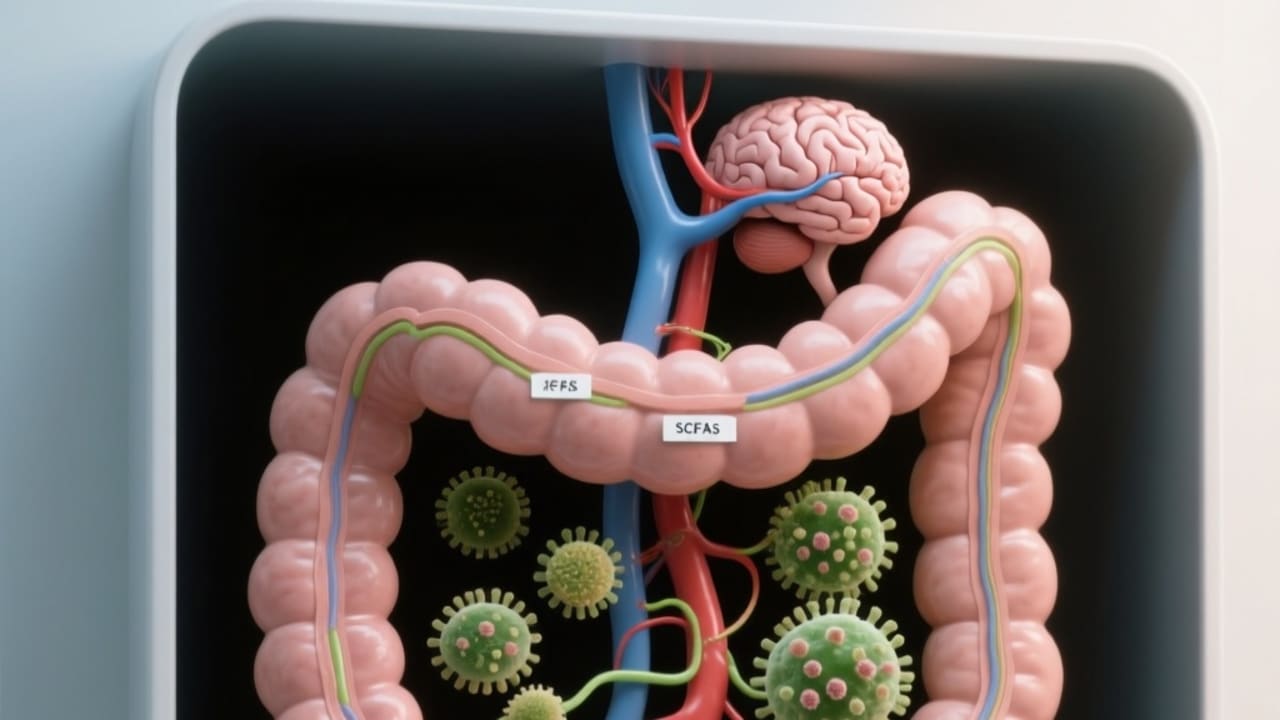
Microbes make mood messengers—SCFAs, GABA, and BDNF
Think of your microbiome as a tiny chemical factory. Certain bacteria ferment fibers into short-chain fatty acids (SCFAs) that may calm inflammation and support gut lining integrity—both linked to steadier mood. Others influence neurotransmitters like GABA and serotonin precursors.
A 2025 review in Frontiers Microbiomes summarized animal work showing that a Lactobacillus strain improved gut integrity, lowered inflammatory markers, and restored brain-derived neurotrophic factor (BDNF)—a growth factor tied to stress resilience. In early human research, people with fewer protective gut taxa and fewer SCFA-producers tended to report more severe PTSD symptoms, while resilient groups (like firefighters without PTSD) showed greater diversity and more SCFA-producing species.
Is that a direct fix for anxiety? Not exactly. But it’s a meaningful clue: a microbiome geared toward making anti-inflammatory and neuromodulatory compounds may set the stage for a steadier nervous system.
Stress reshapes your microbiome—for months
Most people have been there—weeks of late nights, extra coffee, and takeout. Your mood dips, your stomach protests, and the cycle feeds itself. Because stress chemistry changes gut movements and mucus production, it literally remodels the neighborhood your microbes call home.
A 2025 summary of emerging data reported that prolonged stress can reduce microbiome diversity and alter bacterial communities for at least six months in high-stress workers, tracking with higher anxiety and depression. Elevated norepinephrine—the body’s “go” signal—may even shift microbial gene expression toward different species profiles.
Translation: your gut remembers your stress. The flip side is hopeful—consistent, boring-good habits can help write a new script.
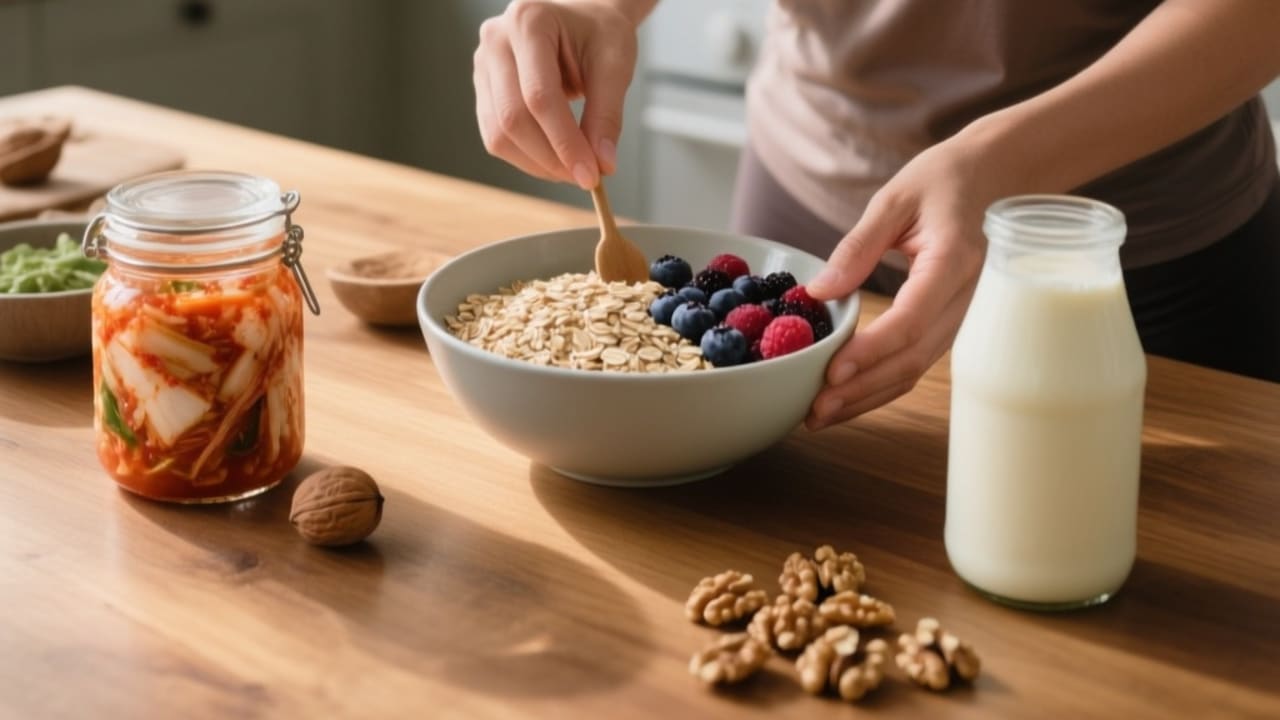
Food, fiber, and probiotics: what’s realistic now
Here’s the thing: supplements get the headlines, but diet and daily rhythm do the heavy lifting. Fiber feeds SCFA-producing microbes. Fermented foods add live cultures. Regular sleep and movement steady the HPA axis and gut motility—the scaffolding your microbiome relies on.
On probiotics, the evidence is evolving. The 2025 Frontiers Microbiomes review notes animal studies where specific Lactobacillus strains eased anxiety-like behavior and restored BDNF. Early human work—like pilot prebiotic trials in veterans—shows modest improvements, not miracles. Benefits appear strain-specific and often subtle.
Don’t sleep on mind-body therapies, either. Johns Hopkins Medicine reports that gut-directed cognitive behavioral therapy and medical hypnotherapy can help IBS by calming brain-to-gut signaling—an indirect but meaningful path to lighter anxiety for people whose mood flares with gut symptoms.
WHY THIS MATTERS
This isn’t about blaming your lunch for your worries. It’s about noticing the quiet chain reaction—extra caffeine after a short night, skipped fiber, a tense meeting—and understanding how those choices echo through your gut, your cortisol rhythm, and the way your brain reads the room at 3pm.
When your gut is calmer, your stress system has less to shout about.
If your stomach flips before your calendar does, this connection gives you more levers to pull—meals you can tweak, habits you can stack, questions you can bring to your clinician. It’s agency, not blame.
WHAT YOU CAN DO TODAY
- Feed SCFA-makers: Aim for 20–30g/day of fiber with prebiotic foods (oats, beans, onions, garlic, asparagus, green bananas). Ramp up slowly to reduce bloating.
- Add fermented foods: 1–2 servings/day (live-culture yogurt, kefir, kimchi, sauerkraut, miso) may support microbial diversity and gut signaling.
- Trial a targeted probiotic: A Lactobacillus/Bifidobacterium blend from a reputable brand for 4–8 weeks may help stress or gut comfort. Track sleep, mood, and GI symptoms; stop if no benefit. Discuss with your clinician if you’re pregnant, immunocompromised, or on medications.
- Steady your HPA axis: Prioritize a regular sleep window, morning light, 20–30 minutes of movement most days, and 5 minutes of slow breathing (e.g., 4 seconds in, 6 out) to engage the vagus nerve.
- Tweak stimulants and timing: Limit caffeine after noon and anchor meals at consistent times. Some people find this helps both gut motility and next-day anxiety.
If anxiety or gut symptoms interfere with daily life, it’s worth talking with a healthcare professional. They can help tailor options—nutrition changes, gut-directed therapies, or, when appropriate, medications—that work together with the gut-brain axis, not against it.
Frequently Asked Questions
Some strains show modest benefits for stress and anxiety, especially in small or pilot studies. Effects are strain-specific and not guaranteed, so a short, supervised trial may be worth discussing with your clinician.
Fiber-rich foods (oats, beans, veggies) feed SCFA-producing microbes, and fermented foods add live cultures. Regular meals, steady sleep, and movement also support calmer gut-brain signaling.
It varies. Some people notice shifts in 2–4 weeks with consistent habits; for others it takes longer. Because stress can disrupt the microbiome for months, steady routines are key.