
Most people blame their mind when anxiety flares. But the real stress switch that keeps flipping on—especially during that 3 p.m. heart‑race or the 3 a.m. wake‑up—may be sitting lower, in your gut.
Here’s the thing: your microbiome talks to your stress system all day long. When those microbes are in balance, cortisol tends to follow a steadier rhythm. When they’re off, your brain can feel like it’s running a siren in the background.
The surprising part? Tiny shifts—timing your meals, picking the right fermented foods, or trying targeted probiotics—may help recalibrate that gut–brain line and take the edge off worry.
- The gut–brain axis helps set your cortisol “volume.” Balanced microbes often mean steadier stress responses.
- Some Lactobacillus and Bifidobacterium strains may reduce cortisol and support calming GABA signaling.
- When your sleep–light–meal schedule is off, your microbes’ daily rhythms can misfire too—raising stress sensitivity.
- Counterintuitive: more morning light can support your gut’s timing and help settle anxiety later in the day.
- Small, consistent moves—fiber, fermented foods, time-restricted eating—may nudge the gut–brain axis in a calmer direction.
Your Gut Talks to Your Stress System (HPA Axis)
Picture this: a tense Slack message pops up and your chest tightens before you’ve even finished reading. That reflex runs through the HPA axis—the brain’s stress pathway that releases cortisol—and your gut microbes are on the line too.
A 2023 review summarized how the microbiota can shape HPA activity, influencing cortisol output and stress reactivity; beneficial bacteria may help restrain overactivation, while imbalances can intensify it (Rusch et al., 2023, in “The gut–brain connection: microbes’ influence on mental health”). Chronic overexposure to cortisol has been tied to changes in brain areas that regulate mood and focus, which helps explain why “wired and tired” can morph into anxious spirals.
In plain terms: when your gut is better fed and less inflamed, the stress dial may turn down a notch—your body still responds, but the alarm stops blaring.
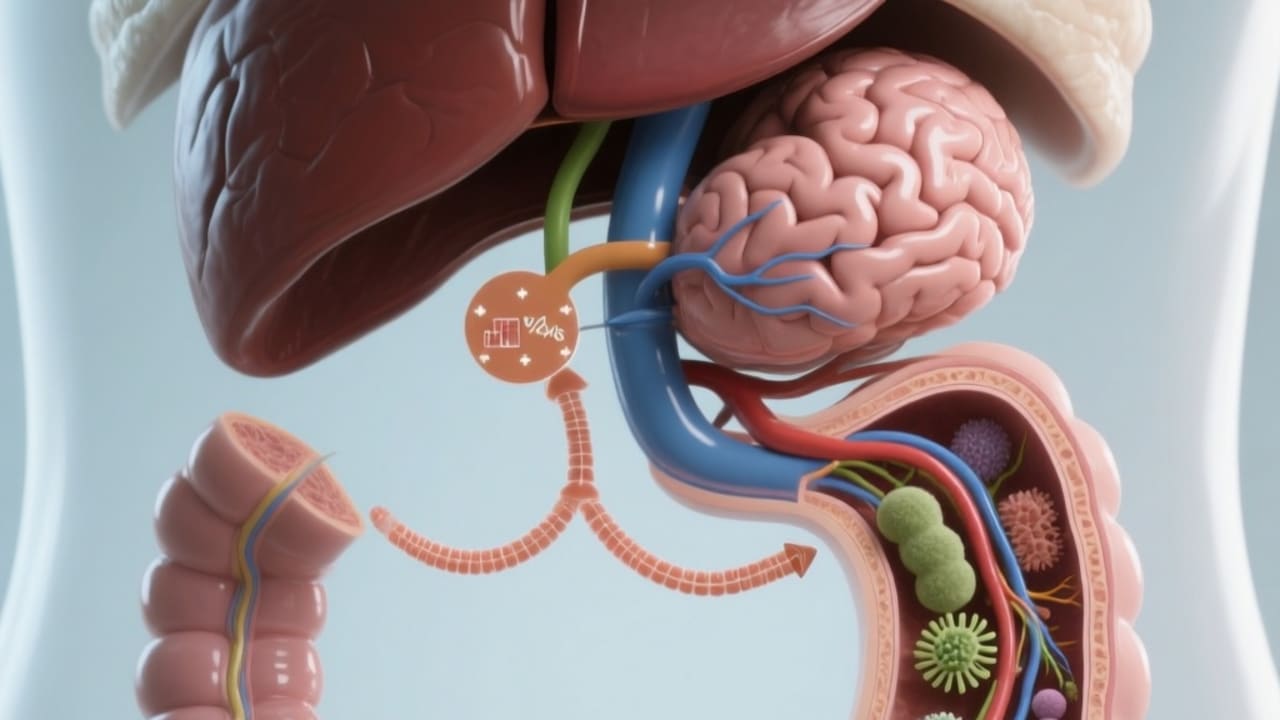
When Microbes and Clocks Fall Out of Sync
You know that feeling when a late night, skipped breakfast, and a dim workday blur into each other? Your internal clocks feel off—and so can your microbes’. They keep time too.
A 2025 critical review in Frontiers in Psychiatry reported that gut dysbiosis often travels with flattened daily cortisol rhythms and higher anxiety risk. The HPA axis is tightly linked to circadian clocks, and circadian misalignment disrupts both cortisol timing and microbial oscillations, amplifying stress sensitivity. Early evidence suggests chronotherapeutic strategies—like time‑restricted eating, aligned sleep, and strategic light exposure—may help restore circadian–microbial synchrony in mood disorders (Frontiers in Psychiatry, 2025, “Gut–brain–circadian axis in anxiety and depression”).
Think of your day like a playlist: consistent wake time, morning light, and a defined eating window help microbes “learn the beat,” and your stress system often follows the rhythm instead of riffing wildly.
Psychobiotics: What the Best Evidence Says
“Psychobiotics” refers to microbes (or prebiotics that feed them) that may benefit mood. The headline strains you’ll see most: Lactobacillus and Bifidobacterium.
Mechanistically, certain strains appear to lower cortisol and support GABA—the brain’s main calming neurotransmitter (Liu & Zhu, 2018; Zhao et al., 2022, summarized in Rusch et al., 2023). A small 30‑day human trial reported that a probiotic regimen reduced cortisol and self‑reported anxiety to a degree comparable to a standard anxiolytic in that study; promising, but it was short and needs larger, well‑controlled replication (reviewed in a 2017 article available on PubMed Central, “Gut microbiota’s effect on mental health”).
Here’s the nuance: probiotic effects are strain‑specific, doses vary, and they aren’t a replacement for therapy or medication. But for some, an 8–12‑week trial of targeted strains—often including Lactobacillus rhamnosus, L. helveticus, Bifidobacterium longum, or B. breve—may help as part of a broader plan. If you’re on medication or have GI conditions, it’s worth discussing with a clinician.

Food, Sleep, and Movement: Small Levers, Real Impact
Most people have been there—skipping lunch, overcaffeinating, crashing hard. Your microbes experience that whiplash, too. Fiber and fermented foods tend to buffer it; erratic snacking and ultra‑processed foods can do the opposite.
The 2025 Frontiers review notes growing interest in “chrononutrition”: aligning meal timing with your body clock and your microbes’ daily rhythms. Approaches like a gentle 12:12 or 14:10 eating window, paired with consistent sleep and morning light, are being studied for recalibrating cortisol patterns in anxiety and depression.
A day that supports the axis
Think simple: sunlight in your eyes within an hour of waking, protein and fiber at the first meal, a defined eating window that winds down before late evening, movement sprinkled in, and a regular lights‑out. It’s not flashy, but your microbes read those cues—and often your mood does, too.
Why This Matters
If you’ve tried “just relaxing” and it never sticks, there’s a reason. Your body’s stress system may be getting marching orders from your gut and your clocks. The good news: you don’t need a total life overhaul to start nudging both in your favor.
Anxiety isn’t only “in your head”—it’s also in your timing, your breakfast, your sunlight, and your microbes. That’s empowering, not blame‑shifting.
Small, repeatable choices add up—especially when they map to how your biology actually runs. And if your anxiety is severe or persistent, pairing these lifestyle levers with professional care can be a smart, compassionate move.
What You Can Do Today
- Try a gentle time‑restricted eating window (12:12 for 1–2 weeks) and notice sleep and energy. This may help resync cortisol and microbial rhythms; skip if you have a history of disordered eating or you’re pregnant—talk with a clinician first (Frontiers in Psychiatry, 2025).
- Add 1–2 servings of fermented foods daily—plain yogurt, kefir, kimchi, sauerkraut, miso. These may increase microbial diversity and support calmer stress signaling.
- Hit 25–35g of fiber most days (beans, oats, berries, veggies). Prebiotic fibers feed microbes that produce butyrate, which may support gut lining integrity and balanced inflammation.
- Morning light for 10–20 minutes within an hour of waking. Research suggests this helps anchor circadian clocks that regulate the HPA axis and your microbes’ timing.
- Consider a targeted probiotic trial (8–12 weeks) that includes a Lactobacillus and a Bifidobacterium strain. This may modestly lower perceived stress and cortisol for some people; review options with a healthcare professional.
None of this replaces therapy, medication, or a thorough medical workup if you need it. But aligning your gut and your clocks can give your mind a steadier floor to stand on.
References for context: Rusch et al., 2023 (gut–brain link and HPA modulation); Frontiers in Psychiatry, 2025 (gut–brain–circadian axis and chronotherapeutics); 2017 review on PubMed Central (psychobiotics and early human data).
If this resonated, share it with the friend who can’t sleep past 3 a.m.—and explore more pieces in our Mental Wellness collection.
Frequently Asked Questions
Research often focuses on Lactobacillus (like L. rhamnosus, L. helveticus) and Bifidobacterium (like B. longum, B. breve). Results vary by strain and dose, so a short, supervised trial may help you see if they’re a fit.
Some people notice shifts in 2–4 weeks, especially with sleep timing and fermented foods. For probiotics, 8–12 weeks is a reasonable window before you reassess with a clinician.
GI distress can raise heart rate, trigger chest tightness, and spike stress hormones, which may feel like panic. If symptoms are severe or new, it’s wise to get medical evaluation to rule out other causes.