Picture this: it’s 9:30 a.m., you’ve reread the same email three times, and your to‑do list looks like static. You’re not lazy and you’re not broken. Your brain is simply flooded with inputs before it’s fully online.
Most people blame “getting older” or “lack of willpower” when the real cause is a jumpy stress system, poor sleep cues, and visual chaos stealing attention. The fix isn’t another productivity app. It’s a few tiny levers—done early and consistently—that calm your nervous system so thinking gets crisp again.
- Set a “soft start” boundary: no news, email, or social for the first 15 minutes after waking.
- Pick one 5‑minute anchor (water before coffee, open a window, 2 minutes of stretching, or write 3 must‑dos) and repeat it daily.
- Take a 10‑minute walk—yes, it counts—for a fast lift in mood and memory support.
- Reset one surface at home or work to cut visual noise and lower stress signals.
- Counterintuitive but true: removing inputs often works faster than adding tools.
Your fog is a stress signal, not a flaw
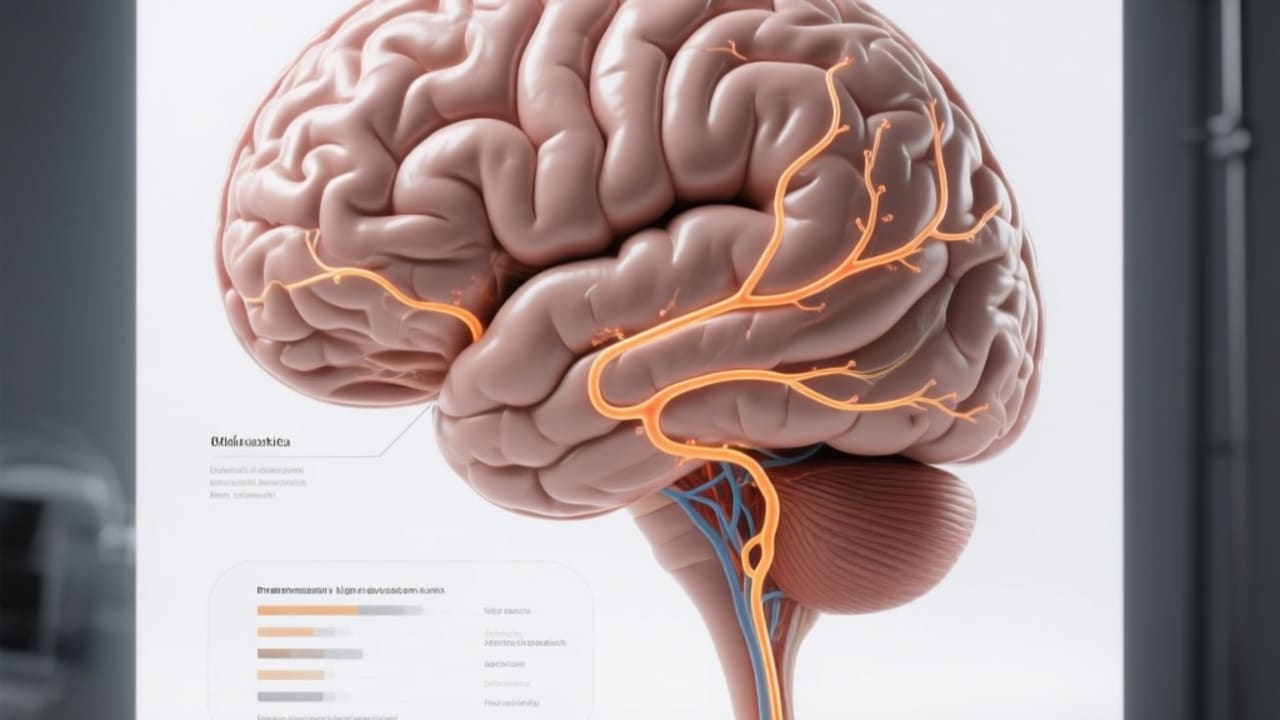
You know that feeling when your brain has 47 tabs open—and the one you need keeps freezing? That’s stress physiology at work. When cortisol and adrenaline spike, the prefrontal cortex (your planning and focusing HQ) can stall, making simple decisions feel heavy.
A 2016 meta‑analysis in Neuroscience & Biobehavioral Reviews (Shields et al.) found acute stress reliably impairs core executive functions like working memory and cognitive flexibility. Translation: under stress, the brain becomes more reactive and less strategic, which feels like mental fog.
Your environment adds fuel. In a 2010 paper in Personality and Social Psychology Bulletin, Saxbe and Repetti showed that describing a home as “cluttered” was linked with higher daylong cortisol. Visual mess constantly pings your attention system, like background notifications you can’t mute.
Here’s the thing: reduce the early‑day stress cues and your brain’s executive functions have a chance to come back online. That’s what the reset below is designed to do.
The soft‑start boundary that calms your morning
Most of us wake up and feed our threat system—news alerts, emails, social scroll—before we’ve had a sip of water. For the first 15 minutes after waking, ban the chaos. No news. No email. No social. You can still use your phone for a timer, music, or notes. Think of it as creating a quiet runway for your brain.
Pair that boundary with one tiny “anchor” you’ll do every morning. Choose one: drink water before coffee, open a window for 30 seconds, do 2 minutes of stretching, or write the 3 things you need to do today. The goal isn’t productivity—it’s proving to your brain, “I’m in control of my first five minutes.”
Mindfulness helps here. A 2014 JAMA Internal Medicine meta‑analysis (Goyal et al.) found mindfulness programs can reduce anxiety and improve mood—benefits that support clearer thinking. Even 3–5 minutes of slow breathing while you stand at the window may help lower arousal and sharpen attention.
If you can step outside or open a bright window, even better. Spending brief time in nature has been tied to stress reduction; a 2019 study in Frontiers in Psychology (Hunter et al.) found that 20–30 minutes in a natural setting lowered cortisol levels. You don’t need a forest—morning light and fresh air often nudge your system toward calm.
The 10‑minute walk that actually clears the haze
No, it doesn’t need to be a workout. A brisk 10‑minute walk is one of the fastest ways to regulate your nervous system. Picture it as a manual “refresh” button: heart rate rises slightly, blood flow increases, and your brain gets the oxygen and rhythm cue it’s been missing.
There’s lab evidence for quick wins. A 2018 paper in PNAS (Suwabe et al.) showed that just 10 minutes of mild exercise enhanced connectivity in brain regions involved in memory. People performed better on memory tasks right after moving. It’s modest—yet it’s fast, free, and stacks up when you repeat it most days.
If you can’t get outside, walk indoors, pace during a call, or do gentle mobility. The point is reliable motion, not perfection. Many readers find that “ten before ten” (10 minutes before 10 a.m.) keeps it consistent.

One‑surface reset: less clutter, clearer thinking
Clutter isn’t a moral failure—but it is cognitive load. Most people have been there: you sit to work, see a pile, and your brain spins out before you even start. Try the one‑surface reset. Choose a single surface you see often (desk, nightstand, kitchen island) and return it to “clear” once a day.
Why it helps: In that 2010 study mentioned earlier, higher perceived home clutter tracked with elevated cortisol over the day. And research from Princeton in 2011 in the Journal of Neuroscience (Kastner lab) showed that multiple visual stimuli compete for neural representation, which can reduce focus and performance. Fewer competing items, fewer attention drains.
Set a 5‑minute timer. Toss, file, or place items in a small tray. You’re not organizing the whole house—you’re giving your brain a clear field to land on. Do this once and you’ll feel it; do it daily and it becomes a quiet form of stress hygiene.
Why this matters
Brain fog makes ordinary days feel heavier—forgetting mid‑sentence, losing threads, and watching simple tasks stretch out. The resets above are small on purpose. They lower the noise floor so your natural clarity can surface, even when life isn’t tidy.
“You don’t need a new brain. You need fewer early‑day triggers.”
And if your fog has specific layers—new parent sleep, high‑stress projects, hormonal changes—these tools still apply. If symptoms are persistent or affect daily functioning, consider checking in with a clinician; brain fog can overlap with issues like iron deficiency, thyroid imbalance, ADHD, depression, or perimenopause, and support is available.
What you can do today
- Set a 15‑minute “soft start” tomorrow morning—no news, email, or social. Use that time for water, light, and a few slow breaths.
- Pick one 5‑minute anchor (water before coffee, open a window, micro‑stretch, or write 3 must‑dos) and repeat it for 7 days. Consistency may help more than variety.
- Schedule a 10‑minute walk before 10 a.m. Research suggests even brief movement can support memory and mood.
- Do a one‑surface reset (desk or nightstand). This small declutter may reduce visual stress and free up attention.
- Protect sleep signals at night: dim lights and reduce bright screens 1–2 hours before bed—changes that may improve next‑day clarity.
You’ve got this. Share this with a friend who’s stuck in a haze, pick one tiny lever, and start tomorrow a little quieter—and a lot clearer.
Frequently Asked Questions
Brain fog is a cluster of symptoms—slowed thinking, distractibility, forgetfulness—often tied to stress, poor sleep, visual clutter, or health factors. Lowering early‑day stressors and improving sleep cues may help, but persistent fog is worth discussing with a clinician.
It can be a helpful start. Research has shown that even 10 minutes of mild exercise can support memory-related brain networks and lift mood. If you can, stack it most days for a bigger effect.
You don’t have to skip it, but drinking water first and delaying caffeine 30–60 minutes may feel steadier for some people. If caffeine worsens jitters or sleep, consider cutting back or timing it earlier in the day.