
You’re eating “clean,” closing your rings, and still waking up puffy, wired-tired, and not quite yourself. Your jeans feel snug by Friday, your sleep is jagged, and small stressors hit like a truck.
Most people blame willpower or one bad meal when the real culprit can be quieter — a slow burn of chronic, low-grade inflammation. It doesn’t shout like a sprained ankle. It whispers across systems: energy, mood, gut, skin.
Here’s the thing: there’s no single test or magic food. But patterns matter, and small shifts can nudge the needle in a week or two.
- Watch patterns, not one-off days: fatigue + GI issues + mood shifts can point to inflammation.
- Food pattern beats superfood: more plants, omega‑3s, and spices; fewer ultra‑processed foods.
- Sleep and stress matter as much as salads: short sleep can raise inflammatory markers.
- Counterintuitive: gentle walks may lower inflammation better than all‑out HIIT when you’re stressed.
- No DIY diagnosing: discuss persistent symptoms with a clinician; tests like hs‑CRP need context.
9 subtle signs chronic inflammation might be in the mix
Picture this: you wake achy, your stomach flips between constipation and reflux, and your mood rides an elevator with no stops. These aren’t random — they can cluster when inflammation simmers.
Common clues include persistent body or joint pain, chronic fatigue or insomnia, mood changes (anxiety, low mood), GI issues (constipation, diarrhea, acid reflux), skin flares, unintended weight changes, and frequent infections. Mouth sores and new stiffness also show up for some people. The Cleveland Clinic notes that chronic inflammation can be harder to spot than an acute injury, with a wide range of symptoms that ebb and flow over months rather than days (Cleveland Clinic, “Inflammation: What You Need To Know”).
Most people have been there — three “off” weeks turn into three months. The real kicker is how nonspecific it feels. That’s why tracking patterns (sleep + energy + gut + mood) for 2–3 weeks can be more revealing than chasing one symptom in isolation.
How an anti‑inflammatory eating pattern may help
Forget the silver-bullet superfood. What moves the dial is a pattern: plants, pulses, nuts, seeds, whole grains, olive oil; cold‑water fish for omega‑3s; herbs and spices (turmeric, ginger, garlic). And on the flip side, easing up on ultra‑processed snacks, sugary drinks, refined grains, and processed meats.
Harvard T.H. Chan School of Public Health highlights that Mediterranean‑style and similar eating patterns are associated with lower inflammatory markers over time, likely thanks to fiber, polyphenols, and unsaturated fats that support a healthier immune response (Harvard Nutrition Source: Inflammation). In the landmark PREDIMED trial (NEJM, 2013), a Mediterranean pattern reduced cardiovascular events; sub‑analyses reported reductions in some inflammatory markers, suggesting a plausible pathway for how diet can influence inflammation.
Think of your plate like a dimmer switch, not an on/off button. A colorful grain bowl with salmon and olive oil isn’t a “cure,” but it may turn down the brightness on symptoms over time — especially when it replaces highly processed options most days of the week.
Smart swaps that add up
- Swap breakfast pastry for Greek yogurt, berries, and walnuts.
- Trade chips for hummus with carrots, cucumbers, and olives.
- Choose salmon, sardines, or trout twice weekly instead of processed meats.
- Cook with extra‑virgin olive oil; finish dishes with herbs and spices.
- Make half your plate vegetables at lunch and dinner.
Beyond the plate: sleep, stress, and movement
You know that feeling when four hours of sleep makes everything feel louder? There’s biology behind it. A 2016 review led by Dr. Michael Irwin reported that even partial sleep loss can raise inflammatory markers like CRP and IL‑6 (Biological Psychiatry, 2016). Translation: protecting your sleep window may calm the immune “volume.”
Chronic stress pushes similar buttons. Reviews in psychoneuroimmunology link ongoing stress with higher inflammation and slower recovery from illness. Short, regular stress‑downshifts — a 5‑minute breathing drill, a quiet walk — can be surprisingly potent when done daily.
And about workouts: if you’re already fried, stacking maximal HIIT daily can be like adding fuel to a campfire. Moderate movement — brisk walks, zone‑2 cardio, strength training with real rest days — is often kinder to your nervous system and may support healthier inflammatory signaling.

Your gut is the crossroads
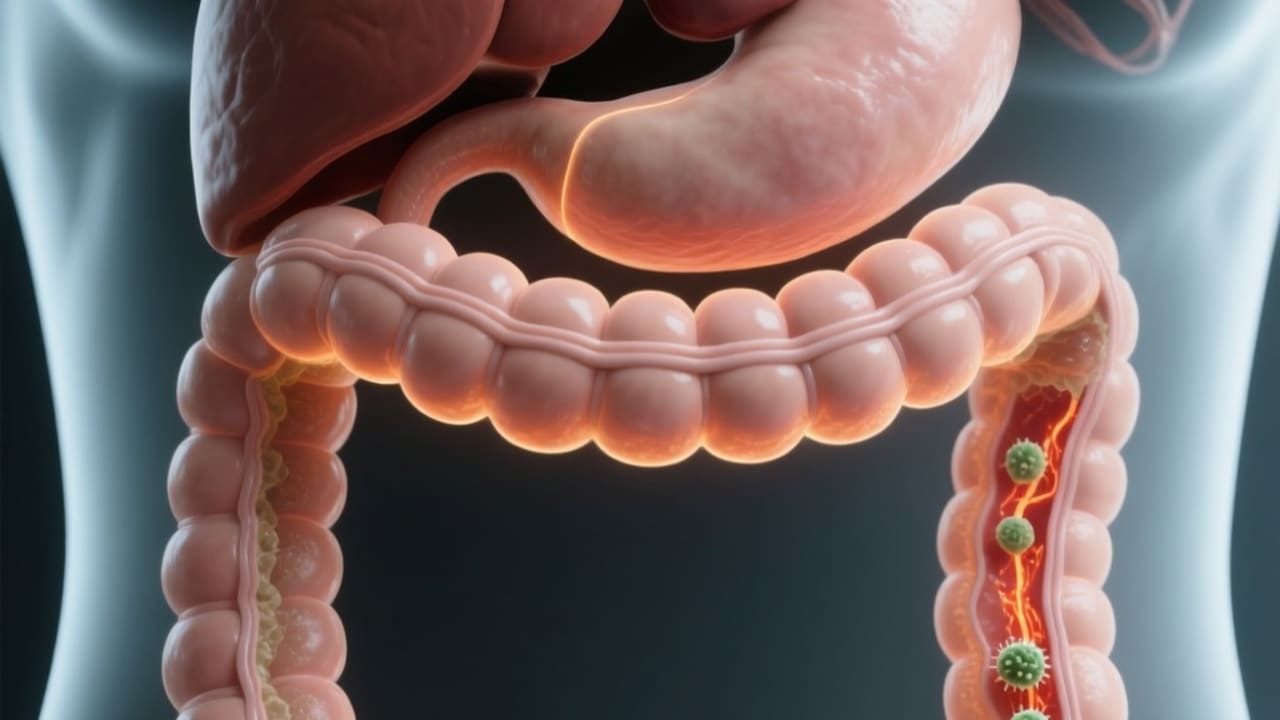
Bloat one day, reflux the next, random bathroom changes — your gut often broadcasts when inflammation’s in the picture. Fiber‑rich plants feed microbes that make short‑chain fatty acids, which help maintain the gut lining. That lining is your body’s velvet rope, deciding what gets in.
There’s also emerging research on how additives and highly processed patterns can irritate that system. For example, a 2015 paper in Nature found that certain common emulsifiers disrupted the gut environment and promoted inflammation in mice (Chassaing et al., 2015). Mice aren’t people, but it’s one reason many clinicians suggest keeping ultra‑processed foods as “sometimes” choices rather than daily staples.
Most people have been there — two weeks of takeout and you feel it. Getting back to basics (plants, pulses, whole grains, olive oil) is often the fastest reset your gut recognizes.
Why this matters
Because this is about your Monday morning — not lab graphs. It’s the difference between powering through a fog and feeling steady by 3 p.m., between sleeping like a person and scrolling at 2 a.m., between snapping at your partner and actually laughing at the small stuff.
Inflammation often feels like “nothing’s wrong, but nothing’s right.” That’s your cue to make small, steady changes — not to push harder.
What you can do today
- Color your plate: aim for 2–3 cups of vegetables today. More plants may help support a healthier inflammatory profile.
- Add omega‑3s: include salmon, sardines, trout, or 1–2 tbsp ground flax or chia. Research suggests omega‑3s can support balanced immune signaling.
- Guard your sleep window: set a 30‑minute wind‑down and aim for 7–9 hours. Even one extra hour may help, based on sleep–inflammation research.
- Walk it off: if you’re stressed, try a 20–30 minute easy walk. Gentle aerobic work may lower inflammatory tone better than all‑out sessions when you’re depleted.
- Check patterns, not perfection: track energy, mood, gut, and sleep for 14 days. If symptoms persist or worsen, discuss them with a clinician; tests like hs‑CRP can provide context, but no single lab confirms “chronic inflammation.”
Small moves, stacked daily, beat heroic overhauls. Share this with someone who’s been feeling “off” — and if you want, bookmark it for a two‑week reset you can actually stick with.
Frequently Asked Questions
Acute inflammation comes on fast after injury or infection and usually settles within days. Chronic inflammation is a lower, longer signal that can last months, often showing up as fatigue, aches, GI changes, or mood shifts. A clinician can help sort out causes and next steps.
Markers like hs‑CRP and ESR can reflect inflammation, but they’re nonspecific and influenced by many factors. They’re most useful when interpreted by a clinician alongside your history, symptoms, and exam — not as a stand‑alone diagnosis.
Many people do well emphasizing vegetables, legumes, whole grains, nuts, seeds, olive oil, and omega‑3 fish, while easing up on ultra‑processed foods and sugary drinks. If you have persistent GI symptoms, consider discussing a tailored plan with a registered dietitian.