
You’re eating roughly the same, moving most days, and still—your jeans feel tighter by Friday. Most people blame willpower. The real culprit is quieter: shifting brain–hormone circuits that change how hungry you feel and how much energy your body burns, especially in your late 30s and 40s.
Here’s the twist that’s lighting up research feeds: scientists just spotlighted a natural hormone, FGF21, that flips energy burn in mice through a brain circuit similar to GLP‑1 drugs—but via a different switch. One curbs appetite. The other revs metabolism.
That doesn’t mean a new miracle shot is in pharmacies tomorrow. It does mean your midlife weight plan should think beyond calories in, calories out—and get personal about which lever your body actually responds to.
- Midlife weight gain is hormonal and neural, not just “willpower.” Cortisol shifts, sleep changes, and muscle loss push the odds.
- GLP‑1 meds reduce appetite; emerging FGF21 research (in mice) increases energy burn via a different brain pathway.
- Counterintuitive: Eating 25–35g protein at breakfast can reduce late‑night snacking by stabilizing hunger hormones.
- Personalization wins: Hormone therapy, GLP‑1s, and strength training together may help more than any single path—when medically appropriate.
- Start today: Lift 2–3x/week, prioritize sleep, manage hot flashes, and discuss HRT or GLP‑1 eligibility with your clinician.
What’s actually changing in midlife metabolism
Picture this: you’re “wired but tired” at 11 pm, then raiding the pantry at midnight. That loop isn’t just stress. In a long‑running Seattle Midlife Women’s Health Study following 132 women over seven years, overnight urinary cortisol rose from 45.3 to 53.4 ng/mg creatinine as women moved through the menopausal transition—tracking more closely with shifting reproductive hormones than with day‑to‑day stress or sleep complaints.
Why it matters: higher nighttime cortisol can nudge ghrelin (hunger) up and leptin (satiety) down, promote abdominal fat storage, and worsen insulin resistance. Add hot flashes and sleep fragmentation, and you’ve got a self‑reinforcing loop that makes weight maintenance harder even if your meals look the same. At the same time, gradual muscle loss—think 3–8% per decade after 30—quietly drags resting metabolism down unless you actively lift.
The takeaway: it’s not that your body “stopped working.” It’s that the control panel changed—and it rewards different inputs now.
Source: Seattle Midlife Women’s Health Study summary (cortisol rise and hormone tracking) via Gift From Within (2026).
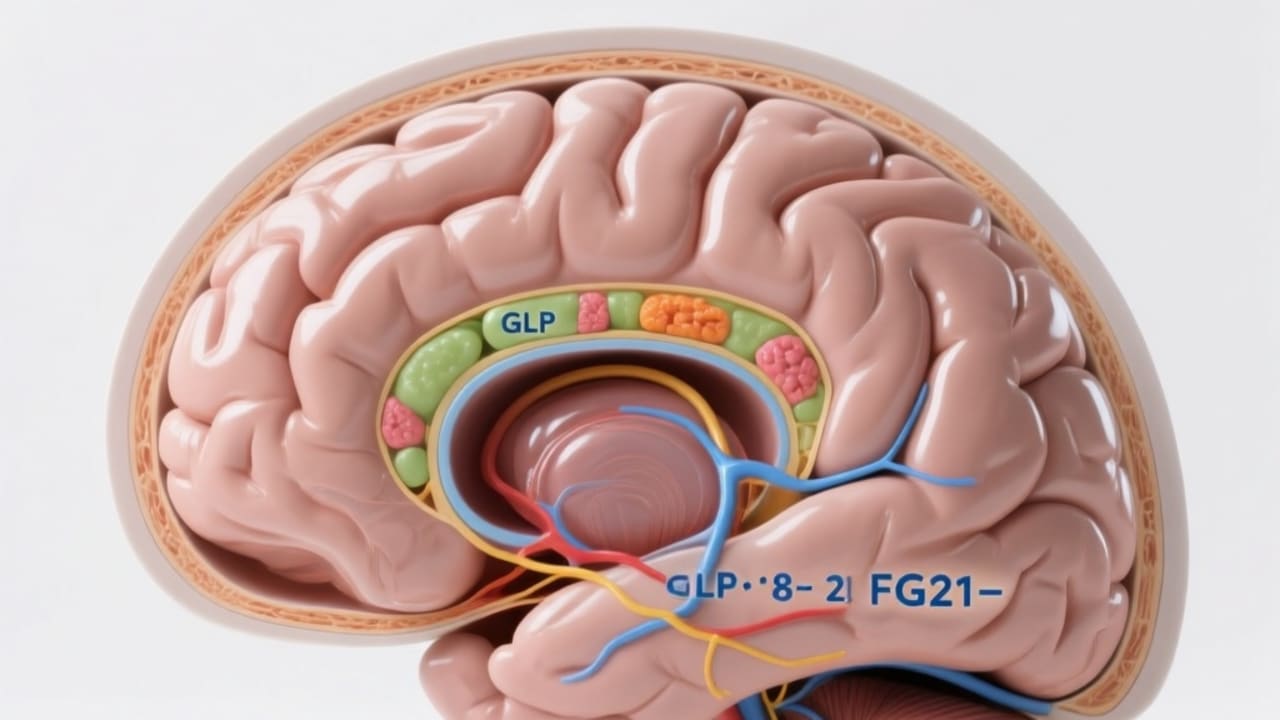
GLP‑1s curb appetite; FGF21 may turn up the burn
GLP‑1 medications like semaglutide and tirzepatide help many people by dialing down appetite and slowing stomach emptying. They target hindbrain circuits that tell you you’re full sooner. That’s one lever—“eat less, feel okay doing it.”
Enter FGF21. A 2026 report from University of Oklahoma scientists found that FGF21 reversed obesity in mice by activating a newly identified hindbrain circuit tied to metabolism—but instead of suppressing appetite, it ramped up energy burning. Same neighborhood in the brain, different door.
What’s surprising is the implication: if some bodies struggle more with low energy expenditure than high appetite, a “burn”‑focused therapy could one day complement “hunger”‑focused meds. Early‑stage human translation will take time, and animal data doesn’t always hold in people. But it widens the map.
Meanwhile, researchers are also testing combinations. AdventHealth Research Institute highlighted new projects at the 2026 ADA Scientific Sessions exploring how pairing GLP‑1 therapy with exercise may influence brain and metabolic health. It’s another nudge toward tailored, multi‑lever strategies rather than one pill for everyone.
Sources: University of Oklahoma via ScienceDaily (2026) on FGF21’s hindbrain mechanism; AdventHealth Research Institute (2026) noting GLP‑1 and exercise research directions.
Personalization beats one‑size‑fits‑all
You know that friend who eats halfway mindfully and drops weight quickly, while you track everything and see a half‑pound a month? Different levers, different results. Personalization starts with your likely drivers: appetite signaling, energy expenditure, hormone shifts, sleep, and muscle mass.
Path 1: Target hormones (especially around menopause)
For eligible women, hormone therapy (estrogen—often with progesterone if you have a uterus) may ease sleep‑wrecking vasomotor symptoms and improve body‑composition trends when started at the right time window. Some clinicians see better weight outcomes when HRT reduces hot flashes and restores deeper sleep—indirect effects that support metabolism. Whether HRT is right for you depends on age, timing since last period, and personal/family risk factors.
Path 2: Target appetite and metabolism (GLP‑1s now, FGF21 later?)
GLP‑1–based medications may help people with obesity or certain metabolic risks by reducing hunger and improving glycemic control. They can be powerful tools when paired with nutrition, resistance training, and medical supervision. FGF21‑based approaches are still preclinical; they’re not available treatments and may or may not translate to humans—but they hint at future “burn”‑centric options.
Path 3: Target daily habits (the base layer)
Strength training 2–3 times weekly, 25–35g protein per meal, earlier light exposure, and consistent sleep may shift your internal settings more than you think. Think of it like turning three dials—muscle, appetite, and cortisol—slightly in your favor every day. That steady stack matters whether or not you add meds or HRT.
Clinics and researchers increasingly combine these paths. The Gift From Within 2026 review notes that stacking hormone therapy, GLP‑1s, and lifestyle often outperforms any single lane for midlife women. And several weight‑management clinical trials are recruiting in 2026 if you want to contribute to the evidence base.
Sources: Gift From Within (2026) on combined approaches; TrialX roundup (2026) on active weight‑management trials.

Why this matters
Because this is about your Monday morning, not a lab headline. If your appetite isn’t the main issue but your energy feels “stuck,” a plan that only targets hunger may disappoint. If hot flashes keep you up, no macro calculator can outwork sleep loss. And if you’re not lifting, your metabolism is negotiating with one hand tied.
The fix isn’t “try harder”—it’s “pull the right lever for your body.”
This lens helps you spend effort where it pays off—choosing earlier dinners or heavier squats instead of endlessly swapping snack brands and blaming yourself.
What you can do today
- Lift heavy(ish) 2–3x/week. Two lower‑body and two push/pull moves, 2–4 sets of 6–10 reps. Muscle may raise resting burn and improves insulin sensitivity.
- Front‑load protein. Aim 25–35g at breakfast and lunch (eggs + Greek yogurt, tofu scramble, salmon). This may blunt evening cravings.
- Protect sleep to calm cortisol. Morning outdoor light 10–20 minutes, caffeine cutoff 8 hours before bed, keep the bedroom 60–67°F. Treat hot flashes; discuss HRT if appropriate.
- Consider medical tools—safely. If you meet criteria for GLP‑1 therapy, discuss risks, benefits, and exit plans with your clinician. FGF21 is not a treatment yet; avoid unproven “hormone boosters.”
- Personalize with data you can sustain. Track 1–2 metrics (protein hits, lifting sessions, sleep hours) for 4 weeks. Adjust one lever at a time so you learn what actually moves your scale and energy.
You don’t need to overhaul your life—just choose the lever that fits your biology right now. If this clicked, share it with a friend who’s stuck on the same plateau, or head to our next piece on building an easy, protein‑forward breakfast rotation.
Frequently Asked Questions
Not at this time. The 2026 findings were in mice and need human trials to assess safety, dosing, and real‑world effects. Be cautious with any supplement claiming to “boost FGF21.”
Many clinicians encourage it because resistance training may help preserve muscle while you lose weight. Discuss timing, protein targets, and any side effects with your healthcare provider.
HRT is individualized and depends on age, time since last period, symptoms, and personal/family risk factors (like breast cancer or clotting). A menopause‑trained clinician can help you weigh benefits and risks.