
Picture this: it’s 11:37 pm and you feel wired but not exactly awake—scrolling, snacking, promising yourself you’ll be a different person tomorrow. Then morning hits and your brain boots up like a 10-year-old laptop. Most people blame willpower. Often, the real driver is cortisol doing the wrong thing at the wrong time.
Cortisol isn’t the villain. It’s the get‑out‑of‑bed hormone, the focus hormone, the adapt‑to‑stress hormone. But when it stays high too long, it can look like anxiety, belly weight you can’t shake, and sleep that never truly restores you.
Here’s the thing: you don’t need a lab coat to notice when your stress system is off. There are patterns—quiet signals—that your body sends long before burnout arrives.
- “Wired at night, slow in the morning” is a classic cortisol rhythm flip.
- Seven common signs include sleep trouble, cravings, belly weight, blood pressure spikes, brain fog, mood shifts, and cycle changes.
- Small levers—morning daylight, steady meals, shorter workouts—may help recalibrate your stress rhythm.
- Counterintuitive: Longer, punishing workouts can keep cortisol high; shorter strength sessions may work better.
- If symptoms are severe (easy bruising, purple stretch marks, rapid weight gain), speak with a clinician about cortisol testing.
What cortisol actually does — and why you feel “wired but tired”
Cortisol follows a daily wave: it surges within the first hour after waking (the cortisol awakening response) to help you focus, then gradually declines through the day and dips at night so you can sleep. When that curve flattens or shifts late, you get the frustrating combo—alert when you should be winding down, foggy when you need to perform.
Think of it like a dimmer switch that got stuck. You can still turn the lights on, but it’s never bright at the right moment—and it won’t dim when you want calm. A large meta‑analysis by Clemens Kirschbaum and colleagues reported that alterations in the morning cortisol surge are linked with perceived stress and health outcomes (Stalder et al., Psychoneuroendocrinology, 2016).
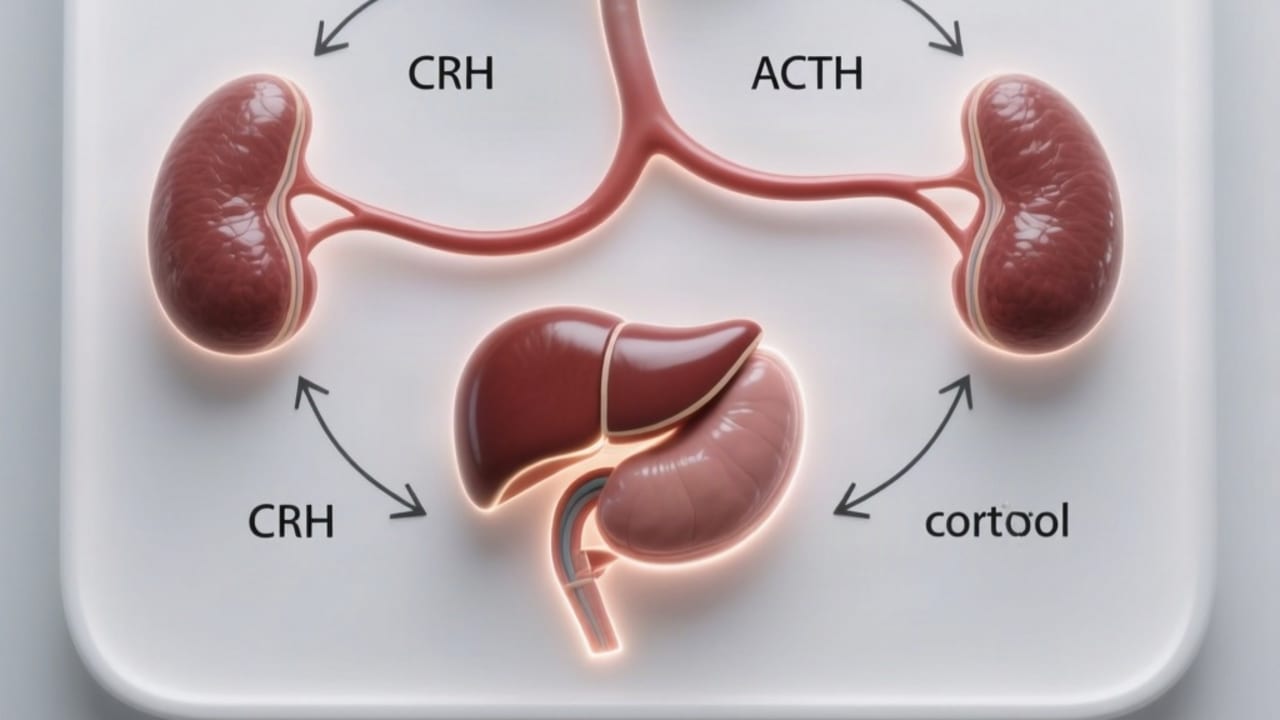
7 subtle signs your cortisol may be running high
You don’t need every symptom to have a cortisol issue. But if several resonate, it’s worth paying attention—and, if they’re intense or persistent, worth discussing with a clinician.
- Sleep feels broken. You fall asleep late, wake at 2–3 am, or wake unrefreshed. Elevated evening cortisol is linked with insomnia and fragmented sleep (Vgontzas et al., J Clin Endocrinol Metab, 2001).
- Cravings and “stress belly.” High, sustained cortisol can stoke appetite for quick carbs and favor central (abdominal) fat storage—what people call “cortisol belly.”
- Mood swings or worry spikes. Feeling on edge, snappy, or low without a clear trigger can reflect an HPA‑axis stuck in high gear.
- Blood pressure creeps up. Cortisol can raise vascular tone and sodium retention, nudging numbers higher.
- Brain fog and memory blips. Chronically high cortisol has been associated with hippocampal vulnerability—think names on the tip of your tongue more often (Lupien et al., Nat Neurosci, 1998).
- Slower recovery. More colds than usual, workouts that leave you unusually depleted, cuts that heal slowly—glucocorticoids temper immune and repair processes.
- Cycle changes (for women). Stress hormones can interfere with the brain‑ovary conversation, leading to irregular periods or lower libido.
If you also notice easy bruising, new purple stretch marks, profound muscle weakness, or rapid weight gain in the face/upper back, that’s not “normal stress.” Those red‑flag signs warrant medical evaluation for conditions like Cushing’s syndrome.
Hidden habits that keep cortisol high (and how to fix them)
Most people have been there—skipping breakfast, grinding through a late‑night HIIT, then staring at the ceiling. Small daily choices can nudge your stress system up or down.
Sleep debt and screens
Short sleep and bright screens after sunset push your brain toward “daytime mode.” Evening light, especially blue‑rich LEDs, suppresses melatonin and can delay sleep timing (Cajochen et al., J Appl Physiol, 2011). Less sleep and later bedtimes often correlate with flatter, less healthy cortisol rhythms.
Under‑fueling and long gaps between meals
Because cortisol helps keep blood sugar stable, long stretches without food—or chronically low energy intake—can prompt stress‑hormone “help.” Balanced meals with protein and fiber may reduce big swings that your body perceives as a stressor.
All‑out workouts, all the time
Exercise is an incredible stress reset, but intensity and timing matter. Back‑to‑back long, punishing sessions—especially late evening—can keep cortisol elevated into the night. Many people do better with 25–40 minutes of strength or intervals earlier in the day, and gentler movement after dinner.
Sleep restriction itself can elevate evening cortisol, which then disrupts the next night—an unhelpful loop (Leproult & Van Cauter, Curr Opin Endocrinol Diabetes Obes, 2010). Breaking that cycle starts with earlier light, steadier fuel, and smarter training.

Should you test your cortisol?
If your symptoms are mild, lifestyle changes may be a good first step. If they’re persistent, worsening, or include red flags, testing can help rule out medical conditions. Common options include: morning serum cortisol, late‑night salivary cortisol, 24‑hour urinary free cortisol, and the 1‑mg overnight dexamethasone suppression test.
Endocrinology guidelines recommend specific tests and thresholds when Cushing’s syndrome is suspected, often using more than one method to confirm (Nieman et al., J Clin Endocrinol Metab, 2015). Work with a clinician—ideally an internist or endocrinologist—to match symptoms with appropriate testing and to interpret results in context. Home saliva tests can offer a snapshot, but they’re not a diagnosis.
Why this matters
This isn’t about chasing a “perfect” hormone level. It’s about your mornings feeling clear, your afternoons feeling steady, and your nights feeling like an off‑switch actually exists. High cortisol touches how you show up—at work, with your partner, with your kids, and for yourself.
When you fix the rhythm, you often fix the feeling—focus by day, calm by night.
And because cortisol intersects with blood pressure, blood sugar, immunity, and bone health, addressing it isn’t only about stress—it’s a quiet investment in your long‑term vitality.
What you can do today
- Get 5–10 minutes of outdoor light within an hour of waking. Morning daylight may help anchor your circadian rhythm and support a healthier cortisol curve.
- Eat a steady first meal. A protein‑rich breakfast (20–30 g) with fiber and some carbs may help stabilize energy and reduce stress‑driven cravings.
- Shrink, don’t skip, your workout. Research suggests shorter strength or interval sessions earlier in the day may help; keep late‑evening training easier (mobility, walking, breathwork).
- Create a 45‑minute wind‑down. Dim lights, park your phone, warm shower, and a consistent bedtime may support lower nighttime cortisol.
- Watch stimulants and alcohol. Limiting caffeine after noon and alcohol close to bedtime may improve sleep quality and reduce “wired but tired” nights.
You don’t have to overhaul your life to change your stress rhythm. Try one lever for a week, then stack another. If symptoms stick around or you’re worried, loop in your clinician—personalized guidance can make all the difference.
Frequently Asked Questions
You can’t diagnose yourself, but patterns help. If you notice several signs—sleep fragmentation, cravings, rising blood pressure, brain fog—it’s reasonable to try gentle rhythm resets. If symptoms are severe or persistent, ask your doctor about targeted evaluation, including cortisol testing.
Testing is most useful when symptoms are significant (easy bruising, new purple stretch marks, rapid central weight gain) or when lifestyle changes haven’t helped. An internist or endocrinologist can order validated tests like late‑night salivary cortisol or a low‑dose dexamethasone suppression test.
Some people find magnesium before bed helpful for sleep, and small trials suggest adaptogens may influence stress perception. Effects vary, and they can interact with medications. It’s worth discussing options and doses with your clinician rather than self‑experimenting blindly.