
You’re dragging by 3 p.m., your joints feel oddly creaky, and your skin keeps flaring for no clear reason. Most people blame “stress” or “getting older.” But here’s the thing: the real driver might be a low, constant immune simmer—chronic inflammation.
It rarely announces itself with a fever. Instead, it shows up as fatigue, brain fog, bloating, and aches that come and go. You can feel “off” even when your basic labs look normal. And while inflammation is part of healing, the long-haul version can nudge other issues if it’s left unchecked.
The good news? Small, daily levers—food, sleep, movement, and stress skills—can calm that simmer. Let’s make it practical.
- Quiet clues: persistent fatigue, joint stiffness, digestive swings, skin flares, brain fog, frequent colds.
- Food matters: more plants, fiber, and fatty fish may lower inflammatory signals.
- Sleep is medicine: even partial sleep loss can spike inflammatory markers the next day.
- Move smart: regular moderate activity cools inflammation—overdoing high-intensity sessions can do the opposite short term.
- Measure wisely: hs-CRP is one common blood marker; patterns over time matter more than a single number.
The quiet symptoms most people miss
Picture this: you wake up “tired but wired,” your hands feel stiff opening a jar, and your stomach flips between bloat and urgency. None of it screams “inflammation,” yet together they can hint at an immune system on idle fire.
Common clues include persistent fatigue, joint or muscle aches that wax and wane, skin issues (eczema, psoriasis, random rashes), digestive swings (bloating, constipation, diarrhea), headaches, brain fog, mood shifts, and catching colds more often. Unintended weight change—up or down—can also show up.
What’s surprising: inflammation talks to the brain as much as to your tissues. A 2016 analysis in JAMA Psychiatry reported that some people with depression have higher inflammatory markers like CRP and IL-6, hinting at a mind–immune link worth discussing with a clinician.
What actually drives low-grade inflammation
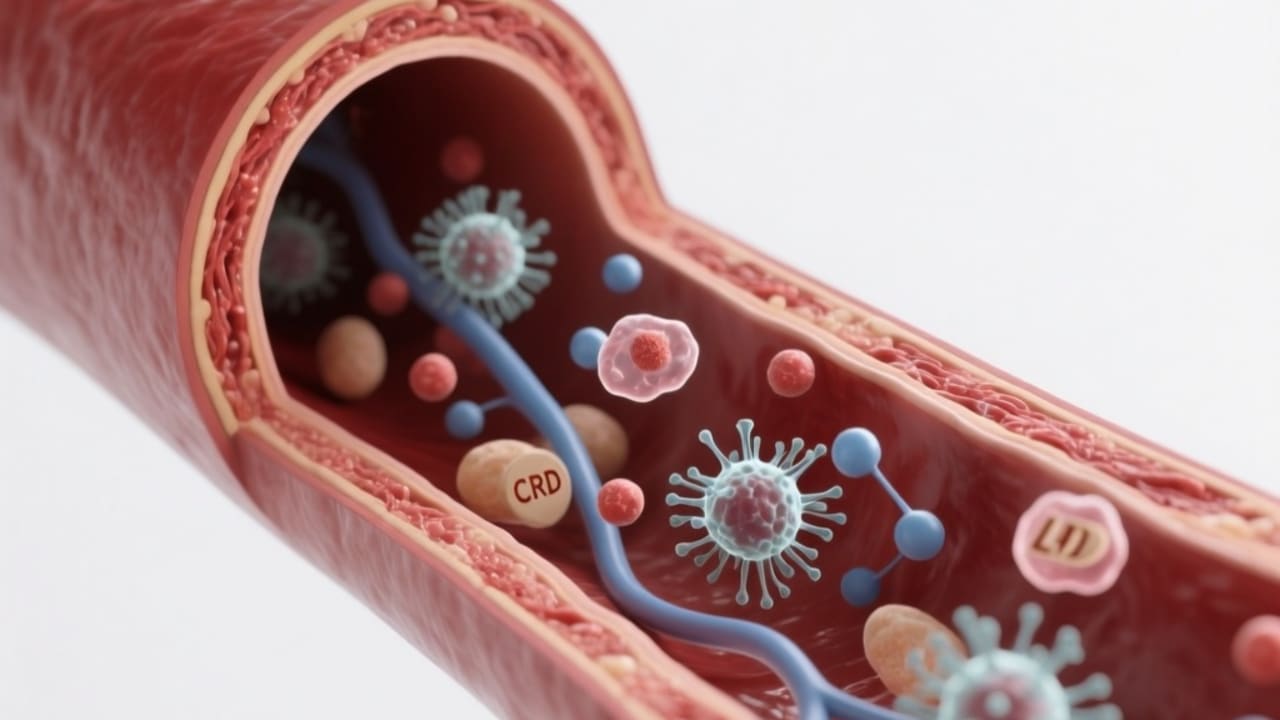
Most people think “injury or infection.” But daily life nudges your immune system too—ultra-processed foods, poor sleep, chronic stress, sedentary time, pollution exposure, and even oral health issues can all contribute. It’s less a single spark and more a pile of small matches.
Diet is a big lever. A 2023 paper in The BMJ linked higher ultra-processed food intake with increased risks of several health outcomes and noted ties to inflammatory pathways. That doesn’t mean one packaged snack “causes” disease—patterns over months and years matter.
We also know inflammation itself can drive disease risk. The 2017 CANTOS trial in The New England Journal of Medicine showed that reducing IL‑1β–mediated inflammation lowered cardiovascular events independent of cholesterol, underscoring that the immune flame—not just lipids—matters.
Food, movement, and sleep: your daily levers
Think of your day like a thermostat. Meals, steps, and sleep dial the heat up or down. You don’t need perfection—you need repeatable, boring-good choices most of the time.
Food that may cool the flame
Build plates around plants (vegetables, fruits, legumes), whole grains, nuts, olive oil, herbs/spices, and fish rich in omega‑3s. This “Mediterranean-leaning” pattern has been tied to lower inflammatory signaling. In the PREDIMED randomized trial (NEJM), a Mediterranean-style diet improved cardiovascular outcomes; follow-up analyses reported reductions in markers like CRP.
Move most days—without burying yourself
Aim for regular moderate activity (think brisk walks, cycling, strength training 2–3x/week). A Nature Reviews Immunology paper led by Dr. Gleeson described how consistent, moderate exercise tempers systemic inflammation via muscle–immune crosstalk. Hard intervals can be great, but stacking maximal efforts day after day may spike inflammation short term—especially if you’re underslept.
Sleep like your immune system depends on it (it does)
Even one short night can shift inflammatory signals. A 2015 review in Biological Psychiatry by Dr. Michael Irwin (UCLA) found that partial sleep loss increases next‑day inflammatory activity. Translation: protect 7–9 hours, a stable sleep-wake window, and morning light exposure. Your next workout and your mood will feel easier.

Your gut and stress are talking to your immune system
You know that feeling when a tense week flips your stomach? That’s the gut–brain–immune loop in action. Fiber feeds gut microbes that make short-chain fatty acids like butyrate—compounds that may calm immune cells. Low fiber and frequent ultra-processed foods can shift the microbiome in a more inflammatory direction.
A 2020 review in Cell Host & Microbe linked higher-fiber diets to more butyrate-producing bacteria and lower systemic inflammation. And on the stress side, a 2017 PNAS study led by Dr. Steve Cole showed that chronic social stress upregulates pro‑inflammatory gene expression. Stress isn’t just a feeling; your immune system hears it.
That said, you’re not powerless. Simple skills—box breathing between meetings, a 10‑minute walk after lunch, or a wind‑down ritual—may shift that loop in your favor.
Why this matters
Because this is your Tuesday, not a textbook. Chronic inflammation can make work feel heavier, workouts feel harder, and relationships feel shorter-fused. Not because you’re weak—but because your biology is quietly pushing uphill.
“You don’t need to overhaul your life—just change the signals you send your immune system, most days.”
The goal isn’t zero inflammation—that’s neither possible nor desirable. It’s a steadier baseline so your immune system can flare when needed and cool when it’s done.
What you can do today
- Build one anti-inflammatory plate: half vegetables, a quarter protein (fish, tofu, beans, poultry), a quarter whole grains, plus olive oil and herbs. Research suggests this pattern may lower CRP over time.
- Walk 10 minutes after meals: post‑meal walks may help blunt glucose spikes, which can influence inflammatory signaling.
- Protect your sleep window: pick a consistent 8‑hour opportunity, anchor your wake time, and get 5–10 minutes of morning daylight. Even small improvements may help.
- Swap one ultra-processed item: trade chips for nuts/berries or soda for sparkling water. Small swaps, repeated, matter.
- Check in with your clinician: if symptoms persist, ask about lifestyle factors and whether tracking hs‑CRP or other tests makes sense for you. Lab context and patterns over time are key.
Start with one lever, not all of them. Momentum beats perfection. If this resonates, share it with the friend who’s “just tired”—it might be their turning point.
Frequently Asked Questions
Subtle patterns like ongoing fatigue, morning stiffness, digestive swings, skin flares, brain fog, and frequent colds. If these persist, consider a check‑in with your clinician to rule out other causes and discuss next steps.
Many people see benefits from lifestyle—more fiber and omega‑3s, regular moderate exercise, better sleep, and stress skills. These may help, but talk with a healthcare professional if symptoms persist or worsen.
High‑sensitivity C‑reactive protein (hs‑CRP) is a common blood marker. It’s one piece of a bigger picture; your doctor may consider symptoms, history, and repeat measurements over time.