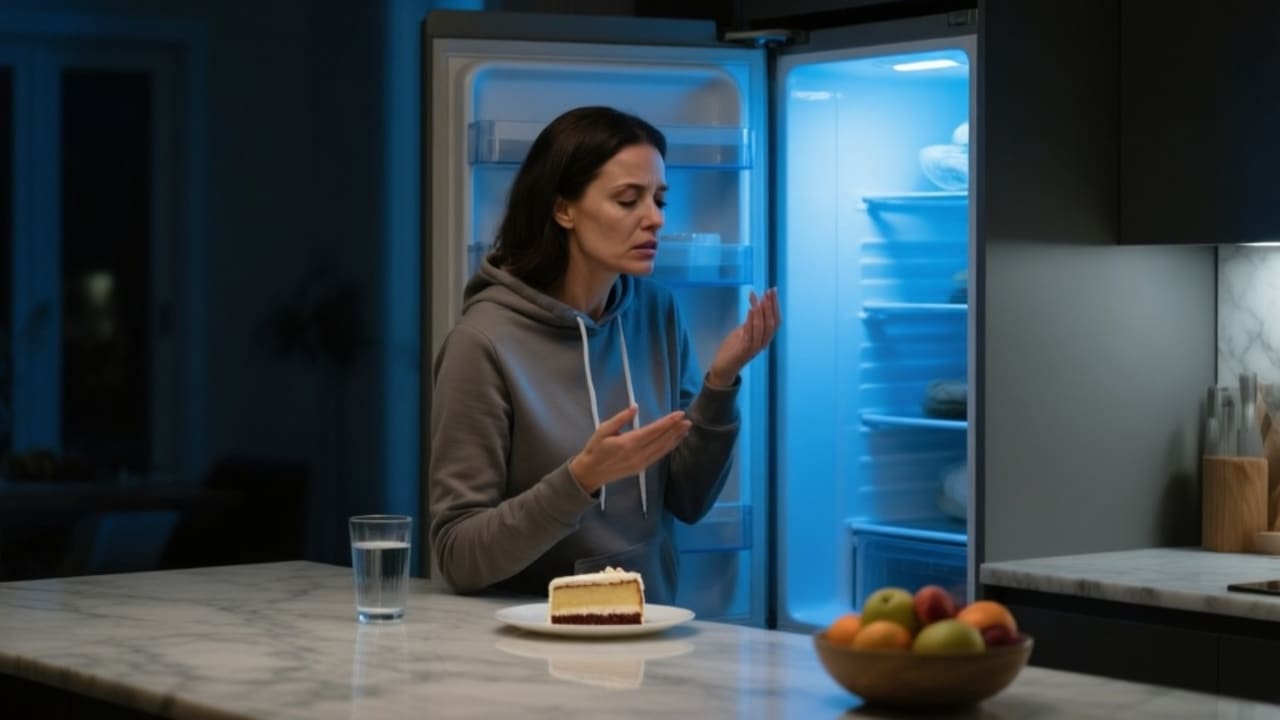
Picture this: it’s 2 a.m., you’re exhausted, and your heart feels like it’s jogging in place. Your mind isn’t just racing—it’s sprinting. You’re not “bad at sleep.” Your nervous system is simply acting like it’s noon.
Here’s what almost nobody tells you about insomnia: it isn’t only a mind thing. It’s a body thing—elevated heart rate, warmer core temperature, stress chemistry that keeps you alert. That wired-but-tired feeling has a name: hyperarousal.
The good news? When you understand the body alarm behind insomnia, you can work with it—gently lowering the volume instead of fighting it.
- Insomnia hyperarousal = body in “day mode.” Higher heart rate, stress signals, and brain speed keep you alert at night.
- CBT‑I is first-line for chronic insomnia. It targets thoughts, timing, and behaviors that keep arousal high.
- Counterintuitive: A warm shower 1–2 hours before bed may help you cool down and fall asleep faster.
- Timing matters. Morning light, earlier workouts, and a 2 p.m. caffeine cutoff may reduce night-time alertness.
- Don’t chase sleep. If you’re awake ~20 minutes, get up briefly and reset in low light.
Hyperarousal 101: When Your Body Thinks It’s Daytime
If insomnia had a soundtrack, it’d be your nervous system humming at a higher volume. Many people with insomnia show signs of physiological activation—faster heart rate, higher evening cortisol, and more fast brain-wave activity near bedtime. Harvard’s Division of Sleep Medicine describes this “hyperarousal” state as a leading theory for why falling and staying asleep becomes hard in some people.
Think of it like a sensitive smoke alarm: a little stress, late caffeine, or bright light can send it blaring. The result? Your brain gets “daytime” signals after dark, and sleep can’t stabilize even if you’re exhausted.
The autonomic see-saw
Your sympathetic system (the gas) and parasympathetic system (the brakes) ideally switch smoothly across 24 hours. But a 2024 clinical review in the Yeungnam University Journal of Medicine highlighted that in insomnia, this balance can skew toward sympathetic tone—elevating heart rate, core temperature, and vascular tension at night. That makes the “brakes” sluggish right when you need them.

Insomnia Is Systemic—Not Just “In Your Head”
Most people blame busy thoughts. But hyperarousal can ripple well beyond the brain—affecting cardiovascular, endocrine, and immune systems. A 2024 review in the Yeungnam University Journal of Medicine described insomnia as a systemic condition that touches multiple body networks, and linked it to higher daytime fatigue, impaired attention, and mood symptoms.
Here’s the thing: when sleep fragments, the body’s balancing acts—glucose control, inflammation, stress hormones—can drift. That doesn’t mean you’re doomed. It means sleep is a whole-body process, and small shifts in routine can have outsized effects on those systems.
The brain-body feedback loop
Anxious thoughts can rev the body, and a revved body can fuel anxious thoughts. It’s a loop. The practical takeaway: strategies that calm the body (light, temperature, timing) and the mind (CBT‑I skills) can interrupt the cycle from both directions.
Why It Starts—and Sticks: The 3P Model
Most people have been there—one stressful week, a painful injury, or a tough deadline, and suddenly sleep is off. In the “3P” model (predisposing, precipitating, perpetuating), traits like anxiety sensitivity or a family history can set the stage; stressors like loss or illness flip the switch; then habits (long naps, late caffeine, clock-watching) keep the problem going.
A 2019 review available via PubMed Central summarized how heightened central nervous system activity—through stress, pain, or worry—amplifies arousal and disrupts sleep regulation. It also noted that thermoregulation (how your body adjusts temperature) ties into sleep onset, offering a surprising route to relief: warmth before bed that prompts a cooling rebound.
The “wired but tired” trap
When sleep feels fragile, many people spend extra time in bed to “catch up.” Ironically, that can train the brain to associate bed with wakefulness, boosting hyperarousal. CBT‑I flips this by matching time in bed to actual sleep and rebuilding sleep pressure—so the bed becomes a strong cue for drowsiness again.

Tools That May Lower Night‑Time Arousal
Let’s talk about options with real‑world backing. A 2023 review indexed on ScienceDirect reported higher insomnia rates in neurological conditions and underscored therapies like CBT‑I, bright light timing, and judicious melatonin for certain cases. No single tool fits everyone, but the pattern is clear: align the body clock, reduce arousal signals, and retrain sleep associations.
CBT‑I: First‑line for chronic insomnia
CBT‑I blends stimulus control (bed = sleep and intimacy only), sleep scheduling (consistent rise time, time-in-bed matched to sleep), cognitive tools (defusing “What if I never sleep?” thoughts), and relaxation practices. Many people see improvements within weeks, and effects may last longer than sleep meds. It’s worth discussing with a clinician or finding a certified provider (or vetted digital program).
Light, caffeine, and temperature—small levers, big impact
Morning light anchors your clock; bright light at night pushes it later. Try bright outdoor light within an hour of waking and dim, warm light in the last 2–3 hours before bed. Caffeine’s half‑life means a 2 p.m. cutoff (earlier if sensitive) may help. And that warm shower or bath 1–2 hours before bed? It can trigger a cooling drop that signals sleepiness.
Exercise helps—timing matters
Regular physical activity may reduce arousal and deepen sleep. That 2019 PubMed Central review noted exercise’s thermogenic effects and possible links to sleep-promoting brain regions. Many people do best with morning or afternoon workouts; vigorous sessions too close to bedtime can keep the body “on.”
What about melatonin?
Melatonin isn’t a sedative; it’s a clock signal. Low doses, taken at the right time (often 2–4 hours before the target bedtime), may help with circadian shifts or jet lag. It’s not a universal fix for chronic insomnia, and it can interact with medications—so it’s worth reviewing with a clinician.
Why This Matters
When you treat insomnia like a willpower problem, you end up blaming yourself for biology. Understanding hyperarousal reframes the struggle: your body is trying to protect you—it’s just picking the wrong moment to stay alert.
“You’re not broken. Your body alarm is simply set too loud at night—and you can learn to turn it down.”
But what does that actually mean for your Monday morning? It means you can change the inputs your body reads—light, timing, temperature, thoughts—and gradually teach your system that night is safe for sleep again.
What You Can Do Today
- Set a consistent rise time (even after a rough night). Regular wake-ups may help rebuild sleep drive and steady your clock.
- Get bright morning light for 10–30 minutes; dim screens and overheads 2–3 hours before bed. Research suggests this light contrast helps lower evening arousal.
- Trial a 2 p.m. caffeine cutoff for 1–2 weeks. Many people find this reduces that “wired at midnight” feeling.
- Try a warm shower or bath 1–2 hours before bed to promote a cooling drop that may ease sleep onset.
- Use CBT‑I habits: keep bed for sleep and intimacy only; if awake ~20 minutes, get up briefly in low light and return when drowsy.
- Move most days, ideally morning or afternoon. Even 20–30 minutes of moderate activity may help over time.
- Talk to a clinician if insomnia lasts 3+ months or you suspect conditions like sleep apnea, chronic pain, anxiety, or depression. CBT‑I and targeted care may help.
Sleep may never be “perfect,” but it can be steadier. Share this with the friend who’s tired of being tired—and if you want a deeper guide to CBT‑I skills, we’ve got you.
Frequently Asked Questions
Hyperarousal is when your body shows daytime‑style activation at night—faster heart rate, racing thoughts, warm core temperature, and alertness at bedtime. It’s not a diagnosis, but if you often feel “wired but tired,” it’s worth discussing with a clinician and exploring CBT‑I strategies.
For chronic insomnia, CBT‑I is generally recommended first‑line and may provide longer‑lasting benefits. Melatonin can help with circadian timing in some cases, but it isn’t a sedative and may not address the behaviors and thoughts that keep insomnia going.
Many people do best with a 2 p.m. cutoff, or about 8–10 hours before bedtime if you’re sensitive. Try a two‑week experiment and track changes in how quickly you fall asleep and nighttime awakenings.