
Picture this: it’s 2 a.m., your brain’s racing, and your stomach feels off — again. You’ve tried breathing apps and blue‑light filters. Still, your anxiety hums like a fridge you can’t turn off.
Here’s the thing most people miss: your mood, microbes, and body clocks talk all day. When they’re in sync, stress feels manageable. When they’re not, small worries can snowball, sleep unravels, and your gut lets you know about it.
New research is pointing to a powerful loop — the gut–brain–circadian axis — and it’s reshaping how we think about anxiety. The surprising part? Simple shifts in food, timing, and targeted probiotics may help nudge that loop back on track.
- Your gut talks to your brain via nerves, immune signals, and hormones — not just “vibes.”
- Multi‑strain probiotics and prebiotic fiber may reduce anxiety symptoms in some people within 4–8 weeks.
- Aligning meals and sleep with daylight may steady cortisol and improve mood.
- Counterintuitive: Eating earlier can calm next‑day stress more than eating “clean” late at night.
- Track your “gut–mood–sleep” trio; patterns often show up within two weeks.
The Gut–Brain–Circadian Loop, Explained Simply
Think of your gut, brain, and body clocks as a group chat. Microbes send chemical messages; the vagus nerve carries updates; hormones like cortisol set the tone. When the chat goes supportive, you feel grounded. When it goes chaotic — late meals, poor sleep, high stress — anxiety can spike.
A 2025 review in Frontiers in Psychiatry mapped this loop, showing that gut microbes can influence mood through neural, immune, endocrine, and metabolic pathways — and that circadian rhythms modulate all of it (Bautista et al., 2025). Translation: timing matters, not just what you eat or how you cope.
Most people have been there — a late dinner, doomscrolling in bed, then a jittery morning. That’s the loop in action: disrupted clocks, a restless gut, and a brain wired for threat.
Microbes, Metabolites, and Mood: What’s Doing the Talking
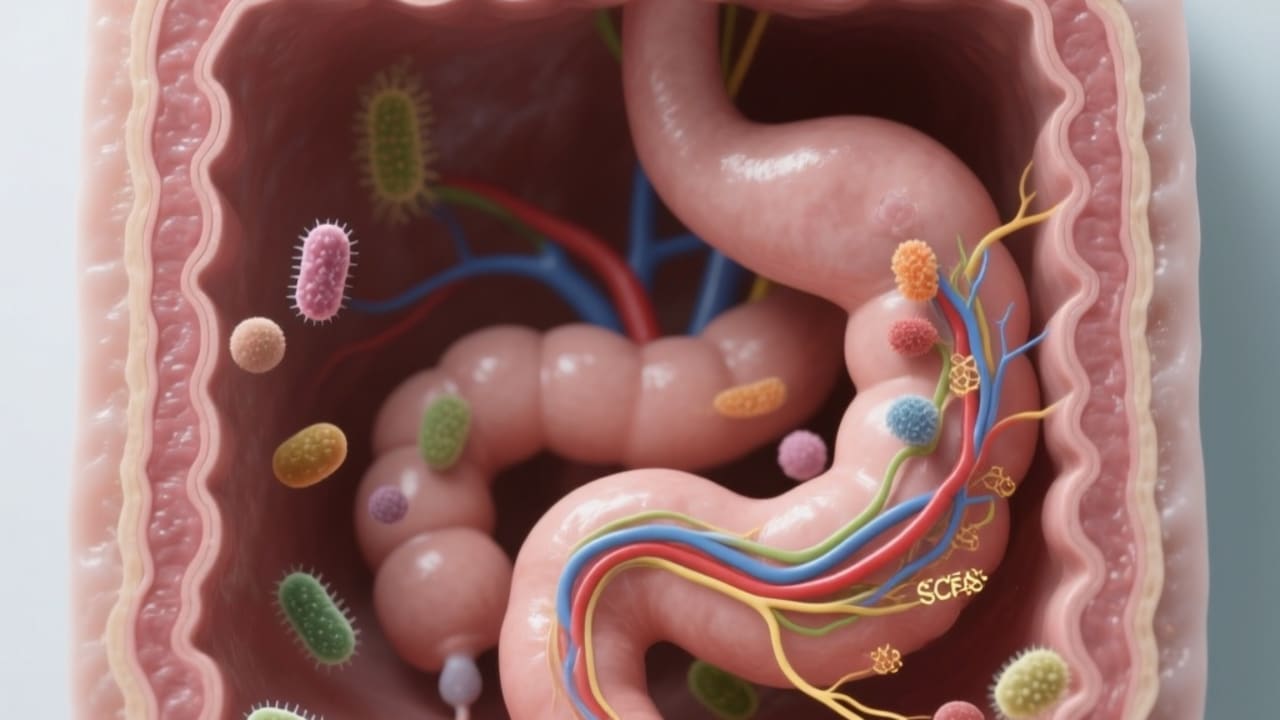
Your microbes make metabolites — short‑chain fatty acids (SCFAs), indoles, and compounds tied to tryptophan metabolism — that can shape inflammation, gut barrier integrity, and even neurotransmitter systems. When the balance shifts, mood can follow.
A 2026 review in Frontiers in Microbiomes summarized evidence that certain Lactobacillus and Bifidobacterium strains may reduce stress responses and trend toward lower anxiety symptoms in human studies, while rodent work shows changes in brain‑derived neurotrophic factor (BDNF) and inflammation markers (Ataei et al., 2026). One example: Lactobacillus reuteri DSM 17938 improved gut integrity and restored BDNF in stress models (Petakh et al., 2024).
Relatable picture: after a stretch of fiber‑light, ultra‑processed meals, your gut community shifts. You feel more reactive, your sleep fragments, and your “baseline” suddenly isn’t. Rebuilding with fiber and fermented foods often steadies the feed of those calming metabolites.
Cortisol, Sleep, and the Stress Spiral
Cortisol isn’t the villain — it’s a rhythm‑keeping hormone that helps you wake and wind down. When it’s dysregulated, anxiety can feel louder and sleep lighter. Microbes and meal timing appear to nudge that rhythm.
Human trials are still emerging, but a 2025 pilot summarized in the microbiome review literature reported trends toward reduced perceived stress with multi‑strain probiotics, alongside hints of improved sleep quality (Voigt et al., 2025, as cited by Ataei et al., 2026). Put simply: supporting your gut may make it easier for your stress system to recalibrate — especially when paired with consistent sleep and earlier dinners.
You know that feeling when a late‑night takeout hits hard and you’re wired at midnight? That timing + food combo can push cortisol later, making the next morning grittier and anxiety more likely to flare.

Food, Timing, and Targeted “Psychobiotics”: What Actually Helps
“Psychobiotics” is a term researchers use for probiotics and prebiotics that may support mental health. Early data is promising, but not a magic bullet — and strain specifics matter.
A critical review in Frontiers in Psychiatry highlighted how individualized responses, circadian patterns, and lifestyle context can explain why the same product helps one person and not another (Bautista et al., 2025). Meanwhile, a Nature Mental Health commentary in 2025 emphasized teasing apart cause vs. correlation, urging careful, personalized trials rather than one‑size‑fits‑all fixes (Amath et al., 2025).
Another clue: a 2025 preprint linked altered microbial carbohydrate metabolism with anxiety and GI symptoms in people with generalized anxiety disorder, hinting that fiber type and carb quality may matter (Rabbia et al., 2025, medRxiv). It’s early, but consistent with what many notice anecdotally — steadier carbs, steadier mood.
Why This Matters
Anxiety rarely lands out of nowhere. It shows up on the days you skipped lunch, chugged a 4 p.m. latte, and collapsed into bed with your phone. Your microbes feel that schedule — and so does your nervous system.
“When you line up your meals, microbes, and sleep, anxiety often loses its megaphone.”
But what does that actually mean for your Monday morning? It means you can test small, low‑risk changes — earlier dinner, more fiber, a short probiotic trial — and watch your gut, mood, and sleep move together.
What You Can Do Today
- Prioritize prebiotic fiber daily — oats, beans, onions, garlic, bananas, asparagus. Research suggests SCFA production may support calmer stress responses.
- Trial a multi‑strain probiotic for 4–8 weeks with Lactobacillus and Bifidobacterium species; track mood, sleep, and GI changes. If you’re immunocompromised or pregnant, discuss with a clinician first.
- Eat earlier, sleep steadier — anchor your main meal 3–4 hours before bed and keep a regular sleep window. This may help align cortisol and the gut’s own clocks.
- Rethink caffeine timing — consider a cutoff by noon. Late caffeine can push cortisol later and fragment sleep.
- Keep a 14‑day “gut–mood–sleep” log — note meals, stool patterns, anxiety levels (0–10), bedtime/wake time. Patterns often reveal your best levers.
If anxiety is interfering with work, relationships, or safety, reach out to a licensed mental health professional. Microbiome support can be a helpful layer, but therapy and medical care remain foundational.
Small experiments add up. Share this with the friend who can’t figure out why their “healthy” routine still feels edgy — and compare notes after two weeks.
Frequently Asked Questions
Early human research points to multi‑strain products with Lactobacillus and Bifidobacterium species. Results vary by person; consider a 4–8 week trial and track changes. If you have medical conditions or take medications, check with a clinician first.
Some people notice shifts within 2–4 weeks of adding fiber or probiotics, with further changes by 8–12 weeks. Sleep regularity and meal timing often speed up the benefits.
Diet and microbiome support may help, but they’re not a standalone solution. Pair nutrition and timing strategies with therapy, stress skills, physical activity, and medical care as needed.