
Most people blame their mind when anxiety spikes. Here’s the thing: your gut might be pressing the gas. Picture this—your stomach flips before a meeting, you power through with coffee, and minutes later your heart is racing. That chain reaction isn’t just “in your head.”
Your microbiome—trillions of microbes living in your gut—talks to your brain through nerves, immune messengers, and hormones like cortisol. Stanford Medicine highlighted in 2025 that this gut-brain conversation affects mood, sleep, and even motivation to exercise. When the gut’s signals skew loud or inflammatory, your stress system can, too.
- Your gut-brain connection can amplify cortisol and anxious feelings—tuning the gut may help dial them down.
- More plant variety (think 25–30 different plants/week) may support a calmer stress response via short-chain fatty acids.
- Some probiotics show promise for anxiety but need 4–8 weeks and the right strains.
- Slow breathing and CBT don’t just calm the mind—research suggests they can ease gut symptoms, too (counterintuitive, but real).
- Small, consistent changes (fiber, fermented foods, sleep, breathwork) often beat big, short-lived overhauls.
The stress loop that starts in your belly
You know that feeling when your stomach churns and your brain instantly tags the moment as “danger”? That feedback runs through the vagus nerve, immune signals, and cortisol—your body’s stress hormone. If your gut lining is irritated or your microbiome is off-balance, those “danger” pings can get louder.
Stanford Medicine’s 2025 overview of the gut-brain connection notes that gut signals influence mood, sleep, and brain function—far beyond digestion. Johns Hopkins Medicine also reports that irritation in the GI tract can send signals that trigger mood changes, helping explain why people with IBS often experience anxiety. It’s a two-way street: mind to gut, and gut back to mind.
A relatable picture
Most people have been there—tight deadline, second latte, quick lunch, late night. The combo can disrupt gut rhythms and push cortisol higher. Over time, your body starts “expecting” stress. Supporting the gut may soften that loop so stressful moments feel more like bumps than cliffs.
Microbiome diversity and stress resilience
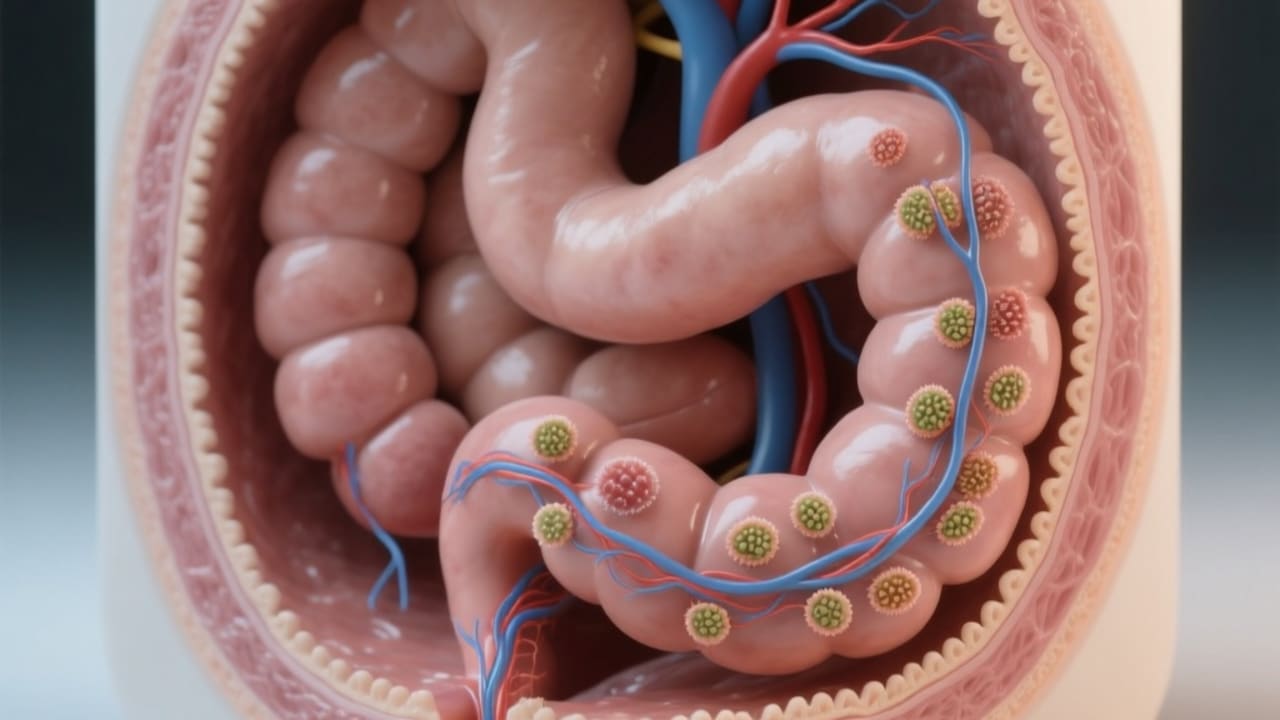
Think of your microbiome like a rainforest: diverse ecosystems are more resilient to storms. A 2025 review in Frontiers in Microbiomes reported that people with greater gut microbial diversity—and more short-chain-fatty-acid (SCFA) producers—tended to show more stress resilience in real-world groups like firefighters. SCFAs (like butyrate) help maintain the gut barrier and may influence brain pathways linked to calm and focus.
The same review noted that lower levels of certain protective taxa (for example, Actinobacteria and Verrucomicrobia) were associated with more severe trauma-related symptoms in some populations. That doesn’t mean diversity “cures” anxiety, but it suggests your daily plant variety and fiber intake could matter more than you think.
A simple analogy
If you feed your gut the same three foods each week, it’s like watering only one plant in that rainforest. Adding colors—beans, greens, nuts, seeds, herbs, fermented foods—invites in new “species” that may help buffer stress signals.
Probiotics: promising, not magical
Probiotics get a lot of buzz, and for good reason—some strains have early evidence for easing anxious feelings and normalizing stress markers. A 2025 Frontiers review summarized human and animal studies where select strains (including Lactobacillus helveticus R0052 and Lactobacillus reuteri DSM 17938) were linked to attenuated stress responses and improvements in brain factors related to mood. In rodent models, L. reuteri improved gut integrity and reduced inflammation connected to anxiety-like behaviors.
Here’s what’s surprising: results often rely on being specific and consistent. Strain matters (not just “a probiotic”), and timelines are measured in weeks, not days. Pilot human trials suggest some people notice benefits by 3–4 weeks, with clearer effects after 6–8 weeks. If you try it, track your sleep, energy, and tension—not just “anxiety”—to catch subtle wins. And if you have a GI condition or take immune-modulating meds, it’s worth checking in with a clinician first.
How to read a label
Look for specific strains (e.g., “Lactobacillus helveticus R0052,” not just “Lactobacillus helveticus”), a clear CFU count through expiration, and storage guidance. Many anxiety-focused products land between 1–10 billion CFU per day, but individual needs vary—start low, watch your body, and adjust with professional guidance if needed.

Food, nerves, and therapies that talk to both “brains”
Fermented foods (like yogurt, kefir, kimchi, and tempeh) may support microbial diversity, while fiber and polyphenol-rich plants feed SCFA producers that help keep the gut lining strong. Pair that with slow breathing—six breaths per minute for five minutes—to stimulate the vagus nerve, which can ease “alarm” signals traveling from gut to brain.
Johns Hopkins Medicine notes that mind-body therapies such as cognitive behavioral therapy and medical hypnotherapy can improve IBS and bowel-disorder symptoms—evidence that brain therapies can quiet gut symptoms when the two are “talking.” That two-way benefit is exactly what makes gut-brain care so practical for anxiety.
A real-life swap
Picture your morning: instead of coffee on an empty stomach, try a fiber-and-protein breakfast (oats + chia + berries + kefir) and two minutes of box breathing. Many people feel steadier by mid-morning—less gut flutter, fewer cortisol spikes.
Why this matters
Anxiety steals time you can’t get back—sleep, focus, social plans. When your gut piles onto your stress inputs, everything feels louder. The flip side is hopeful: because the gut is so modifiable—meal by meal, breath by breath—you get more levers to pull than “just think calmer thoughts.”
“You’re not ‘overreacting’—your gut and brain may be co-authoring the story. Change the gut’s lines, and the plot often softens.”
What you can do today
- Try a two-week “30 plants” challenge: aim for 25–30 different plants per week (fruits, veggies, beans, whole grains, nuts, seeds, herbs). Research suggests diversity may support stress resilience via SCFAs.
- Add one small serving of fermented food daily (1–2 tbsp sauerkraut, 1/2 cup kefir, or similar). Start low to avoid bloating; increase as tolerated.
- Practice 5 minutes of slow breathing (about 6 breaths/min) after meals or before bed. This may nudge the vagus nerve toward “rest-and-digest.”
- Consider a probiotic trial with a defined strain used in research (e.g., Lactobacillus helveticus R0052). Take it consistently for 6–8 weeks, track sleep/stress, and discuss with a clinician—especially if you’re pregnant, immunocompromised, or have GI conditions.
- Build a gut-brain breakfast: fiber + protein + polyphenols (e.g., Greek yogurt, walnuts, oats, blueberries, cinnamon). Many people feel steadier energy and fewer jitters.
Small, steady shifts can quiet the noise—on both ends of the gut-brain line. If this helped, pass it to the friend who’s “wired and tired,” or explore our next read on sleep and the vagus nerve.
Frequently Asked Questions
Early evidence points to specific strains like Lactobacillus helveticus R0052 and Lactobacillus reuteri DSM 17938. Some small human trials suggest reduced stress responses over 4–8 weeks. Effects vary, so discuss options with a clinician, start low, and track changes.
Food and breathing shifts may feel different within days, while microbiome changes usually take weeks. Research suggests some people notice improvements by weeks 3–4, with clearer benefits around weeks 6–8 when consistent.
Many people with IBS benefit from gradual fiber increases, careful fermented-food portions, and stress-reduction techniques. That said, some fibers or probiotics may flare symptoms; change one variable at a time and check with your GI clinician if symptoms worsen.