
What if the biggest lever for lowering inflammation isn’t a supplement or a biohack, but the way you feed your microbes? That’s the quiet revolution in nutrition right now. The foods you choose teach your gut community what to make for you — soothing short-chain fatty acids, or inflammatory signals that keep your immune system on edge.
Picture this: one week you’re living on ultra-processed snacks and late-night takeout, and your sleep and mood feel off. The next, you build meals around plants, olive oil, fish, and fermented foods. Your digestion eases. Energy steadies. It’s not magic. It’s microbiology — and an emerging body of research from 2025–2026 is connecting those dots with clinical precision.
The inflammation–microbiome loop, explained
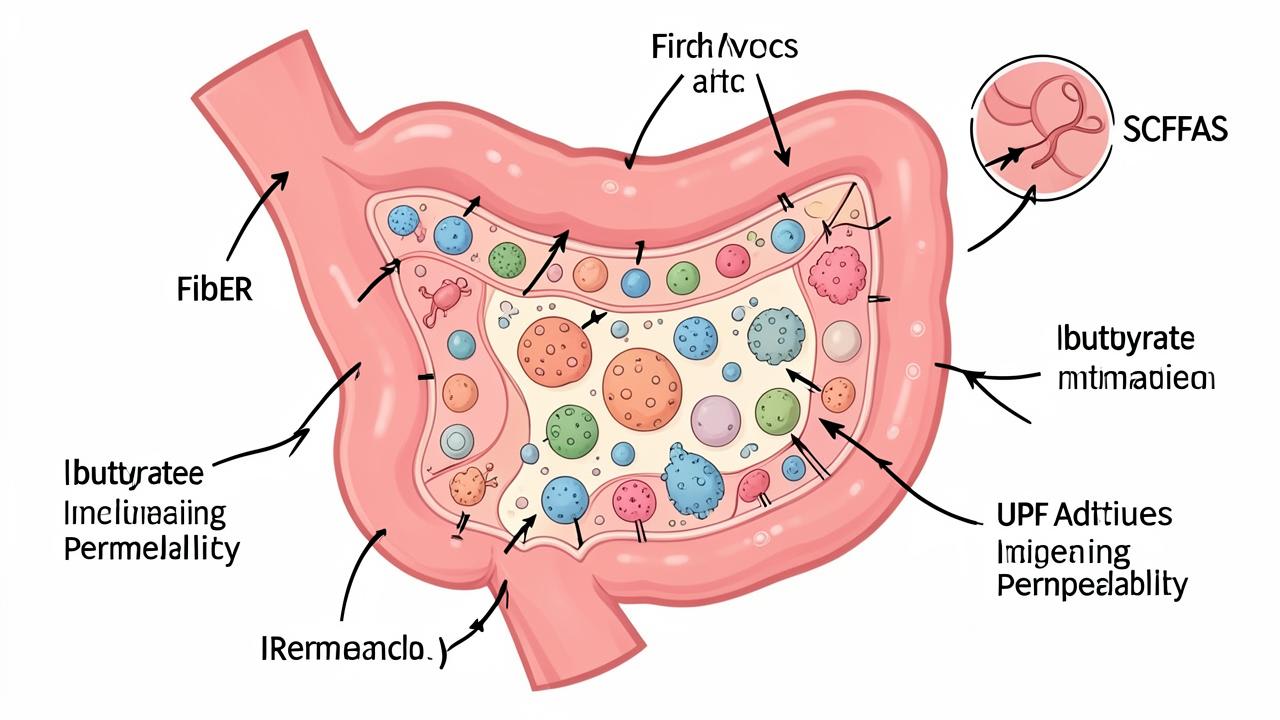
Your gut lining isn’t a brick wall — it’s a living velvet rope. When it’s well nourished, it keeps the right compounds in and the wrong ones out. One of its favorite fuels is butyrate, a short-chain fatty acid (SCFA) made when gut bacteria ferment dietary fibers and resistant starches. Butyrate strengthens tight junctions in the gut barrier, tames immune overactivity, and helps regulate blood sugar. Feed the bugs, and they pay you back.
Flip the script and things change. Diets high in refined sugars, low fiber, and certain emulsifiers can lower microbial diversity and increase levels of endotoxin-like molecules that stoke inflammation. Over time, that can ripple into higher cardiometabolic risk, low-grade systemic inflammation, and — for many — digestive symptoms that feel annoyingly vague but unmistakably real.
Here’s the thing: your immune system is listening to your microbes 24/7. Change what you feed them, and you change the conversation.
What the 2025–2026 research is actually saying
A 2025 “Year in Review” from the Gut Microbiota for Health editorial team highlighted a shift toward mechanistic, clinically meaningful microbiome science — not just associations, but pathways tied to outcomes in metabolic health, neurogastroenterology, and precision nutrition. That matters because it moves guidance beyond buzzwords and toward interventions you can act on.
At the NeuroGASTRO 2025 meeting, researchers spotlighted how polyphenol-rich dietary patterns — think berries, extra-virgin olive oil, cocoa, herbs, colorful veg — can reduce intestinal permeability and lower pro-inflammatory microbe-derived mediators, even in older adults. The takeaway: quality of calories counts for healthy aging and gut integrity, not just quantity.
Meanwhile, an open-access 2025 analysis linking the Dietary Inflammatory Index to the American Heart Association’s Life’s Essential 8 score found that more pro-inflammatory diets were associated with worse cardiovascular health and shifts in gut taxa. Notably, beneficial genera such as Allobaculum — often associated with SCFA production and better metabolic signaling — tended to be less abundant on inflammatory diets.
And timing may nudge the system, too. Conference coverage in 2025 reported that intermittent fasting can reshape microbial rhythms alongside gut hormone secretion. That doesn’t make fasting a cure-all, but it suggests meal timing works in tandem with meal quality to set circadian cues for your microbes and your metabolism.
Zooming out, a 2026 perspective in Frontiers in Nutrition argued that precision nutrition will only work if it’s mechanistically grounded, validated for outcomes, and feasible in real life — factoring in culture, affordability, and access. Translation: the “best” anti-inflammatory diet is the one that improves your markers and fits your Tuesday budget.
So what should your plate look like?
Most people have been there — staring into the fridge, trying to reconcile Instagram nutrition tips with an actual grocery list. Here’s a simpler approach anchored in what the microbiome rewards.
Build around fiber (and its friends)
Aim for 25–40 grams of fiber daily from whole foods. Your microbes especially love fermentable fibers and resistant starches. Think beans, lentils, oats, barley, green bananas, cooked-then-cooled potatoes and rice, onions, leeks, garlic, asparagus, artichokes, and apples with skin. Pair with nuts and seeds for extra prebiotic oomph.
Layer in polyphenol color
Color is a proxy for plant defense compounds that your microbes transform into signaling molecules. Daily targets: extra-virgin olive oil (2–3 tablespoons), berries or cherries, leafy greens, brassicas (broccoli, kale, cabbage), herbs and spices (turmeric, oregano, rosemary), tea or coffee, and a square of dark chocolate.
Choose fats that quell fire
Favor olive oil, avocados, nuts, and omega-3–rich fish (salmon, sardines, mackerel). These support anti-inflammatory signaling and may foster SCFA-producers. Keep omega-6–rich ultra-processed snacks and seed-oil-fried fast foods occasional rather than default.
Add living foods, gently
A small daily serving of fermented foods — yogurt, kefir, kimchi, sauerkraut, miso, tempeh — can increase microbiome diversity in many people. If you have IBS or a sensitive gut, start small and observe symptoms; some ferments are high in histamine or FODMAPs.
- Breakfast: overnight oats with chia, berries, and kefir; drizzle of olive oil and cinnamon.
- Lunch: lentil–farro bowl with roasted broccoli, arugula, olives, and lemon–tahini.
- Dinner: salmon over cooled-then-reheated potatoes, sautéed greens, and herb salsa.
- Snack swaps: almonds and dark chocolate instead of chips; apple with tahini instead of candy.

The gut–brain angle you can feel
Ever notice how a chaotic week shows up in your stomach? That’s the gut–brain axis. 2025 coverage emphasized microbiome modulation as a promising adjunct in disorders of gut–brain interaction (like IBS), because microbial metabolites talk directly to the enteric nervous system and immune cells. The surprise for many people is that lowering gut inflammation often improves mood and stress resilience — not overnight, but measurably over weeks.
Timing and rhythm matter
Your microbes keep circadian schedules, too. Consistent meal windows (say, a 10–12 hour daytime eating window) can align microbial and metabolic rhythms. Some do well with a gentle form of intermittent fasting; others feel better with a protein-forward breakfast. The throughline is regularity, not rigidity.
Sensitive guts need smart tweaks
If you live with IBS, you don’t have to abandon anti-inflammatory eating. Many find success starting with low-FODMAP–friendly plants (zucchini, carrots, spinach, oats, rice) and slowly layering in beans or alliums in small amounts. Track symptoms and adjust — personalization beats perfection.
Personalize, but keep it practical
The 2026 precision-nutrition roadmap is clear: recommendations should be biologically plausible, outcome-validated, and doable. You don’t need a thousand-dollar test to start. You need consistent inputs and honest feedback.
- Pick 2–3 fiber-rich staples you’ll actually eat daily (oats, beans, flax, apples).
- Add one polyphenol “anchor” at each meal (olive oil, herbs, greens, berries).
- Set a meal rhythm that fits your life (e.g., 8 am–7 pm window, or three evenly spaced meals).
- Track 3 signals weekly: digestion (bloating, regularity), energy, and a simple biomarker (resting heart rate, waist measurement, or, with your clinician, fasting lipids/glucose).
- Iterate: if a food flares symptoms, reduce portion, change preparation (soak, cook, cool), or swap within the same category.
Actionable Takeaway
This week, run a simple experiment that your microbes will love — and your inflammation won’t.
- Make plants 75% of your plate at two meals per day.
- Use extra-virgin olive oil as your default cooking and finishing fat.
- Add one fermented food daily in a small portion.
- Choose a 10–12 hour eating window that ends 2–3 hours before bed.
- Walk 10 minutes after your two largest meals to help glucose control — microbes seem to like that, too.
Then, notice how you feel in seven days. Better digestion? More stable energy? That’s data — your kind of precision nutrition.
Because when you consistently feed the microbes that make anti-inflammatory metabolites, your body stops firefighting and gets back to what it’s built to do: heal, adapt, and thrive.