
Here’s the thing: you don’t need a 5 a.m. bootcamp, a ketovore cleanse, and a $400 sleep tracker to add healthy years to your life. New research suggests the smallest, most boring tweaks — minutes, not marathons — meaningfully stack up over time.
Picture this: you go to bed 15 minutes earlier, take a brisk three-minute lap after lunch, and add half a cup of vegetables at dinner. That’s not a wellness overhaul. But it might be exactly the kind of shift that moves the needle on longevity and how well you feel along the way.
The science: why “a little more” matters
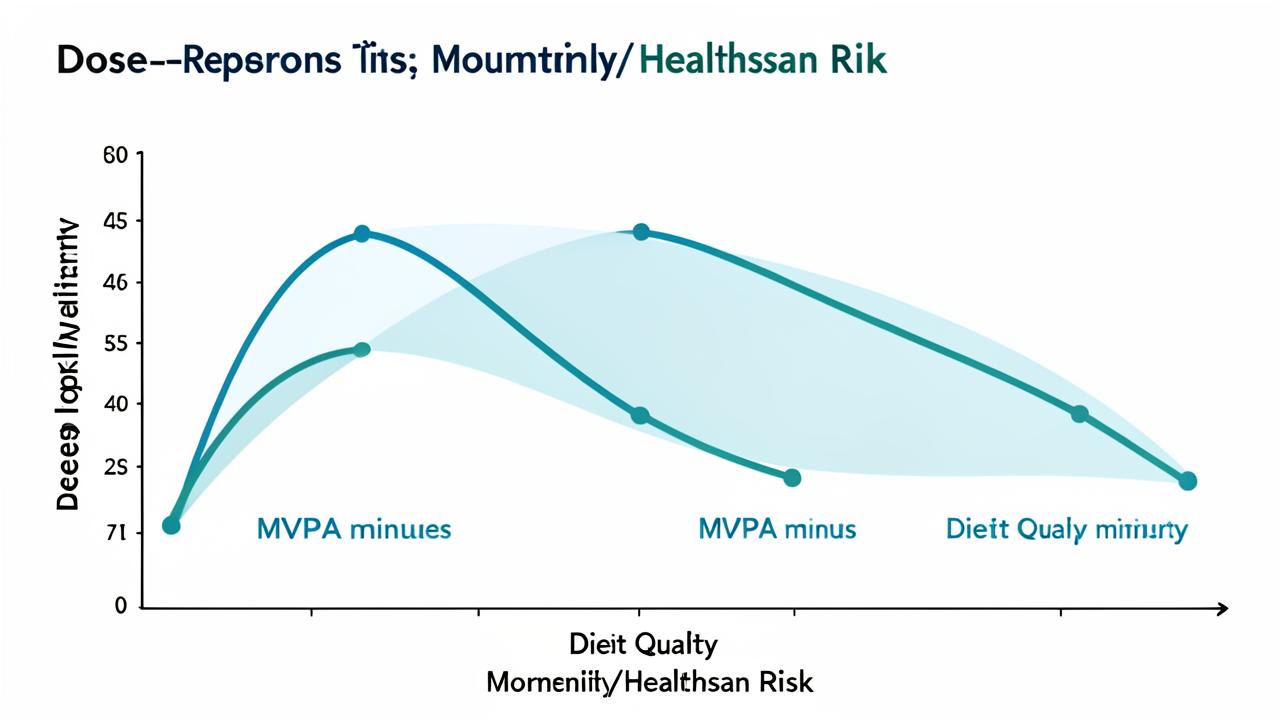
A 2026 paper in eClinicalMedicine analyzed nearly 60,000 adults from the UK Biobank and modeled how tiny upgrades in sleep, movement, and diet relate to lifespan and healthspan (years lived free of major disease). The headline? People starting from the lowest baselines saw substantial associations with longer life from small nudges — think just a few extra minutes of moderate-to-vigorous activity, slightly longer sleep, and a modest bump in diet quality.
In plain terms: the curve is steepest at the bottom. When you’re doing very little, a little more delivers the biggest relative return. An NBC News report on the study noted that those with the poorest habits could add roughly a year of life with a combined shift toward more sleep, a few extra minutes of daily movement, and a higher diet-quality score — and larger combined changes were associated with up to four extra healthy years. Live Science, covering the same dataset, highlighted that even micro-tweaks — minutes of sleep and activity, plus half a serving of vegetables — moved risk in the right direction compared with the lowest performers.
Important nuance: this was observational modeling, not a randomized trial. Sleep and activity were measured for short windows, and diet was captured at baseline. So we’re talking associations, not guarantees. But the consistency with decades of exercise, nutrition, and sleep science makes the signal hard to ignore.
Small beats perfect when small is consistent. Add minutes, repeat them, and let compounding do the heavy lifting.
Your three levers: sleep, movement, food
Most people have been there — you promise yourself a full routine overhaul and then life interrupts on day three. Here’s a friendlier approach: pull each lever by the smallest amount you can repeat on your worst day.
Sleep: add minutes, not hours
You know that feeling when you finally crawl into bed a bit earlier and wake up actually human? Aim for that, in tiny steps. The study signal suggests even small nightly gains are worthwhile, especially coming from short sleep. Because sleep supports glucose control, memory consolidation, and immune function, nudging toward 7–8 hours pays dividends across systems.
- Move bedtime 10–20 minutes earlier (or cut late-night scrolling by two songs’ worth).
- Anchor a wind-down: lights low, warm shower, paperback for 10 minutes.
- Protect your wake time within a 30-minute window — consistency stabilizes circadian rhythm.
Movement: minutes that matter
Turns out, the biggest relative benefit of exercise comes when you go from “almost none” to “some.” U.S. News coverage of the 2026 analysis noted benefits ramp strongly at the low end and continue toward roughly 50 minutes per day of mixed activity for broader health. But if that sounds impossible, start microscopic: add 3–5 brisk minutes after meals or between meetings. Your mitochondria don’t care that it wasn’t a perfect workout; they care that you moved.
- The “post-meal loop”: 3–8 minutes of brisk walking after breakfast or lunch.
- Stairs over elevator once per day — that’s 60–90 seconds of vigorous effort.
- One micro-set: 8–12 bodyweight squats before you shower, daily.
Food: nudge the needle
No need to color-code your pantry. Because diet quality drives inflammation, cardiometabolic risk, and gut health, simple plant-forward moves go a long way. Live Science’s summary of the 2026 work even pointed to half a serving of vegetables as a meaningful step up from the lowest intakes.
- Add one produce “upgrade” per day: half a cup of beans, leafy greens, or berries.
- Swap one refined-carb side for a high-fiber option (brown rice, quinoa, lentils).
- Protein at each meal (eggs, tofu, fish, yogurt) to support satiety and muscle repair.
Strength training: the small habit with outsized payoff
Here’s what’s surprising — and honestly empowering. Strength work seems to punch above its weight for longevity. A 2022 meta-analysis in the British Journal of Sports Medicine reported that 30–60 minutes per week of muscle-strengthening activities was associated with roughly a 10–20% lower risk of all-cause mortality. That’s not hours in the gym; that’s two 15–20 minute micro-sessions.
And people know it. In Life Time’s 2026 wellness survey, getting physically stronger landed as the top goal, with nearly half planning to lift more. Not exactly news, but the motivation tracks the science: more muscle improves insulin sensitivity, bone density, balance, and resilience with age — guardrails against the conditions that shorten healthspan.
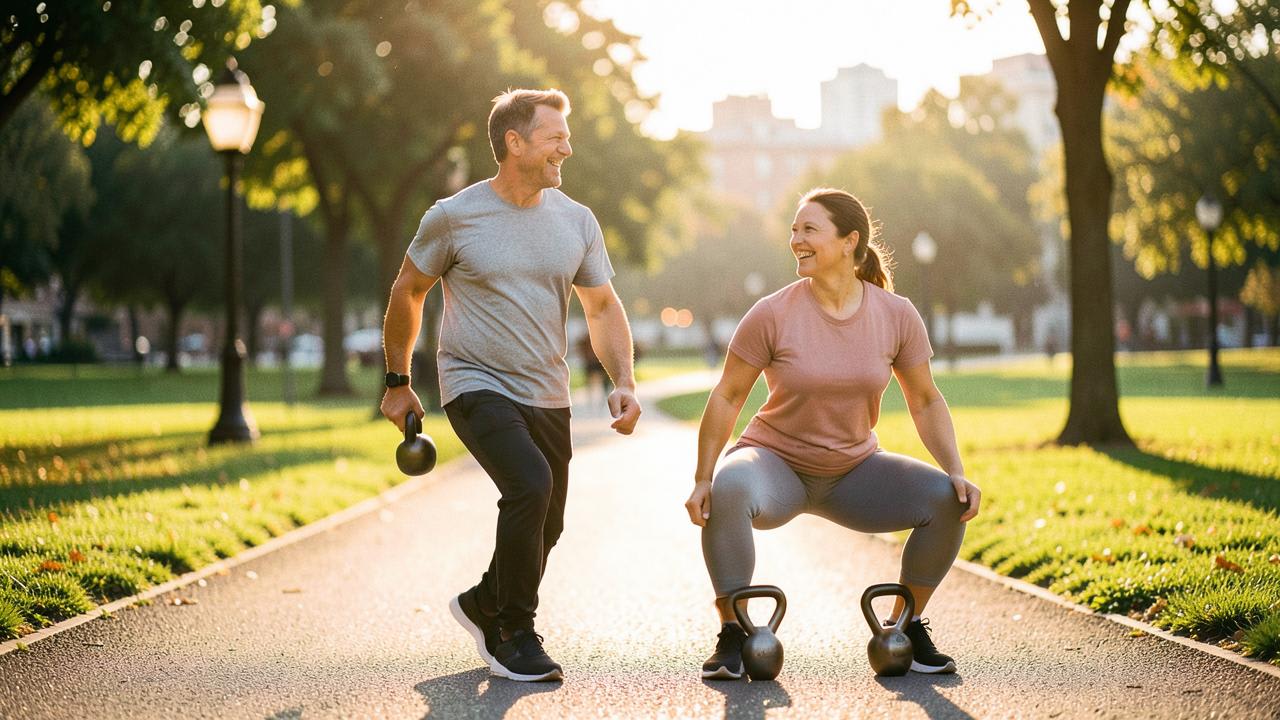
If weights feel intimidating, start at home. Most beginners build meaningful strength with bodyweight moves and a single kettlebell or resistance band. Picture this: you set a two-song timer, run a circuit of squats, push-ups against the counter, and rows with a band. It’s over before your coffee cools, and you’re stronger by Friday than you were on Monday.
- Two days per week: 2–3 sets each of squats, hinges (hip bridges), presses, rows, and carries.
- Pick a “minimum viable” version: wall sits, countertop push-ups, band pulls, suitcase carry.
- Progress gently: add 1–2 reps or a few pounds each week — not both.
Make it stick: micro-plans that survive Tuesdays
Ambition is easy on Sunday night. Tuesday at 4 p.m. is the real test. Build habits that survive your busiest day by lowering friction and raising cues.
- Attach to anchors: after coffee, 8 squats; after lunch, a three-minute loop; after dishes, prep tomorrow’s veg.
- Pack the environment: shoes by the door, band on the counter, frozen veggies in plain sight.
- Track tiny wins: checkboxes for minutes slept earlier, minutes walked, and one food upgrade.
- Use “floor and ceiling” goals: floor = do 3 minutes; ceiling = do 20 if you feel great.
- Safeguard recovery: at least one true rest day per week and light movement on sore days.
A 7-day micro-experiment
Try this for one week and observe how you feel. No perfection required.
- Sleep: go to bed 15 minutes earlier nightly; keep wake time steady within 30 minutes.
- Movement: add a 3–5 minute brisk walk after two meals each day.
- Strength: two sessions (Mon/Thu), 12 minutes each — squats, push, row, carry.
- Food: one extra plant per day and swap a refined carb once.
- Reflection: jot a 30-second note each night — energy, mood, appetite, aches.
But what does that actually mean for your Tuesday morning? It means you can win by 8 a.m.: 8 squats while the kettle boils, yogurt with berries, and you’re already checking boxes.
Actionable takeaway
Pick one tiny action per lever and make it daily for 14 days:
- Sleep: lights out 12 minutes earlier.
- Movement: 4-minute brisk walk after lunch.
- Food: add half a cup of vegetables to dinner.
If that sticks, layer in a 12-minute strength session twice weekly. That’s it. Consistency beats intensity — especially at the start.
The real kicker? You don’t have to chase hacks. The habits that extend life are refreshingly ordinary. A little more sleep. A little more movement. A little more color on your plate. Doable on a messy Tuesday. Repeatable on a great Saturday. And compounding quietly in your favor.