
Most people blame their inbox for that spike of anxiety. Here’s the twist: the real nudge might be coming from your intestines.
Picture this: you’re wired at 11 p.m., brain looping through to‑dos, stomach a little off. You didn’t change your workload—but you did swap lunches for “whatever’s fast.” Your microbes noticed. They’re tiny, opinionated chemists, and they talk to your brain all day long.
The gut brain axis isn’t woo. It’s anatomy (vagus nerve), immunology (cytokines), and biochemistry (short‑chain fatty acids, tryptophan). And while we’re still early on the science, small, strategic food shifts may help smooth the edges of stress.
- Your gut and brain are in constant chat. Microbes signal via the vagus nerve, immune messengers, and metabolites.
- Fiber is mood fuel. 25–38 g/day feeds microbes that make calming short‑chain fatty acids.
- Not all probiotics help anxiety. Benefits appear strain‑specific (think Bifidobacterium longum 1714), not “one bottle fits all.”
- Counterintuitive: More plants + fermented foods may support calmer mood even before sleep or screen-time fixes land.
- Give changes 4–8 weeks. The microbiome shifts with consistency, not perfection.
How Your Microbes Talk to Your Mind
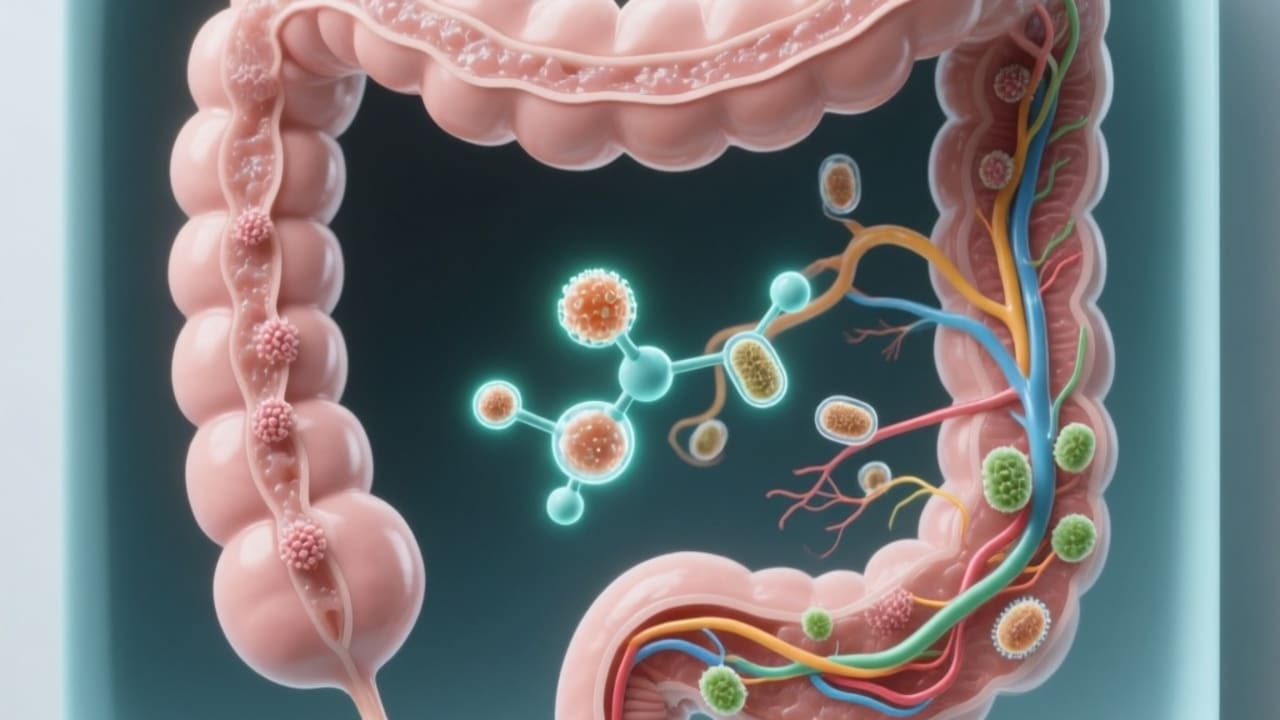
Think of your gut as a group chat where microbes post updates and your brain reacts. They release metabolites like butyrate that can influence inflammation and nerve signaling. They also interact with tryptophan—the raw material for serotonin—and ping the vagus nerve, the body’s calm‑down hotline.
A 2017 peer‑reviewed review on PubMed Central described this two‑way conversation—neural, endocrine, and immune—with early links to anxiety and depression through altered gut communities and signaling pathways (PMC5641835). An academic overview from Palo Alto University echoes this, outlining how microbes produce neuroactive compounds that can shape mood and cognition through the microbiota‑gut‑brain axis.
Relatable version: imagine your gut microbes as baristas deciding what shots go into your mental latte—soothing or jittery—depending on what ingredients you hand them at mealtimes.
What the Evidence Actually Says (and Doesn’t)
Here’s the thing: animal studies are striking, human data is promising but mixed. John Cryan’s team at University College Cork reported that transferring microbiota from people with depression into rodents induced depressive‑like behaviors—suggesting microbial communities can carry mood‑relevant signals. A 2025 report in Nature highlighted these findings and the growing push to test microbiome‑targeted therapies in stress‑related conditions.
On people, a 2023 peer‑reviewed review available on PubMed Central summarized links between anxiety/depression and altered gut profiles, and noted that prebiotics, probiotics, synbiotics, omega‑3s, and even fecal microbiota transplantation are being explored—though clinical trials remain limited and heterogeneous (PMC10146621). Translation: the signal is real, but protocols and “which‑for‑whom” details are still shaking out.
Most people have been there—trying a random probiotic and wondering why nothing changed. It’s not you; broad bottles aren’t precision tools. The evidence points toward specific strains, doses, and enough time on them to notice a shift.
Food as a Mood Messenger
Your daily menu is the fastest, safest way to nudge the gut brain axis. Microbes thrive on fiber and polyphenols from plants; they ferment those into short‑chain fatty acids that may reduce gut inflammation and support healthier signaling to the brain.
A 2023 peer‑reviewed review on PubMed Central mapped how diet patterns rich in vegetables, legumes, whole grains, nuts, and omega‑3s can shift microbial composition and correlate with better mood outcomes (PMC10146621). Earlier reviews have also outlined how fermented foods add beneficial microbes and bioactives that may modulate stress responses (PMC5641835).
Picture your plate as a playlist: more diverse tracks (plants and ferments) make for smoother vibes; a loop of ultra‑processed hits can crank the static.

“Psychobiotics” and Probiotics: What to Know Before You Buy
Some probiotics show potential for stress or mild anxiety, but details matter. Early human trials suggest strains like Bifidobacterium longum 1714 or Lactobacillus rhamnosus (specific strains) may help some people; other strains don’t move the needle. In mice, Lactobacillus casei eased depression‑like behavior and inflammation after antibiotic‑induced dysbiosis, adding biological plausibility (summarized in PMC10146621).
A 2025 Nature report underscored that while interest in “psychobiotics” is rising, larger, well‑controlled human trials are needed to pin down effects, dosing, and who benefits most. Until then, think of probiotics as one tool—useful when targeted, not magical when random.
Real‑life filter: buying “a probiotic” is like grabbing any key and hoping it opens your front door. The right key matters, and it needs a consistent turn—often 4–8 weeks—to test whether it fits.
Why This Matters
Mood isn’t just mindset. It’s physiology, meals, sleep, and the tiny citizens in your gut. If you’re juggling coffee on an empty stomach, a rushed lunch, and a 3 p.m. slump, your microbes are riding that roller coaster with you—and pinging your brain about it.
Your gut can’t text you “I’m stressed,” so it speaks through cravings, bloating, energy dips—and sometimes, a louder anxious buzz.
The upside: you make food decisions multiple times a day. That gives you frequent, low‑risk chances to send calmer signals upstream to your brain.
What You Can Do Today
- Feed diversity with fiber. Aim for ~25–38 g/day from beans, oats, chia, berries, and veggies. Research suggests this supports short‑chain fatty acids that may help regulate stress signaling.
- Add 1–2 fermented servings daily. Try kefir, unsweetened yogurt, kimchi, sauerkraut, or tempeh. Start small if your gut is sensitive.
- Prioritize omega‑3s. Fatty fish (salmon, sardines) 2x/week or an algae‑based supplement may support mood; discuss supplements with a clinician if you take medications.
- Trial a targeted probiotic. If you’re curious, consider a strain with emerging evidence (e.g., Bifidobacterium longum 1714) for 4–8 weeks. Track mood, sleep, and GI changes; stop if you feel worse and check with a professional.
- Make breakfast count. Swap “coffee‑only” for protein + fiber (eggs + greens + whole‑grain toast). A steadier gut morning can set a calmer tone for your nervous system.
You don’t need perfection to feel progress. A handful of plant‑forward swaps, one fermented habit, and a little patience can make your gut‑to‑brain messages noticeably kinder. If symptoms are severe or persistent, loop in a healthcare professional who can personalize options.
Frequently Asked Questions
Early research points to strain‑specific options like Bifidobacterium longum 1714 or certain Lactobacillus rhamnosus strains. Results are mixed, so a 4–8 week trial with tracking—and a chat with a clinician if you have conditions or take medications—may be helpful.
Microbiome shifts can begin within days, but mood effects—if they occur—often need 4–8 weeks of consistent habits. Start small, track sleep, energy, and stress, and adjust with guidance if needed.
No. Nutrition may support mental well‑being, but it isn’t a replacement for therapy or prescribed treatments. If you’re under care, discuss any changes with your provider so your plan works together.